Indian Researchers Patent Lab Technology to Simulate Lightning on Other Planets
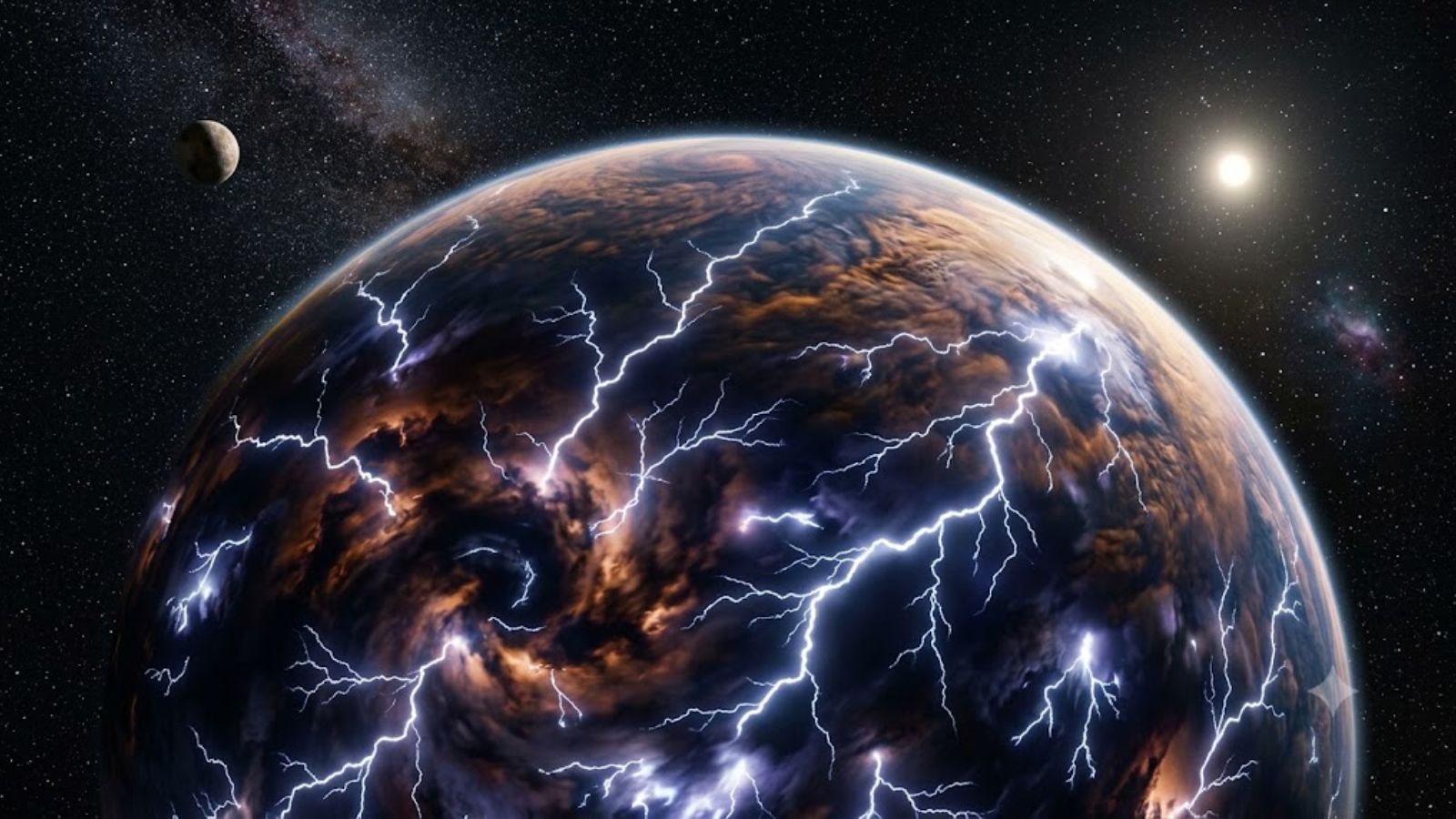
Researchers from two Gujarat institutions have been granted a patent by the Government of India for a technology that can simulate lightning on other planets under controlled laboratory conditions. The invention, developed by scientists at Charotar University of Science and Technology (CHARUSAT) in Anand and the Physical Research Laboratory (PRL) in Ahmedabad, marks a significant step in planetary science.
The patented system, titled 'A System and Method for Performing Lightning Characterisation and Detection for Realisation of a Planetary Lightning,' uses a custom vacuum chamber and a high-voltage setup to replicate the conditions found in the atmospheres of planets such as Venus, Jupiter, and Saturn. By recreating these environments on Earth, researchers can study the characteristics and behavior of lightning in extraterrestrial atmospheres without needing to send probes to those planets.
Lightning is a common phenomenon in the solar system, observed on several planets. However, the exact mechanisms and properties of lightning on other worlds remain poorly understood due to the difficulty of direct observation. This new technology aims to fill that gap by providing a controlled laboratory setting where scientists can generate and analyze planetary lightning.
The system is expected to play a crucial role in future space missions. By understanding how lightning forms and behaves on other planets, scientists can better design instruments for detecting lightning, as well as predict its potential effects on spacecraft and mission operations. For example, lightning on Jupiter is known to be more energetic than on Earth, and the conditions on Venus are vastly different, with a thick, acidic atmosphere. This lab simulation allows researchers to test hypotheses and calibrate detection equipment in a safe, repeatable environment.
The patent, granted by the Government of India, is a recognition of the innovative work done by the team. While the researchers have described it as a major breakthrough, they emphasize that the technology is still in its early stages. Further development is needed to refine the simulation and expand its capabilities to cover a wider range of planetary conditions.
This development underscores India's growing expertise in space research and technology. The Physical Research Laboratory is a premier institute under the Department of Space, and its collaboration with CHARUSAT demonstrates the potential of academic partnerships in advancing space science. The patent could also open up opportunities for international collaborations, as space agencies around the world are interested in better understanding planetary lightning.
For the common person, this research may seem distant, but it has practical implications. Understanding lightning on other planets helps scientists learn more about the solar system's formation and the dynamics of planetary atmospheres. It also aids in the search for habitable environments, as lightning is thought to play a role in the formation of organic molecules. While we may not see direct benefits immediately, such foundational knowledge contributes to the broader field of planetary science.
In summary, the patented technology from Gujarat researchers represents a novel tool for simulating lightning on other planets. It provides a way to study these phenomena in a laboratory, potentially aiding future space missions and deepening our understanding of the solar system.