Curiosity Rover Spots Vast Network of Honeycomb-Like Patterns on Mars
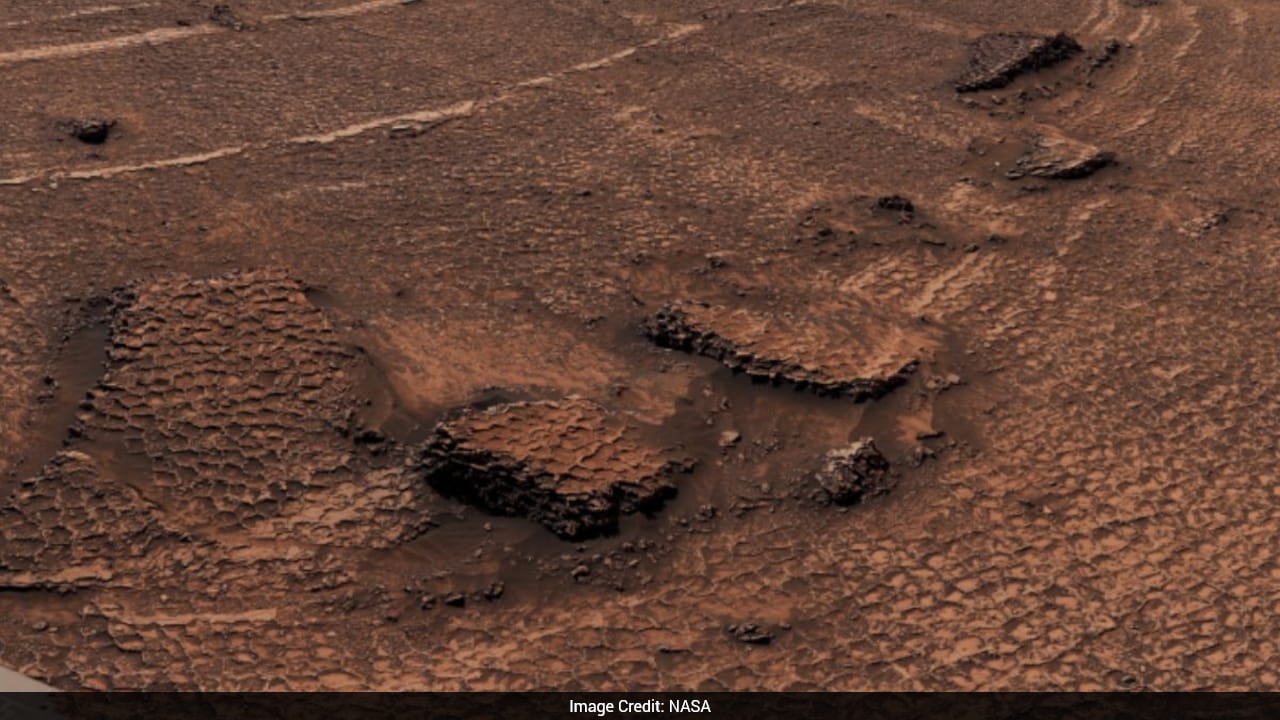
NASA's Curiosity rover has dispatched images of a sprawling Martian landscape covered with honeycomb-like polygonal patterns, a discovery that scientists say far surpasses similar features previously seen during the mission. The finding emerged as the rover began climbing a valley nicknamed "Valle Grande," located within Gale Crater.
The polygonal fractures, measuring roughly 1.5 to 3 inches (4 to 8 centimetres) across, extend in every direction from the rover's vantage point. In a 360-degree panorama captured on June 19 and 20 — the 4,930th and 4,931st Martian sols of the mission — the patterns also wrapped around the slopes of a nearby butte called "Miraflores," which stands about 20 feet (6 metres) tall and carries a thick cap of sand on its summit.
According to NASA, this is not the first time Curiosity has encountered such geometric structures. Small patches of polygon fractures have been observed elsewhere during its journey, but never on this scale. The sheer uniformity and breadth of the Valle Grande formation make it a significant addition to the rover's collection of Martian phenomena.
Ashwin Vasavada, the mission's project scientist at NASA's Jet Propulsion Laboratory, said the team has photographed many distinctive landscapes through Curiosity's cameras, yet this expansive field of polygons stands out for its striking regularity. Vasavada noted that scientists have already conducted detailed measurements of the shapes and chemical composition of the formations. He expressed hope that the data will yield answers about the geological or climatic conditions that shaped them.
Although the exact origin of these honeycomb-like patterns remains uncertain, NASA has outlined several plausible mechanisms. On Earth, similar polygonal networks can form when mud dries and cracks, producing a mosaic of fissures. They can also arise from repeated cycles of freezing and thawing, which cause the ground to contract and crack. Another possibility is that they result from compression during burial, when overlying sediment squeezes water out of the layers below.
Each of these processes implies a different history for the Martian environment. If the patterns are desiccation cracks, they would point to a time when the surface was wet and periodically dried out. If they are thermal contraction features, they would suggest a climate with significant temperature swings. If they are compression-related, they would indicate substantial past geological activity.
Curiosity, which landed in Gale Crater in August 2012, has been ascending Mount Sharp, a 5-kilometre-high mound that preserves billions of years of Martian history. The rover's instruments allow it to analyse rock textures, mineralogy, and chemistry, providing ground-truth data that complements orbital observations. The Valle Grande images, taken with the rover's Mast Camera, will be combined with measurements from its ChemCam laser and other tools to narrow down the possibilities.
Scientists will also compare these new images with past observations of polygons, particularly those that appeared to be mud cracks. The context of the surrounding terrain, including the sand-capped butte, may help explain whether the patterns formed on the surface or at depth.
The discovery highlights the continuing value of long-duration surface exploration. As NASA prepares for future human missions to Mars, understanding such geological features contributes to a broader knowledge of the planet's environmental evolution.
No peer-reviewed study has yet been published regarding the Valle Grande patterns, and NASA has not indicated whether a dedicated investigation is planned. Nevertheless, the images offer an impressive view of a landscape whose formation remains an open scientific question.