🏠 News Empire
science

ISRO and Space Department Launch Mega Recruitment Drive: 746 Posts, Including 92 Scientist Roles

Published on: 30 Jul 2026, 07:48 PM
ISRO and Space Department Launch Mega Recruitment Drive: 746 Posts, Including 92 Scientist Roles

The Department of Space (DoS) and the Indian Space Research Organisation (ISRO) have announced one of their largest recruitment drives in recent years, with 746 openings across scientist, administrative, and apprenticeship positions. The initiative comes as the department grapples with a 25-year-high vacancy rate, with nearly 30% of sanctioned posts lying unfilled at the end of the 2025-26 fiscal year.

The recruitment, spread across three notifications issued between July 27 and July 29, covers 336 regular posts and 410 apprenticeship positions. The largest chunk of regular posts is 244 Level-4 administrative roles, including assistants, junior personal assistants, upper division clerks, stenographers, and assistants for autonomous institutions. The drive also includes 92 scientist/engineer ‘SC’ positions in Level-10 of the pay matrix, with electronics (34 vacancies), mechanical (26), and computer science (13) leading the demand.

Successful scientist candidates will be deployed across specialised centres such as the U R Rao Satellite Centre (URSC) and Human Space Flight Centre (HSFC) in Bengaluru; Vikram Sarabhai Space Centre (VSSC) in Thiruvananthapuram; Satish Dhawan Space Centre in Sriharikota; Space Applications Centre (SAC) in Ahmedabad; and others. These centres have experienced notable attrition in recent years.

Alongside permanent roles, URSC, Bengaluru, has announced 410 apprenticeship positions for 2026-27, comprising 220 graduate apprentices, 120 technician apprentices, and 70 diploma in commercial practice apprentices. Under the Apprentices Act, 1961, these positions provide a monthly stipend (Rs 10,900 to Rs 12,300) and training, but no guarantee of permanent employment.

Despite the scale of the drive, sources indicate it will not significantly alter ISRO’s staffing deficit. The 336 regular vacancies amount to less than 6% of the department’s 5,632 documented vacancies earlier this year. Additional positions, including junior research fellows and project associates, were also advertised in recent months.
Latest in Science 10
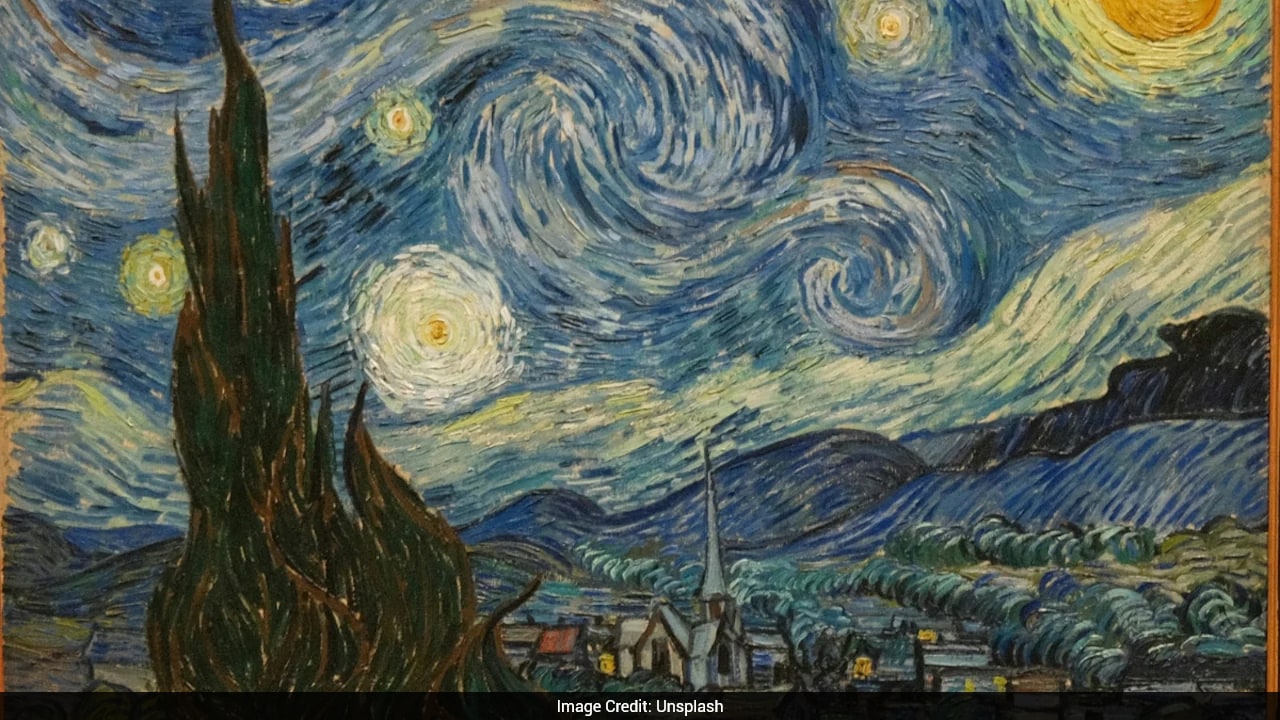
Did Van Gogh Paint 'The Starry Night' on July 22, 1889? New Study Offers a Date
science

Did Van Gogh Paint 'The Starry Night' on July 22, 1889? New Study Offers a Date

A study from Kyung Hee University in South Korea suggests that the positions of the Moon, Venus and the Hyades star cluster in The Starry Night best match the dawn sky of July 22, 1889, as seen from the asylum where Van Gogh stayed in southern France. The researchers say observation and imagination may have combined in the work and accept their findings are not conclusive. The Van Gogh Museum in Amsterdam maintains the painting was made in June 1889.

NDTV 25 Oct 2026, 02:08 AM
Read More →
Hyderabad scientists find the protein that lets cells spot a virus — and raise the alarm
science

Hyderabad scientists find the protein that lets cells spot a virus — and raise the alarm

Scientists at CSIR-CCMB in Hyderabad have identified a protein, DZIP3, that both detects viral RNA inside human cells and switches on the immune response, triggering the production of Type I interferons. The pathway was shown to offer protection against SARS-CoV-2, Chikungunya and Japanese Encephalitis viruses, suggesting potential for broad-spectrum antiviral drugs. The team is now working on small-molecule candidates to boost DZIP3 activity, though any treatment remains years away.

The Hindu 22 Oct 2026, 01:57 PM
Read More →
Kodavas Are Three Distinct Populations, Not One, Finds Genetic Study
science

Kodavas Are Three Distinct Populations, Not One, Finds Genetic Study

A peer-reviewed study has found that the Kodava (Coorg) community of Kodagu in Karnataka is not a single population but three genetically distinct groups, Coorg1, Coorg2 and Coorg3, whose histories stretch back up to 3,000 years. The research, published in Communications Biology, also points to male-mediated migration from Central Asia and the Middle East followed by assimilation with indigenous South Asian women.

The Hindu 18 Sep 2026, 01:51 PM
Read More →
→ View All Science News