India May Create 'Functional Urban Settlements' to Reflect True Urbanisation
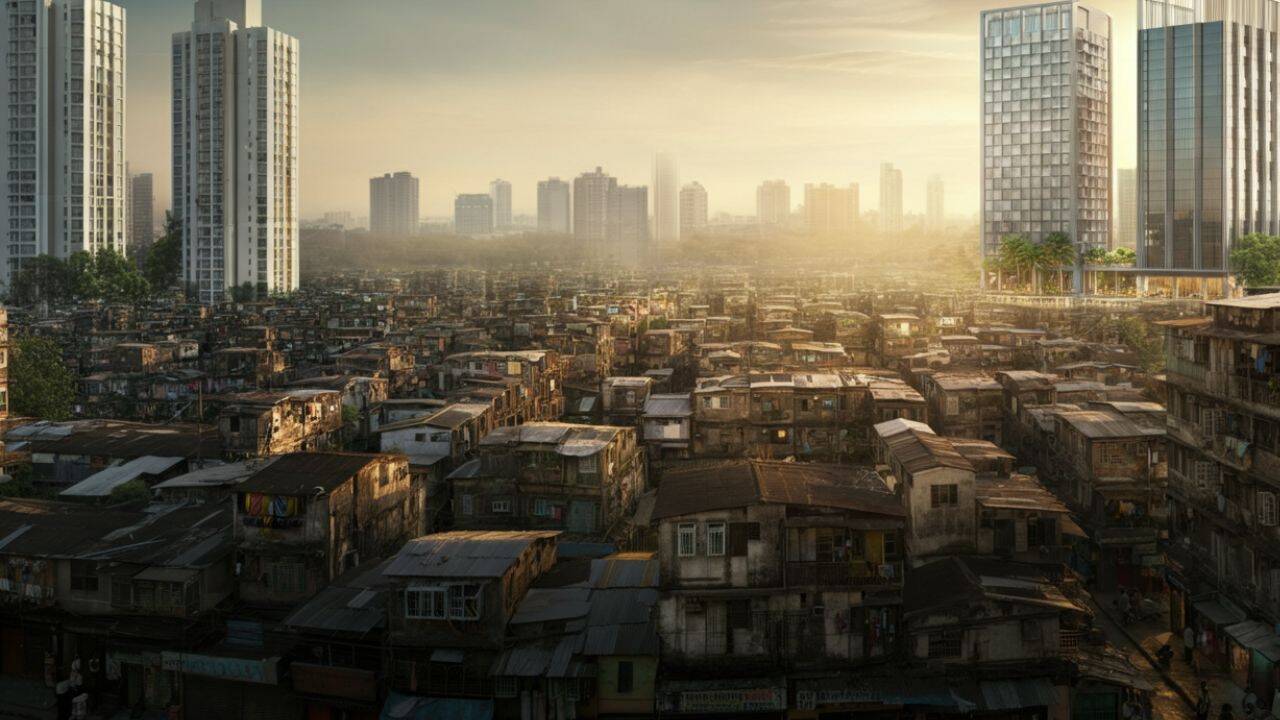
The Union government is considering a new classification—'functional urban settlements'—to better capture the extent of urbanisation in India. This category would sit alongside the existing 'rural' and 'urban' designations, which officials say fail to account for the many villages that have acquired urban characteristics such as high-density built-up areas, reduced dependence on agriculture, and improved transport networks.
Current official data indicates that about 36% of India's population lives in urban areas, but an estimate based on the United Nations' Degree of Urbanisation framework suggests the figure may be as high as 84%. The discrepancy arises because the existing classification system recognises only two types of urban entities—Census Towns (settlements with over 5,000 inhabitants) and Statutory Towns (those with municipal governance). Many villages on the outskirts of major urban centres in states such as Haryana, Uttar Pradesh, Maharashtra, Kerala, and Madhya Pradesh now possess most urban features but remain categorised as rural.
A recent study by the National Institute of Urban Affairs (NIUA), under the Ministry of Housing and Urban Affairs, recommends the adoption of the new national settlement classification framework to accurately capture the rapidly evolving urban landscape. The study, released by P.K. Mishra, Principal Secretary to the Prime Minister, argues that a substantial share of urbanisation is occurring beyond officially recognised towns and cities.
“The extent of actual urbanisation is higher than what’s recorded,” a senior ministry official said, adding that numerous areas exhibit urban characteristics but continue to be governed as rural areas, creating a significant gap between the geography of urbanisation and existing governance structures.
The government has also announced financial aid for City Economic Regions (CERs) in the last Union Budget. CERs transcend strict administrative boundaries and map integrated supply chains, labour markets, and surrounding towns to serve as strategic economic hubs.
The NIUA study identified hundreds of functional urban settlements outside the existing system by applying its modified Degree of Urbanisation framework in Kerala and Madhya Pradesh. In Kerala, Statutory Towns increased from 63 to 93 in 2025. The transition matrix shows that 77 of the 461 Census Towns identified in 2011 were upgraded to municipalities, and 102 villages were incorporated into urban local bodies, reflecting the state’s dispersed urbanisation pattern.
In Madhya Pradesh, Statutory Towns grew from 361 to 413. Between 2011 and 2025, 379 villages were incorporated into nagar panchayats, 112 into municipalities, and 186 into municipal corporations, indicating a widespread but gradual process of urban transformation across the predominantly rural settlement structure.
Unlike approaches based on administrative boundaries or population thresholds, the new matrix uses night-time light (NTL) data from satellite sensors to infer urban extent by analysing the spatial distribution and intensity of illuminated areas.
The ministry is simultaneously finalising a uniform classification of tier-2, 3, 4, and 5 cities to enable differentiated policy, investment, and planning based on the size and role of urban centres. It also proposes to further categorise tier-1 cities into three groups based on population.