Supreme Court Questions Relevance of Two-Child Rule for Panchayat Elections
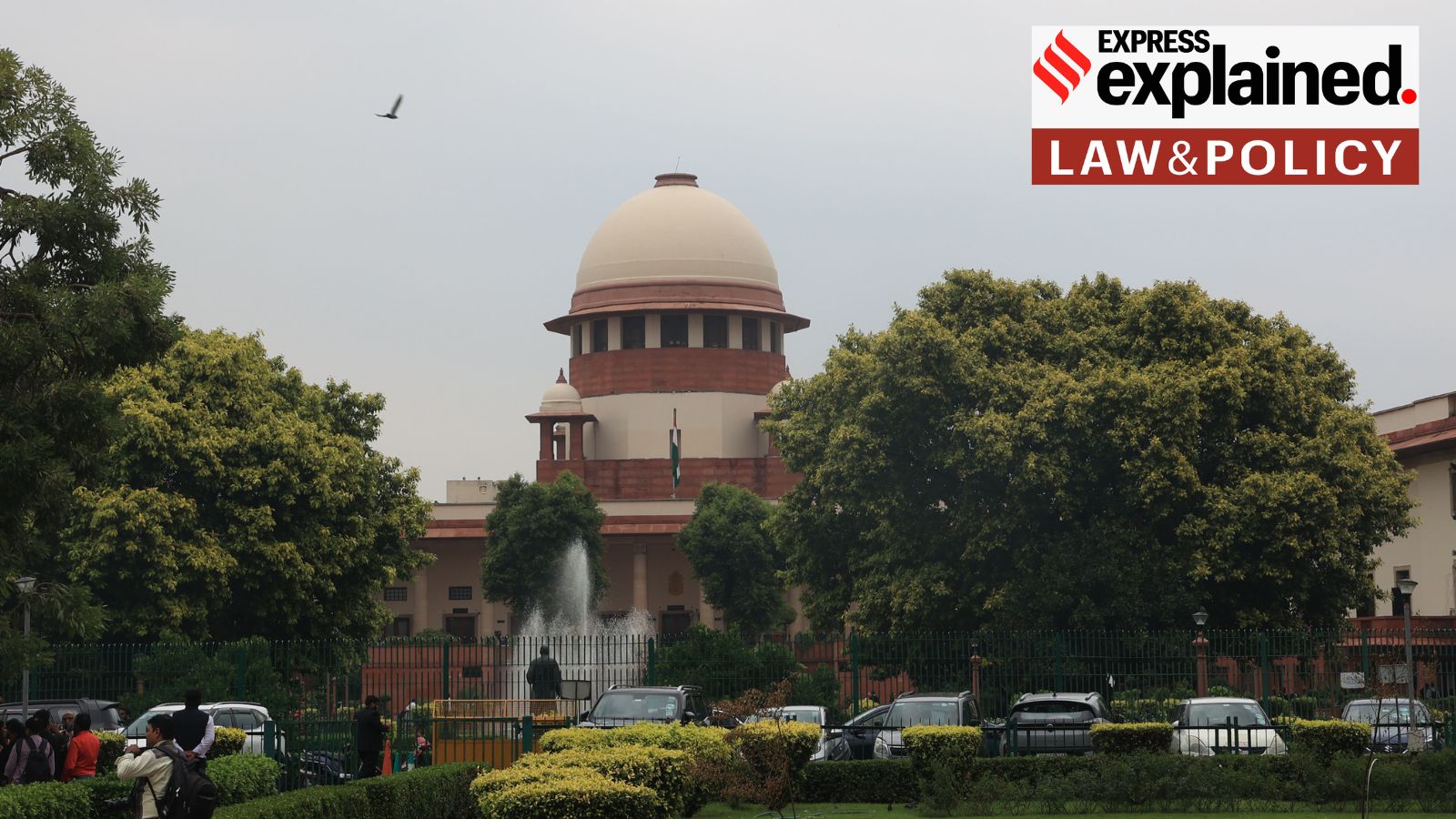
The Supreme Court on July 14 questioned whether laws disqualifying persons with more than two children from contesting panchayat elections continue to serve their original purpose, given India's declining fertility rate.
A bench comprising Justices P S Narasimha and Alok Aradhe observed that the policy was originally intended to control population. However, with many states now reporting falling fertility rates, the bench asked: 'Should this policy continue?' The court also referred to its 2003 judgment in Javed v State of Haryana, noting that it may require reconsideration.
The bench appointed Advocate Rukmini Bobde as an amicus curiae and directed her to examine whether similar two-child qualification laws are still in operation in other states. It also asked petitioner's counsel, Advocate-on-Record Pratik Bombarde, to place relevant materials on record.
Facts of the case
In 2023, a voter from Kakoda gram panchayat in Maharashtra's Buldhana district filed a complaint alleging that the sarpanch, Mangala Bhimrao Ingle, had a third child. The complainant produced a birth certificate and school records, claiming that Ingle, who had been elected a year earlier, had submitted false information in her nomination papers.
Ingle denied having a third child. She argued that the birth certificate was issued by a different gram panchayat in Akola district, while she is a resident of Kakoda in Buldhana. She sought to cross-examine the officials who produced the documents, but her application was rejected.
In October 2024, the additional collector held that Ingle had incurred disqualification under Section 14(1)(j-1) of the Maharashtra Village Panchayats Act, 1959, and removed her from office. Her appeal before the additional commissioner was dismissed in April 2025. The Nagpur bench of the Bombay High Court upheld the disqualification in August 2025, stating that the documents supported the finding.
What the law says
Section 14(1)(j-1) of the Maharashtra Village Panchayats Act, 1959, disqualifies a person from being elected or continuing as a panchayat member if they have more than two children. The clause exempts children born before the amendment took effect and children born in a single delivery within one year of the amendment's commencement. Similar provisions exist in Haryana, Rajasthan, Odisha, Andhra Pradesh, and Madhya Pradesh.
Supreme Court precedent
In Javed v State of Haryana (2003), a three-judge bench led by Justice R C Lahoti upheld the two-child disqualification. The court held that the right to contest elections is a statutory right, not a fundamental right, and the legislature can prescribe conditions and disqualifications. The court also ruled that the classification of persons with more than two children is not arbitrary, as it serves the legitimate goal of population control.
The current bench has now raised questions about the continued validity of this precedent in light of changing demographic trends.