Skyroot's Vikram-1 Becomes India's First Private Orbital Rocket
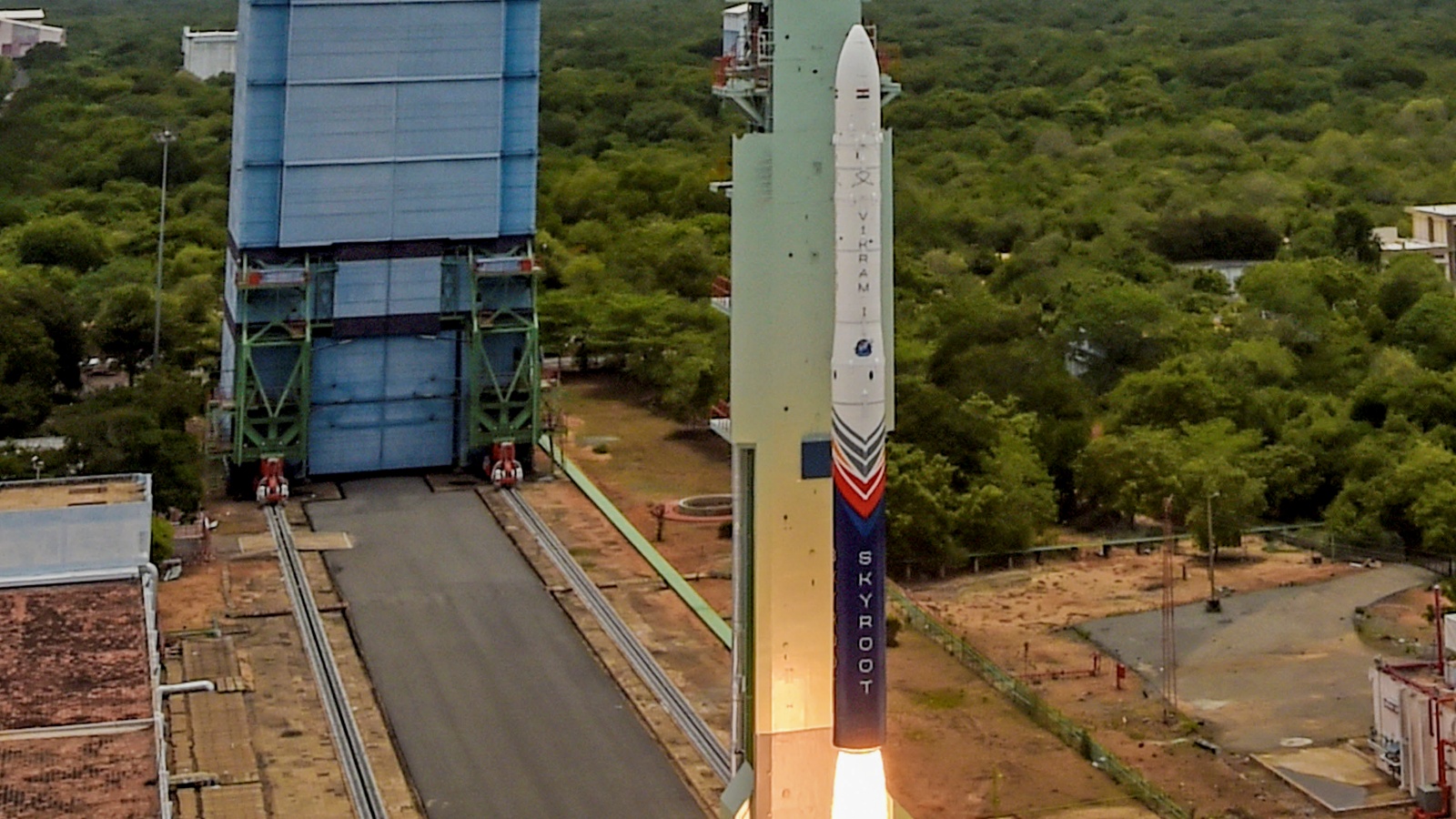
On July 18, 2026, Skyroot Aerospace's Vikram-1 rocket lifted off from the Satish Dhawan Space Centre in Sriharikota, becoming the first privately-built launch vehicle in India to achieve orbit around the Earth. The mission, named Aagaman ('arrival'), successfully deployed a set of technology demonstration satellites into low-Earth orbit at an altitude of approximately 450 km.
Prime Minister Narendra Modi described the launch as a defining moment in India's space journey. In a phone call with the co-founders of Skyroot, Pawan Kumar Chandana and Naga Bharath Daka, Modi noted that his government's decision to open the space sector to private players had been validated. 'There were lots of concerns raised, many said that this cannot happen,' Modi said. 'But because of you, my decision has been proven right.'
India becomes the third country, after the United States and China, to have private orbital launch capabilities. The Indian Space Research Organisation (ISRO) provided infrastructure and support for the launch from its facility in Sriharikota.
Vikram-1 is named after Vikram Sarabhai, the pioneer of India's space programme. Skyroot had previously flown a sub-orbital version, Vikram-S, in 2022. Another private company, Agnikul Cosmos, conducted a sub-orbital test of its Agniban rocket in 2024, which featured a 3-D printed engine.
The launch experienced a brief delay when the countdown was halted five minutes before the scheduled liftoff, but it resumed and the rocket lifted off at 12:05 PM IST. The satellite deployment was completed within about 20 minutes.
This development marks a significant step in the growth of India's private space sector, which has been actively encouraged by the government and ISRO.