VIT-AP Students Build Space Payload, Launched Aboard Skyroot’s Vikram-1 Rocket
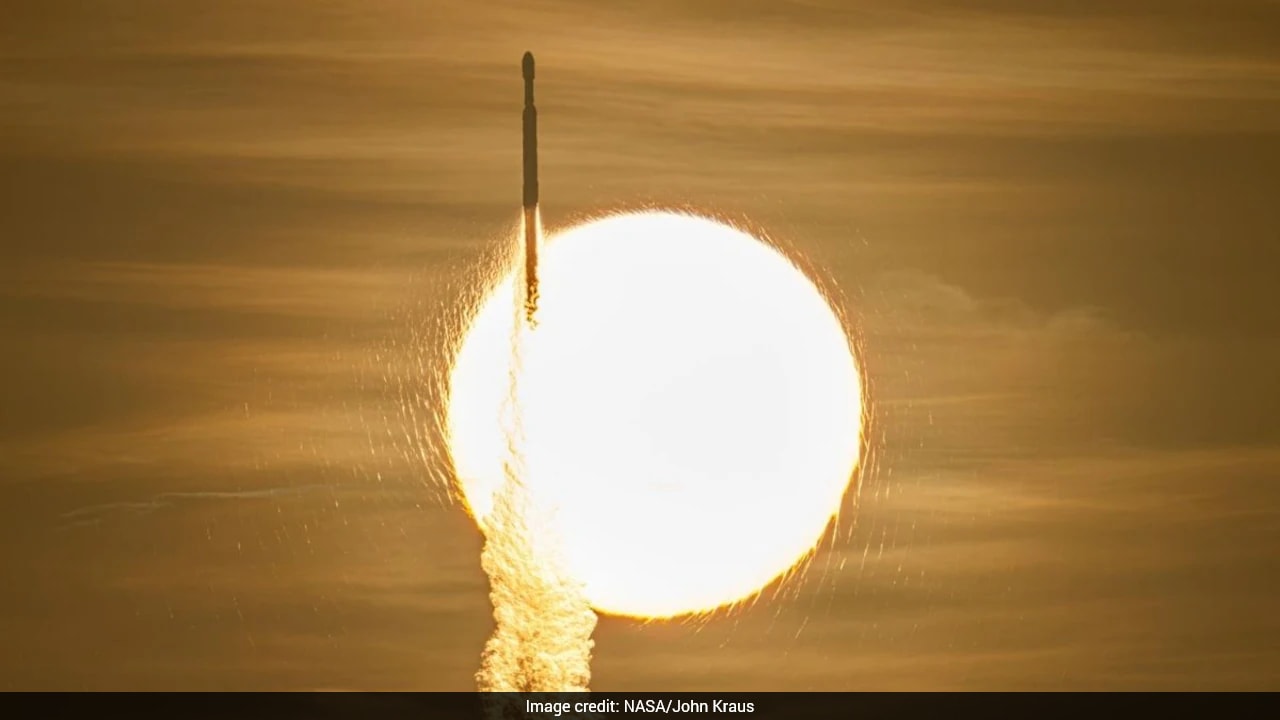
The VIT-AP University has announced the successful launch of VISWA-M (VIT Satellite Wavelength Analysis Module), an experimental space payload conceived, designed, and developed by its students and faculty. The payload was carried into orbit aboard the SOLARAS nanosatellite on Skyroot Aerospace’s Vikram-1 launch vehicle, which lifted off from the Satish Dhawan Space Centre (SDSC-SHAR), Sriharikota, at 12:05 p.m. on Saturday.
Among those who witnessed the historic launch from Sriharikota was Andhra Pradesh Minister for Education, IT and Electronics Nara Lokesh, accompanied by his son Devansh. The Minister described it as a proud moment for India’s scientific and technological progress.
During the mission, the Vikram-1 rocket deployed four small satellites with a combined payload mass of around 350 kilograms, demonstrating the capabilities of India’s growing private launch industry.
For VIT-AP University, the launch represents its first-ever spaceborne research payload, underscoring the institution’s commitment to cutting-edge research, innovation, and experiential learning.
VISWA-M has been developed to study the solar spectrum across multiple wavelength bands using Commercial Off-The-Shelf (COTS) components and compact sensing systems. The project was executed in collaboration with Bengaluru-based spacetech start-up Grahaa Space (Akshath Aerospace Private Limited) under a Memorandum of Understanding signed in 2023.
The mission, known as Mission SIDDHI, reflects the University’s expanding contribution to India’s emerging space ecosystem and provides students with invaluable hands-on exposure to every stage of space payload development, from conceptual design and system integration to testing and mission operations.
Key objectives of VISWA-M include measuring and analysing solar radiation across multiple wavelength bands, demonstrating a cost-effective hosted payload architecture suitable for academic satellite missions, and generating foundational datasets for future research in solar spectrum monitoring and miniaturised sensing technologies.
Vice Chancellor of VIT-AP University P. Arulmozhivarman said the successful deployment of VISWA-M reflects the University’s unwavering commitment to research-driven education and innovation. He noted that seeing a payload designed by students reach space highlights the value of experiential learning, strong academic mentorship, and productive industry partnerships, while contributing meaningfully to India’s growing space ecosystem.
Registrar Jagadish Chandra said the mission demonstrates how academic excellence, research, and industry collaboration can come together to produce meaningful technological innovation. Director of the Innovation, Incubation and Entrepreneurship Cell (IIEC) Ellison Mathe said the VISWA-M mission showcased the powerful synergy between academic research and entrepreneurial innovation. He said the partnership with Grahaa Space had given students an exceptional opportunity to participate in a real space mission while equipping them with advanced technical expertise, systems-thinking capabilities, and the confidence to address future challenges in the global space industry.
Professor Mahesh Miriyala, who mentored the student team, described the mission as an unforgettable experience.