Tamil Nadu excavation traces human occupation from Stone Age to Sangam era
Archaeologists in Tamil Nadu's Tenkasi district are uncovering a settlement on the banks of the Vaippar river that appears to have been continuously inhabited for thousands of years. The excavation at Malayadipatti near Karivalamvanthanallur, underway since April, has revealed a sequence of human occupation spanning from the Microlithic period to the Sangam era.
The Tamil Nadu State Department of Archaeology (TNSDA) has opened 18 trenches so far, uncovering microlithic stone tools, iron-working evidence, glass beads, terracotta figurines, and graffiti-marked pottery. Unlike northern Tamil Nadu, this site shows a direct transition from the Microlithic to the Iron Age and then to the Early Historic period, bypassing the Neolithic and Chalcolithic phases. This pattern matches discoveries at other sites like Mangudi, Sivagalai, and Adichanallur.
One of the most significant finds is a large brick structure measuring 8.7 metres by 4.2 metres, built with bricks of size 40 x 20 x 7 centimetres. The structure includes descending steps and is believed to have functioned either as an underground granary or a rainwater harvesting tank. Its design suggests advanced water management, despite the settlement's proximity to the Vaippar river. The bricks are similar to those found at Keeladi, Alagankulam, and Poompuhar, indicating that the structure dates to the Early Historic or Sangam period. Soil analysis and carbon dating are underway to determine its precise function and age.
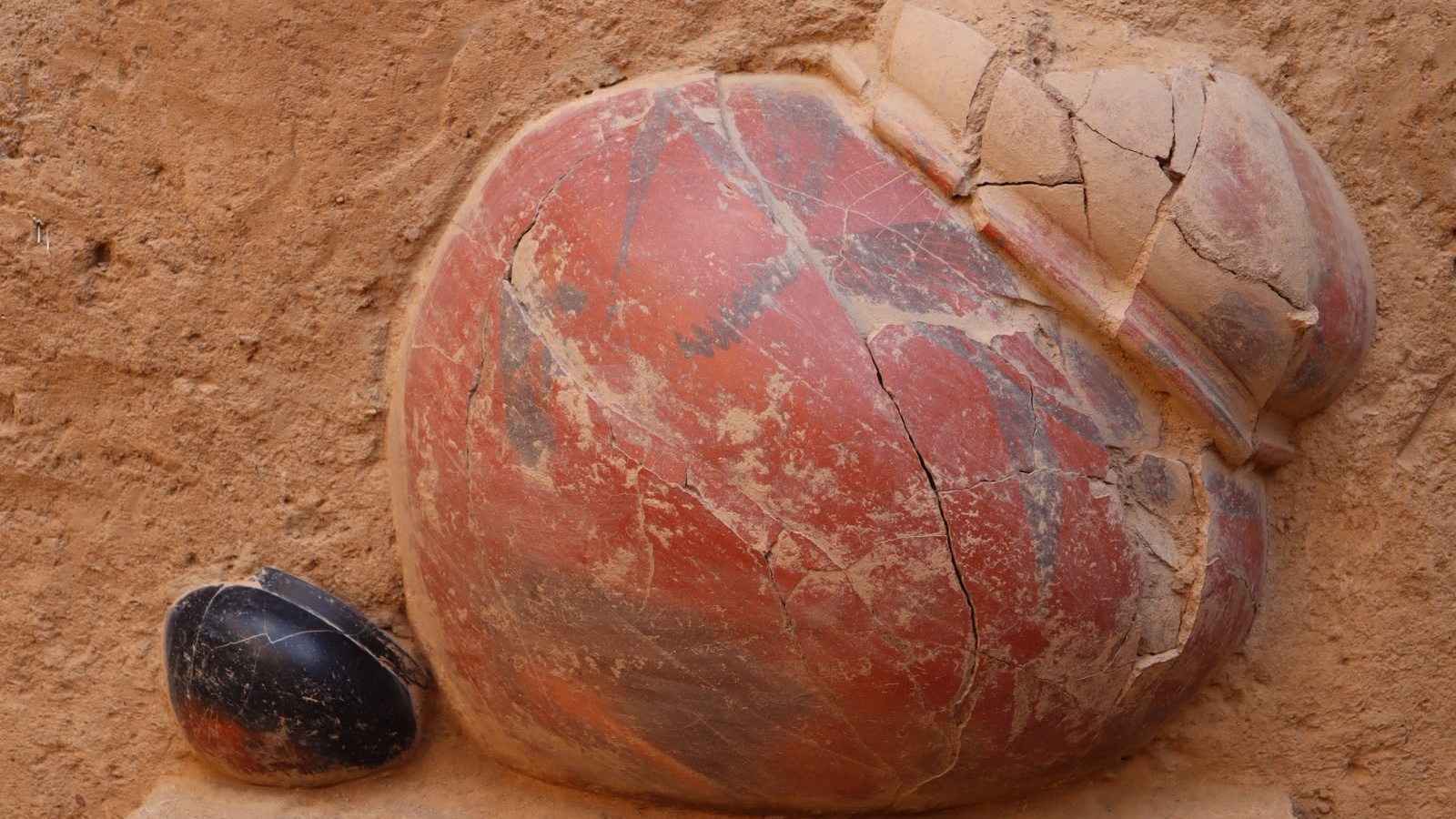
Another notable discovery is a red-slipped burial pot decorated with painted peacocks. Molar and premolar teeth found outside the pot, along with a black-and-red ware vessel beneath it, suggest it was a burial urn. Peacocks have been associated with burials at Porunthal and even Harappan sites, and Sangam literature such as Akananuru mentions decorating memorial stones with peacock feathers. This find bridges archaeological evidence with ancient Tamil literary traditions.
The site's importance was first recognized over 90 years ago when Roman coins were reported from the region. Then Tirunelveli Deputy Collector L A Cammiade surveyed the area, and the Madras Museum's 1932-33 annual report documented glass beads and burial urns from local residents. The current excavation confirms that the settlement was not just inhabited over centuries but also functioned as a manufacturing centre, with evidence of iron extraction, glass bead production, and craft debris.
The discoveries at Karivalamvanthanallur add to Tamil Nadu's rich archaeological landscape, offering insights into the continuity of human habitation and industrial activity in southern India. The excavation is part of the state's broader archaeological programme that includes the famous Keeladi site.