Kilauea Volcano Eruption: Lava Fountains Reach 700 Feet in Ongoing Episode
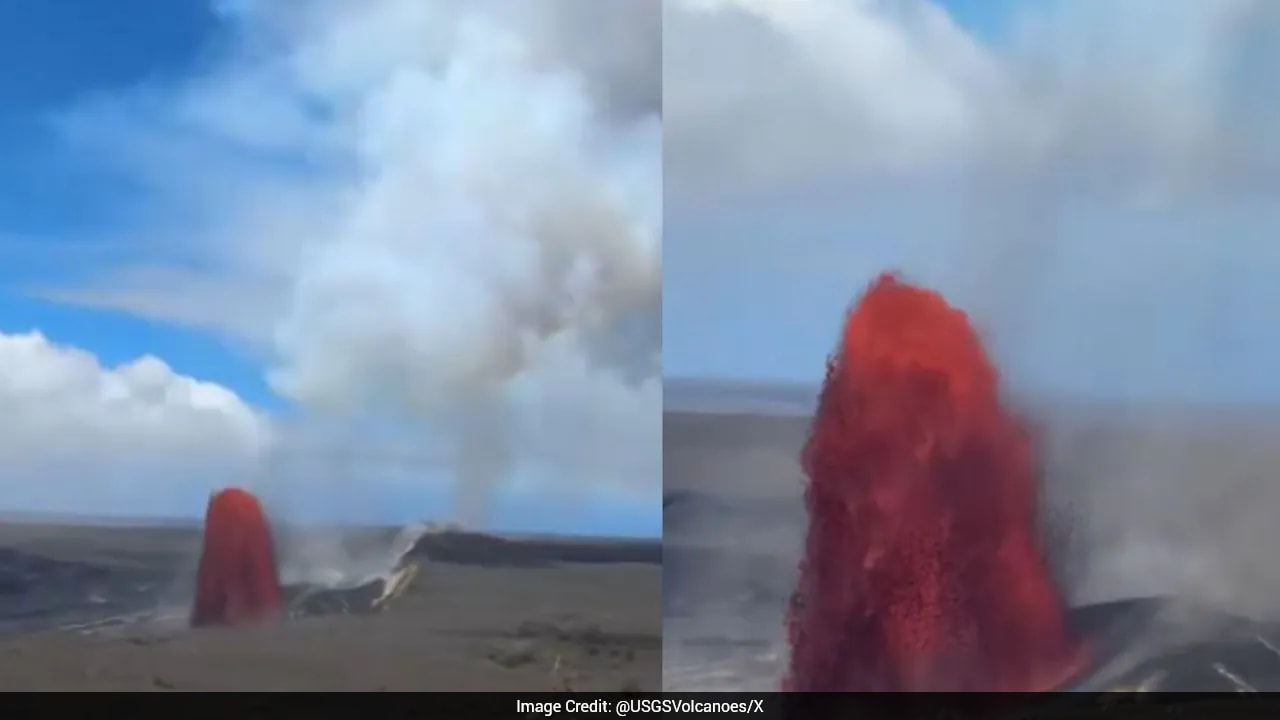
The Kilauea volcano in Hawaii continues to exhibit lava fountaining at its summit, with fountains from the north vent reaching an estimated height of 600 to 700 feet (about 180 to 210 metres), according to the United States Geological Survey (USGS) Volcanoes.
The update was posted on the USGS Volcanoes X account, accompanied by a video of the eruption. The post stated that Episode 50 of the summit lava fountaining began at 10:10 a.m. Hawaii Standard Time (HST) on 27 June and was still ongoing at the time of the report.
This activity is part of an eruption that started on 23 December 2024 within the Kilauea summit caldera, located inside the Hawai'i Volcanoes National Park. The USGS noted that the lava fountain from the north vent remains the most prominent, with heights measured above the vent opening.
Wind conditions are also a factor in the dispersal of volcanic material. The National Weather Service provided data on surface winds below the inversion level, which is approximately 8,000 feet (2,400 metres) above sea level. These winds are expected to be moderate to strong trade winds from the northeast, potentially moving the lower part of the plume towards the southwest. This could lead to tephra fall — fragmented volcanic material — in that direction.
Above the inversion level, very light winds are forecast up to 18,000 feet (5,500 metres), which may allow the plume to spread out. Higher up, winds become stronger and more westerly, possibly pushing parts of the plume towards the east and resulting in ash and Pele's hair — thin strands of volcanic glass — falling in that area.
The USGS explained that fountaining episodes typically last 12 hours or less, though volcanic ash can remain in the air for longer depending on wind and weather conditions. Authorities have advised the public to remain aware of hazards and to follow official updates from the USGS, the National Weather Service, and Hawai'i Volcanoes National Park.