NASA's Perseverance Rover Finds Surprise Gemstone-Related Minerals on Mars
Scientists have announced an unexpected discovery on Mars: a laser analysis conducted by NASA's Perseverance rover has identified minerals on the Red Planet that are linked to gemstones on Earth. The finding, reported in the journal Geophysical Research Letters, could reshape our understanding of Mars's geological past.
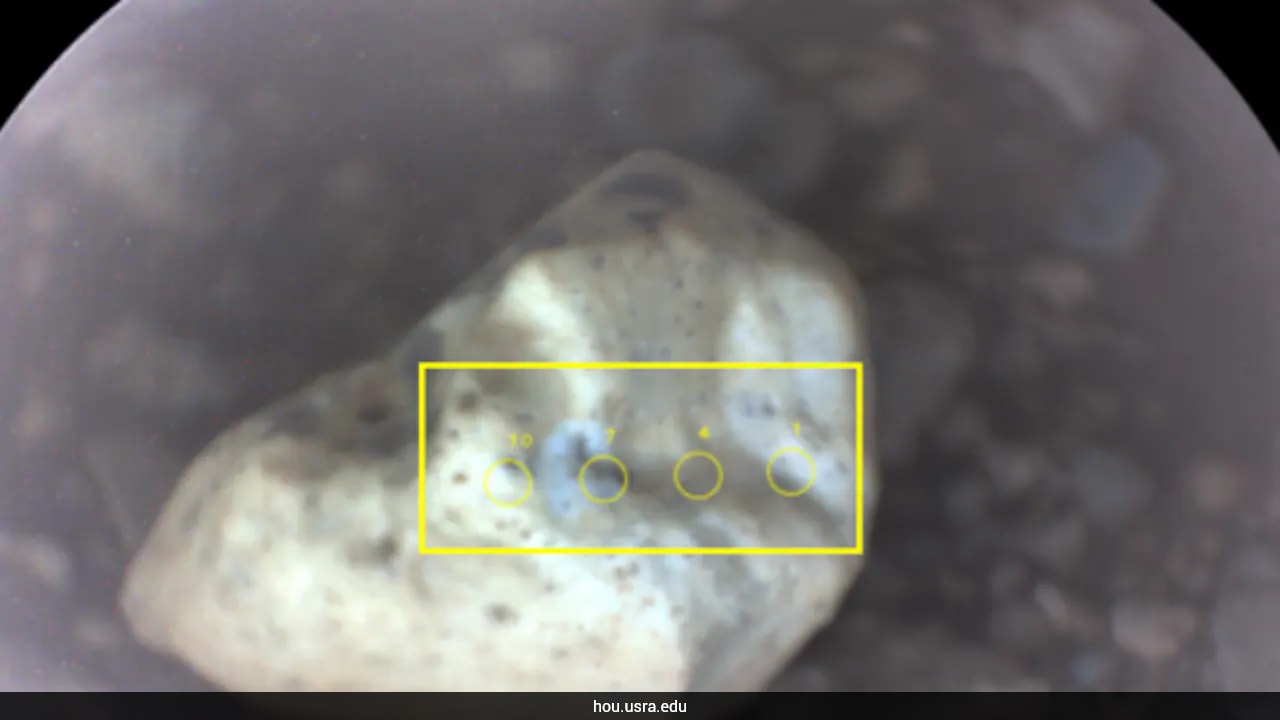
The discovery occurred in Jezero Crater, an ancient lakebed that the rover has been exploring since its landing in February 2021. Researchers used the rover's SuperCam instrument, which fires a laser at rocks to vaporise tiny amounts of material and analyse their chemical composition. In three rocks collected from the crater rim, the instrument detected unusually high concentrations of chromium-bearing corundum — a mineral that, on Earth, forms the basis for rubies and sapphires.
What surprised the research team was not just the presence of the mineral, but its location. According to a conference abstract led by geochemist Ann Ollila of Los Alamos National Laboratory, the rocks were plagioclase-rich float rocks, which are typically not associated with such mineralisation. The finding suggests that Mars may have experienced more complex geological processes than previously assumed.
The leading explanation for the formation of these minerals involves the interaction of hot, water-rich fluids with existing rock formations. When water moves through cracks and fractures, it can dissolve and redeposit minerals, creating conditions favourable for crystal growth. On Earth, similar hydrothermal processes are known to produce gemstones. The presence of such minerals on Mars provides further evidence that liquid water once played a significant role in shaping the Martian landscape.
Beyond the immediate scientific intrigue, the discovery has broader implications for the search for ancient life on Mars. Scientists believe that hydrothermal systems, which involve heated water circulating beneath the surface, could have provided a suitable environment for microbial life billions of years ago. Understanding how and where these systems existed is crucial for assessing the planet's habitability over time.
The minerals also offer clues about the history of volcanic activity on Mars. Corundum is typically associated with aluminium-rich rocks that have undergone high-temperature metamorphism or igneous processes. By studying the composition and distribution of these minerals, scientists can reconstruct the thermal and fluid history of the region with greater precision.
Perseverance continues to collect rock and soil samples that are intended to be returned to Earth in a future mission. These samples, once analysed in laboratories on Earth, could reveal even more details about the conditions that prevailed on Mars when these minerals formed. Researchers are particularly interested in determining the exact age of the rocks and the duration of the hydrothermal activity that produced them.
This unexpected find serves as a vivid reminder that Mars retains many secrets. Even rocks that appear ordinary at first glance can, upon closer examination, reveal remarkable stories about the planet's dynamic past. As NASA continues its exploration, each new discovery adds a piece to the intricate puzzle of understanding whether Mars ever supported life and how its environment evolved over billions of years.
The study, led by Ann Ollila and her colleagues, is among the latest contributions to a growing body of evidence that Mars was once a far more active and water-rich world than it is today. While the gemstone-like minerals are not themselves evidence of life, they provide important contextual information about the chemical and physical processes that shaped the planet's surface and subsurface.
As the rover continues its mission, scientists remain alert for further surprises. The findings from Jezero Crater are expected to guide future exploration strategies, including the selection of sampling sites that may hold the best-preserved records of ancient Martian environments.