ISRO Chief Confirms First Uncrewed Gaganyaan Mission This Year
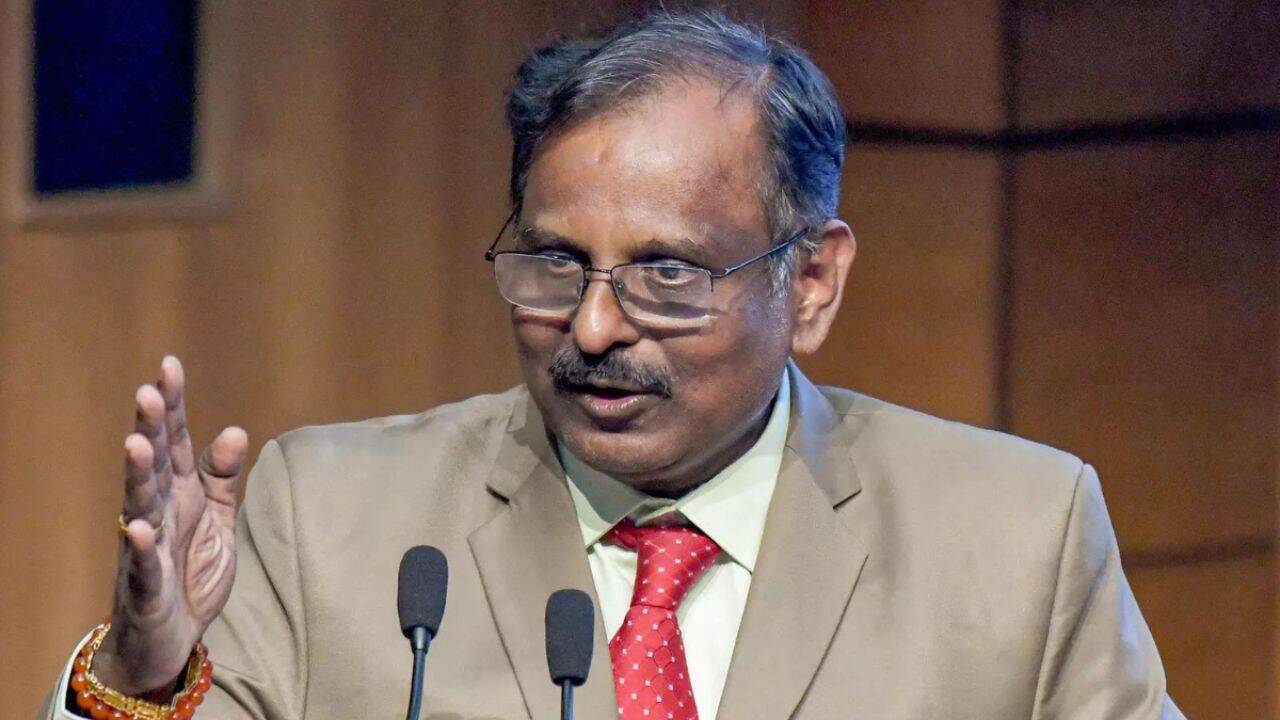
Indian Space Research Organisation (ISRO) Chairman V Narayanan announced that the space agency is working towards launching the first uncrewed mission of the Gaganyaan programme within this year. Speaking at a press conference in Bengaluru, Narayanan stated that the mission, designated G1, will test the crew module and its systems without astronauts on board.
Gaganyaan is India's ambitious human spaceflight programme, aimed at demonstrating the capability to send humans to low-Earth orbit and bring them back safely. The uncrewed flight is a critical precursor to the crewed mission, which is targeted for 2025 or later, depending on the success of preliminary tests.
Narayanan emphasised that the G1 mission will validate the performance of the launch vehicle, crew escape system, and orbital module. He said, 'We are working on the first uncrewed Gaganyaan mission this year. All systems are being integrated and tested.' The mission will likely use the Geosynchronous Satellite Launch Vehicle Mk III, which has been human-rated after multiple modifications.
The announcement comes after years of preparation, including the testing of key technologies such as the crew escape system and the recovery of crew modules. ISRO has also completed astronaut training for the crewed mission, with four Indian Air Force pilots undergoing training in Russia and India.
Challenges remain, including ensuring the reliability of life-support systems and handling the extreme conditions of spaceflight. However, ISRO has a track record of mastering complex technologies, and the Gaganyaan programme is proceeding with a cautious, step-by-step approach.
The uncrewed mission will also carry payloads for scientific experiments, making it valuable for research beyond human spaceflight. If successful, India will become the fourth nation to independently send humans to space, after the United States, Russia, and China.
Narayanan did not specify a timeline for the subsequent crewed mission, but stated that data from G1 will inform the final design and safety assessments. He concluded, 'We are committed to a safe and successful mission, and we will launch only when we are ready.'