ISRO Chairman Hints First Uncrewed Gaganyaan Flight May Slip to 2027
Indian Space Research Organisation (ISRO) Chairman V Narayanan indicated on Saturday that the first uncrewed test flight for the Gaganyaan mission could be pushed back to the third quarter of 2027, while also stating that efforts are underway to achieve a launch by the end of 2026.
Speaking at the Air Marshal L M Katre memorial lecture in Bengaluru, Narayanan showed a slide suggesting the first unmanned flight would launch in Q3 2027. However, during his talk, he said the agency is working towards launching the first uncrewed mission this year, with results informing subsequent crewed missions.
“The Gaganyaan program is a very important technology-intensive mission, and human safety is very important,” Narayanan said. He highlighted the need for a human-rated rocket and a crew escape system to ensure astronaut safety. The program includes three uncrewed missions before the final crewed launch.
When questioned about the conflicting timelines in his slides and speech, Narayanan explained that the program undergoes constant review, and the launch date will be based on progress. The Gaganyaan mission was originally set for a 2022 launch, but has faced multiple delays, including due to the COVID-19 pandemic.
If the first unmanned flight occurs in Q3 2027, the crewed mission could slip to 2028. The Indian astronauts selected for Gaganyaan have been training, incorporating best practices from their training in Russia and the Axiom-4 mission.
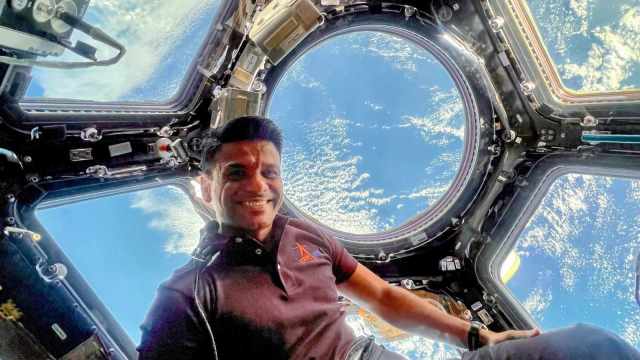
In his lecture, Narayanan also highlighted the role of Indian scientists in ensuring the safe launch of the Axiom-4 mission in June 2025, which carried Indian astronaut Shubhanshu Shukla to the International Space Station. Indian scientists insisted on stopping the launch due to a minor leak, which was later found to be a crack in a main line. The launch proceeded successfully after repairs.
Narayanan also addressed recent ISRO setbacks, including two successive failures of the PSLV rockets in 2025 and 2026, and reduced functionality of the NavIC satellite system, now down to three satellites. He emphasised the importance of learning from these challenges.