Israel and Lebanon sign US-brokered framework agreement: 'First step' toward peace

Secretary of State Marco Rubio, alongside the Israeli and Lebanese ambassadors to the United States, announced a framework agreement on Friday (June 26, 2026) that was described as a first step toward peace after months of conflict between Israel and the Lebanese militant group Hezbollah.
The agreement does not include Hezbollah, and one of the group's officials in Lebanon warned of civil war. The U.S. State Department said the framework establishes a process for dismantling Hezbollah and for Lebanon to regain territory taken by Israeli forces as they battled the group.
The United States will facilitate a newly created 'Military Coordination Group for Lebanon' to implement the framework, the State Department said, while committing $100 million in humanitarian assistance.
'For Lebanon, this Framework provides a genuine pathway out of a long crisis,' the State Department said. 'For Israel, it creates a verifiable path to removing the persistent threat on its northern border.'
The agreement was signed in Washington by Yechiel Leiter, the Israeli ambassador to the United States, and Nada Hamadeh Moawad, the Lebanese ambassador to the United States.
Mr. Leiter said the final destination of the framework is peace between the two countries. 'Our language is we want to embrace Lebanon,' he said. 'Our language is we want to get in our car in Tel Aviv and take a drive up to Beirut, and we want Beirut to come down and take a drive to Tel Aviv. That's where we're going. That's where we want to go.' He added that this will depend on Hezbollah being disarmed and dismantled, which would allow Israel to withdraw and Lebanon to 'regain its full sovereignty.'
Mr. Moawad said the framework 'is a first step on the road to restoring Lebanese sovereignty and territorial integrity, securing a permanent and final cessation of hostilities, enabling our people to go back to their land and allowing all Lebanese to live in peace, security and prosperity.'
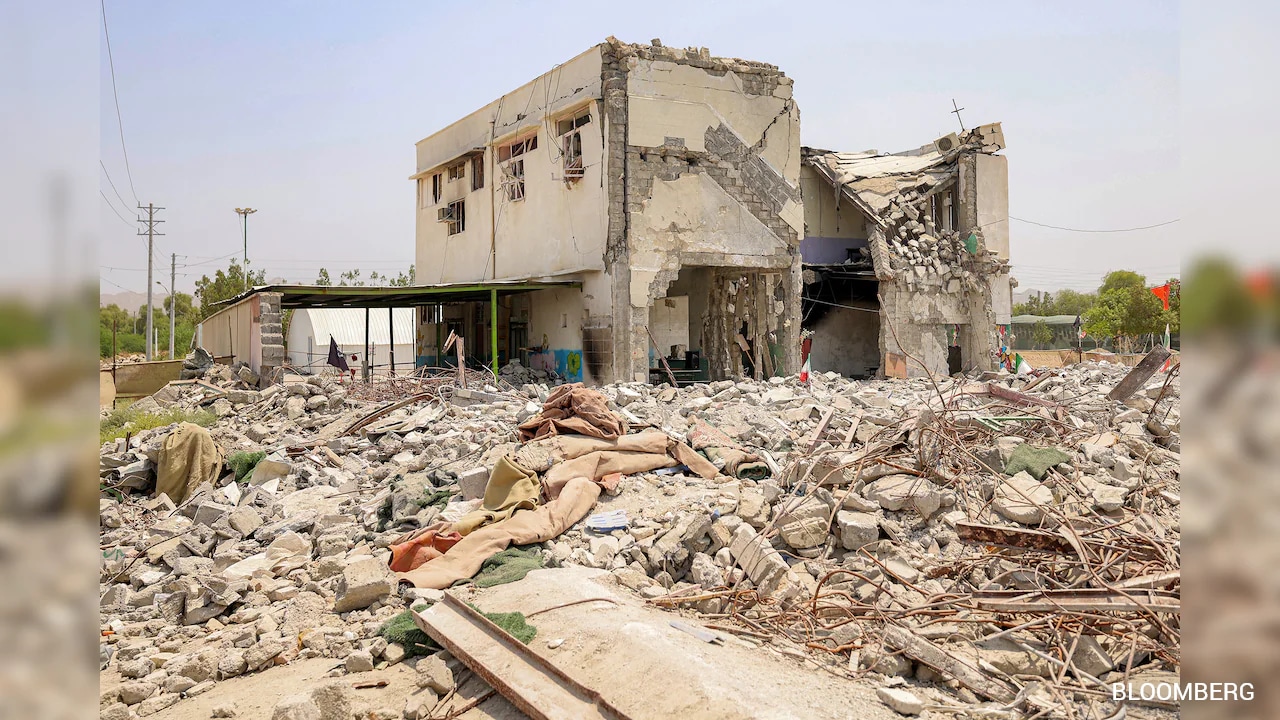
The latest conflict began when Hezbollah fired rockets into Israel days after Israel and the United States launched their war on Iran on February 28. Israel subsequently invaded Lebanon and expanded its control there.
More than 4,000 people in Lebanon have been killed in Israeli strikes since March. At least 37 Israeli soldiers have been killed in Lebanon or northern Israel during the fighting.
Lebanese officials have said that securing a withdrawal of Israeli forces from southern Lebanon is a top priority, while Israeli officials have prioritised the disarmament of the Iran-backed Hezbollah.
The talks between Israel and Lebanon were separate from the interim deal signed last week by the leaders of the United States and Iran to end the fighting in the Islamic Republic. That agreement set a 60-day period for negotiations on key issues, including the future of Tehran's nuclear programme amid concerns that Iran wants to use it for military purposes, a claim the country denies.
The Lebanese government had been wary of having Iran negotiate on its behalf and launched its own direct negotiations with Israel after the outbreak of the latest Israel-Hezbollah war. Hezbollah was not part of the talks, which resulted in several ceasefire agreements that were never implemented on the ground.
Hezbollah is unlikely to agree to any plan that would include its disarmament throughout the country. The group has maintained that it is only required by previous agreements and UN resolutions to disarm in the area south of the Litani River, near Lebanon's border with Israel.
Hassan Fadlallah, a member of Hezbollah's parliamentary bloc, reiterated the group's stance on Beirut-based pan-Arab Al-Mayadeen TV that it rejects Lebanon's direct negotiations with Israel and will not give up its weapons. 'We will not accept any agreement that requires us to disarm,' he said.