Canada wildfire: Peachland evacuees face 'total incinerated destruction' as losses assessed
PEACHLAND, Canada — For 30 years, Earl Kurz and his wife have called this town overlooking Okanagan Lake home. In the past decade, he said, wildfires have become a familiar threat to the community. But never before had they been forced to flee.
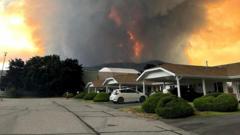
That changed last Friday when the Bald Range wildfire broke out and exploded within hours to 136 square kilometres, forcing evacuations across the region. By Monday, the fire remained out of control, and Kurz was among the first residents allowed to return to survey the damage.
“It's total incinerated destruction,” Kurz said, describing what he saw. “The hot spots are just barren areas of nothing except 12 inches of ash.”
Officials in British Columbia are still working to determine how many homes were lost. The province has declared a state of emergency, and thousands of residents remain under evacuation orders. Emergency responders are focusing on protecting structures and containing the blaze, but shifting winds and dry conditions have complicated their efforts.
The Bald Range fire is one of several burning across the province this summer. Climate scientists have noted that heat waves and prolonged drought have made vegetation drier and more combustible, increasing the intensity and frequency of wildfires in Western Canada. While individual fires cannot be directly attributed to climate change, the broader trend is consistent with projections.
For Kurz, the loss is deeply personal. He and his wife built their life around the lake and the surrounding forests. “We knew this could happen, but you never think it will happen to you,” he said. Many evacuees are now wondering whether their homes are still standing, waiting for official word even as they grapple with uncertainty.
Local authorities have set up reception centres for evacuees, offering temporary housing and mental health support. Meanwhile, firefighters from other provinces and countries have arrived to assist. The Canadian government has also pledged federal resources to support the response.
As the fire continues to burn, officials urge residents to follow evacuation orders and avoid returning to affected areas until they are declared safe. The emotional toll, they acknowledge, is immense.
“This is a difficult time for everyone,” said a spokesperson for the Regional District of Okanagan-Similkameen. “Our priority is the safety of residents and first responders.”
Kurz said he is grateful to be alive, but the scale of destruction has left him numb. “You lose so much more than things,” he said. “You lose the sense of home.”
The coming days will bring clearer answers about the extent of the damage. For now, evacuees like Kurz wait, hoping for the best while preparing for the worst.