Colombia's Strongest Earthquake in a Century Kills 132, Rescue Underway
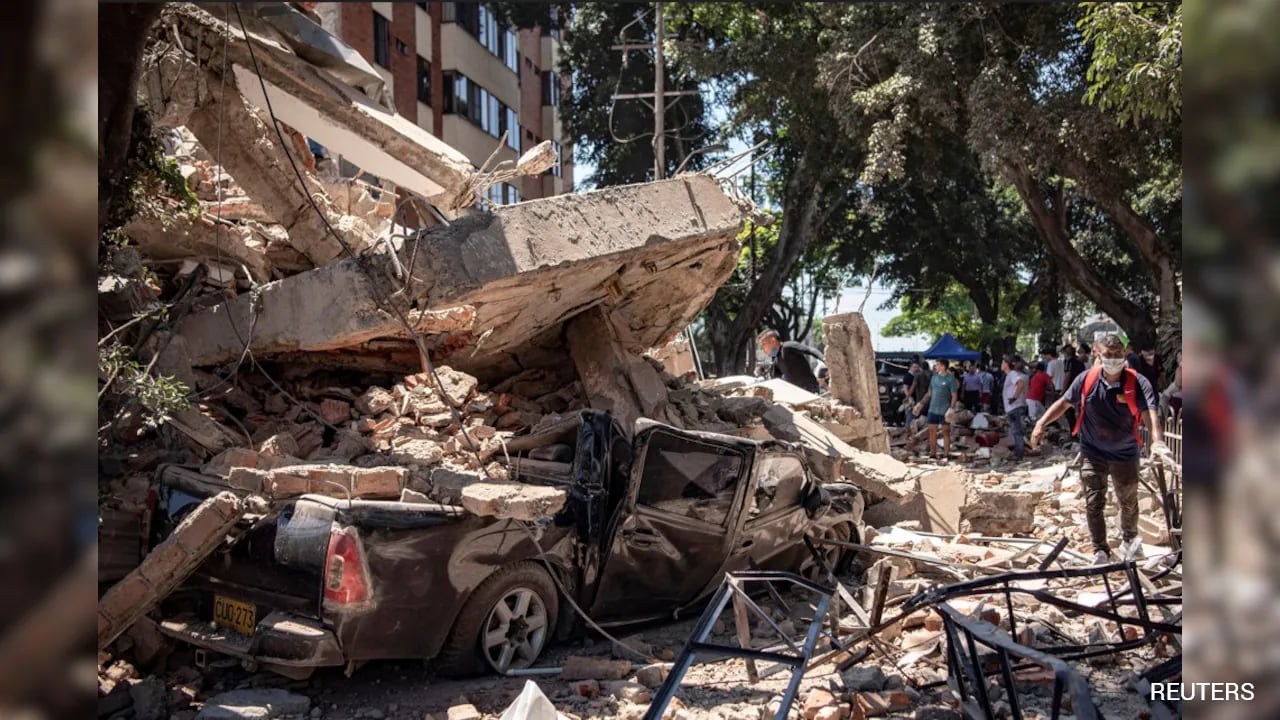
A powerful earthquake of magnitude 7.4 struck western Colombia on Monday, killing at least 132 people and injuring about 570 others, according to official figures. The tremor, which the Colombian Geological Service described as the strongest recorded in the country in the 21st century, caused widespread destruction in several cities and triggered immediate rescue efforts.
The quake rattled a large part of Colombia, forcing residents in urban areas to evacuate buildings. In the affected cities, rescue crews and volunteer residents began digging through the rubble of collapsed homes and commercial structures, searching for survivors. The Colombian Geological Service reported at least 21 aftershocks and cautioned that additional tremors could not be ruled out, heightening the sense of urgency.
The disaster came only days after President Abelardo De La Espriella was sworn into office, making it the first major challenge for his administration. In a nationally televised address, Mr. Espriella declared a state of emergency to speed up the release of funds for rescue and reconstruction. He said at least 1,575 homes, 18 health centres and 52 schools had been damaged, and that 61 buildings had completely collapsed.
"We aren't going to leave people alone. They are in our hearts and we are going to tend to people with our full determination," the President said. The damage to facilities such as hospitals and schools is expected to hamper medical treatment and education in the affected areas for some time.
Video footage shared on social media showed a four-storey building crumbling to the ground in Pereira during the earthquake. In Manizales, one of the side towers of the city's landmark neo-Gothic cathedral collapsed, scattering debris into the streets below. In Cali, Caracol Television broadcast a video of a group of people pulling a six-month-old girl, covered in dust, from underneath a five-storey building. The broadcaster said the infant and her mother were rescued alive. Another clip from the same city showed rescue workers using ropes to lower patients from the upper floors of a hospital to safety.
The epicentre of the earthquake was located in the Choco region, one of Colombia's poorest and most isolated areas, characterised by dense jungle and scattered river settlements. Much of Choco is accessible only by boat or small aircraft, which is likely to complicate damage assessment and the delivery of humanitarian assistance. The region sits along the "Ring of Fire," a horseshoe-shaped zone of intense seismic and volcanic activity that encircles the Pacific Ocean and accounts for the majority of the world's earthquakes.
Monday's earthquake is Colombia's strongest since the beginning of the century, according to the Colombian Geological Service. It also evokes painful memories in the region, coming just months after twin earthquakes devastated parts of neighbouring Venezuela, leaving hundreds dead and displacing thousands.
Northwestern University seismologist Suzan van der Lee told Reuters that the quake's powerful magnitude, inland location and strike-slip motion may have amplified damage in populated valleys, despite its considerable depth. "This one was far below the crust, and in theory it shouldn't cause as much shaking. At this magnitude, it did actually cause a lot of shaking," she said. She added that Colombia's unique geology, with multiple tectonic plates converging beneath its territory, makes it especially difficult for scientists to forecast seismic activity.
As rescue operations continued through the night, officials said the death toll was likely to rise with more bodies expected to be recovered from the debris. The President has pledged to mount an extensive search-and-rescue operation and to provide assistance to all affected families.