Yemen's Truce Frays as Houthi-Saudi Attacks Raise War Fears
The fragile truce in Yemen, brokered by the United Nations in April 2022, is facing its most serious test yet. A series of tit-for-tat attacks between the Houthi movement and the Saudi-led coalition has raised fears of a return to large-scale conflict, even as the Middle East grapples with wider tensions following the collapse of a ceasefire between the United States and Iran.
The United Nations Special Envoy for Yemen, Hans Grundberg, warned that the country faces a greater risk of renewed large-scale fighting than at any point since the truce began. "The escalation risks jeopardising the gains of the 2022 truce," he said, adding that it could draw Yemen into a broader regional confrontation with devastating consequences for its people. Grundberg said he has engaged in intensive talks with Yemeni parties and regional governments to avert further escalation.
The current spiral began on July 13, when a Saudi airstrike hit the runway of Sanaa International Airport. The strike prevented the landing of an Iranian flight carrying a high-ranking Houthi delegation. The aircraft, operated by Mahan Air, an Iranian airline under U.S. sanctions, had attempted to fly without prior permission from the Saudi-led coalition—a requirement in place since the coalition entered the conflict a decade ago.
The Houthis, emboldened by the fallout from the U.S.-Israeli conflict with Iran, had sought to challenge the coalition's control over Yemeni airspace and press for the lifting of a Saudi blockade on territories they control. According to officials from both sides, the Houthis rejected an offer from the internationally recognised Yemeni government to travel on a non-Iranian carrier. The offer would have facilitated the delegation's journey to Sanaa without violating the coalition's restrictions, but the rebels insisted on the Mahan Air flight.
Amid Omani mediation, the coalition later allowed the plane to land in the Houthi-controlled city of Hodeida, a step seen as an effort to avert further escalation. But the damage was done, and the incident set off a chain of retaliatory actions.
Following the Sanaa airport strike, the Houthis attacked Abha airport in southwestern Saudi Arabia and announced a blockade on Saudi shipping in the Red Sea. They also targeted Saudi vessels and oil facilities, adding further disruption to the global economy. In response, the Saudi-led coalition carried out strikes on Hodeida and the island of Kamaran, Yemen's largest island in the Red Sea. The coalition also reinforced Yemeni troops along front lines, raising the possibility of a ground offensive.
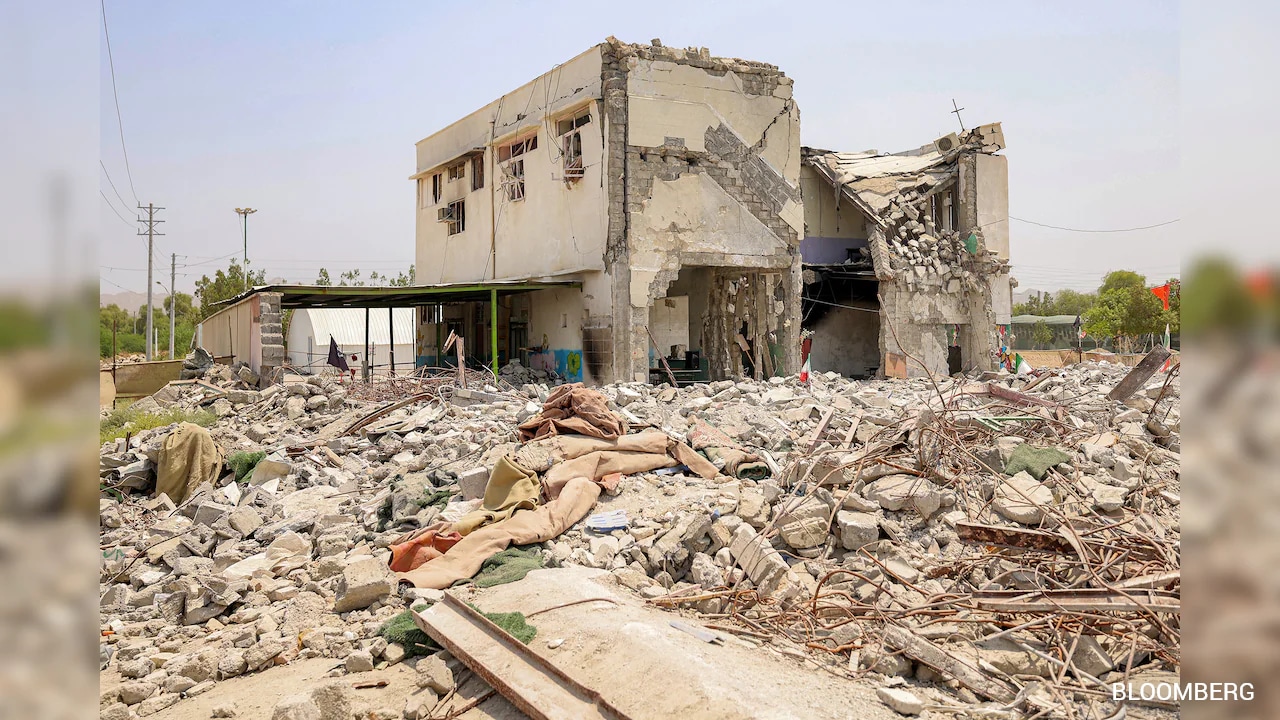
The Houthis, anticipating such an offensive, launched dozens of missiles and drones at military camps in central and southern Yemen, killing dozens of troops and civilians. They also struck the port city of Mokha, severely damaging its crucial harbour, which remains under the control of the internationally recognised government.
Analysts point to a combination of factors behind the escalation. The Mahan Air episode is seen as part of Iran's broader strategy. "By activating the Yemeni front, Tehran reiterates the strategic value of that pressure lever," said Yasmeen al-Eryani of the Sana'a Centre for Strategic Studies. She argued that attacks on Iran can produce costs elsewhere, particularly for Saudi Arabia and the Gulf states.
At the same time, the Houthis face growing internal pressures. A prolonged situation of "no war, no peace" has raised public expectations for tangible economic and living improvements, according to Yemeni researcher Salah Ali Salah. He suggested the group is attempting to shift blame for its failures onto Saudi Arabia and its blockade, framing the escalation as an extension of the Yemen war rather than a new front in a regional conflict.
The UN envoy said he has engaged in intensive talks with Yemeni parties and regional governments to avert further escalation. However, with both sides seemingly entrenched, the prospects for a peaceful resolution remain uncertain. The international community watches closely as a conflict that has already caused immense suffering threatens to reignite.