How a Judge's Verdict in Allahabad Set the Stage for India's Emergency
The Emergency of 1975, which began on the night of 25-26 June, had its legal origins in a courtroom in Allahabad two weeks earlier. On 12 June 1975, Justice Jagmohanlal Sinha of the Allahabad High Court delivered a verdict that set aside Prime Minister Indira Gandhi's election from Rae Bareli, finding her guilty of corrupt practices. This judgement triggered a political crisis that led to the declaration of Emergency.
The case began after the 1971 general elections, when Raj Narain, the defeated candidate, filed an election petition under the Representation of the People Act, 1951. He alleged misuse of official machinery, excessive campaign expenditure, and the involvement of Yashpal Kapoor, a former employee of the Prime Minister's Secretariat who had joined her campaign. The case focused on whether Kapoor had begun election work before resigning from government service, which would constitute a corrupt practice under election law, as government servants cannot assist a candidate's campaign.
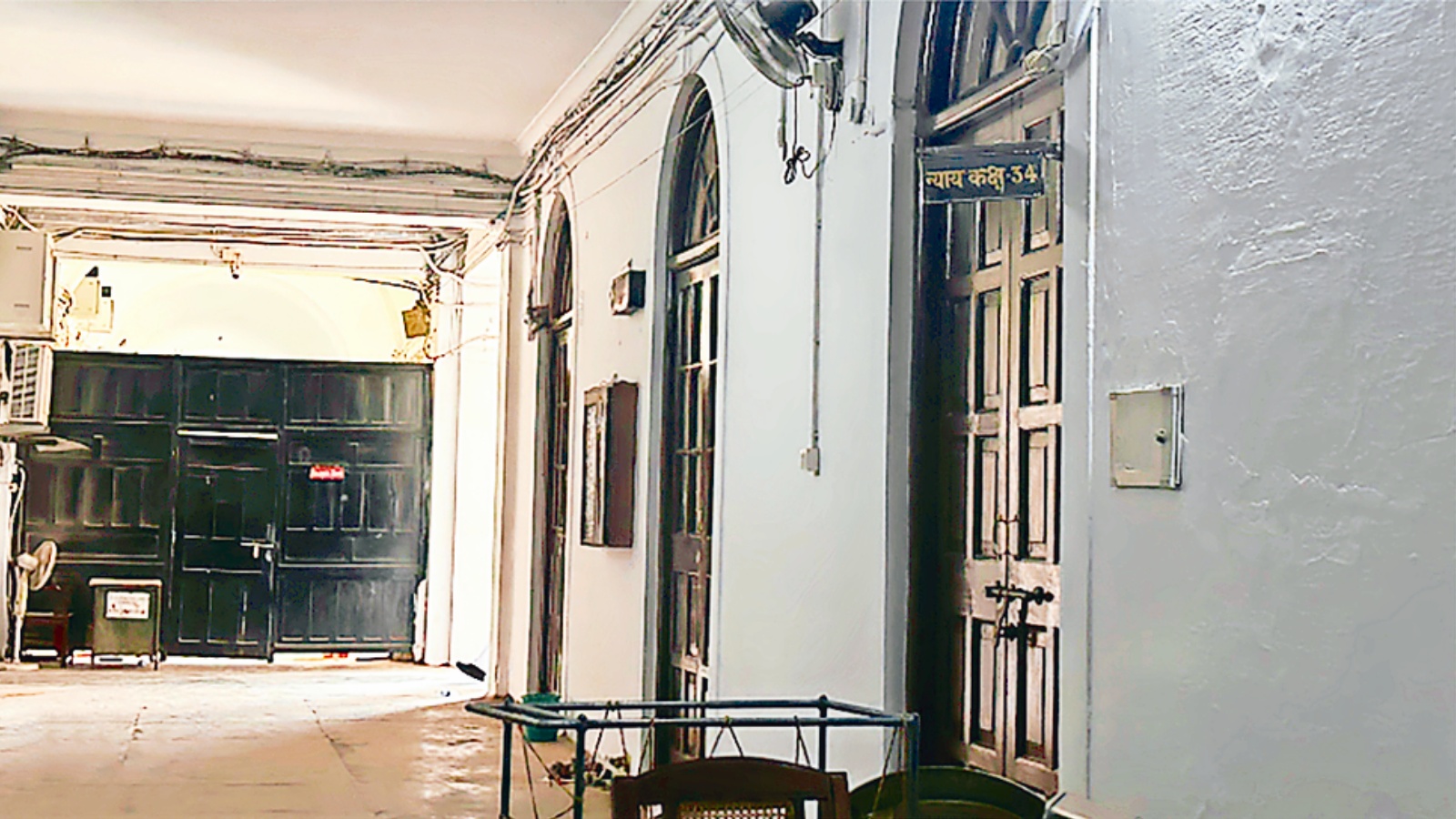
The trial was held in Court No. 24 of the Allahabad High Court, a room chosen for security reasons. When Indira Gandhi appeared as a witness on 8 March 1975, the court was packed. Security was tight, with police guards, restricted entry, and a metal detector. The Prime Minister was treated as a witness, not a head of government; she was allowed to sit on a raised platform to the right of the judge, but the court did not require anyone to rise when she entered. Her counsel examined her, followed by cross-examination by Shanti Bhushan, Raj Narain's lawyer.
Justice Sinha delivered his verdict on 12 June 1975, setting aside the election on limited grounds related to Kapoor's role and official arrangements. He granted a short stay to allow an appeal. The Congress party rallied behind Indira Gandhi, while the Opposition called for her resignation. On 24 June, the Supreme Court allowed her to continue as Prime Minister but restricted her voting rights in Parliament. The political deadlock escalated, and on 25 June, the government declared a state of Emergency, citing internal disturbances. Civil liberties were suspended, opposition leaders arrested, and the press censored.
The Allahabad High Court verdict thus served as the legal preface to the Emergency. It exposed the tensions between constitutional processes and political power, and the events that followed reshaped Indian democracy for the next 21 months.