Adani Charges Dropped in U.S.; Rahul Gandhi Accuses PM of Selling India's Interest

A U.S. federal judge has permanently dismissed criminal charges against Gautam Adani, chairman of the Adani Group, and his nephew Sagar Adani, ending a legal battle that had cast a shadow over the conglomerate for nearly two years. District Judge Nicholas Garaufis of the Eastern District of New York approved the U.S. Justice Department's request to drop the case on Wednesday.
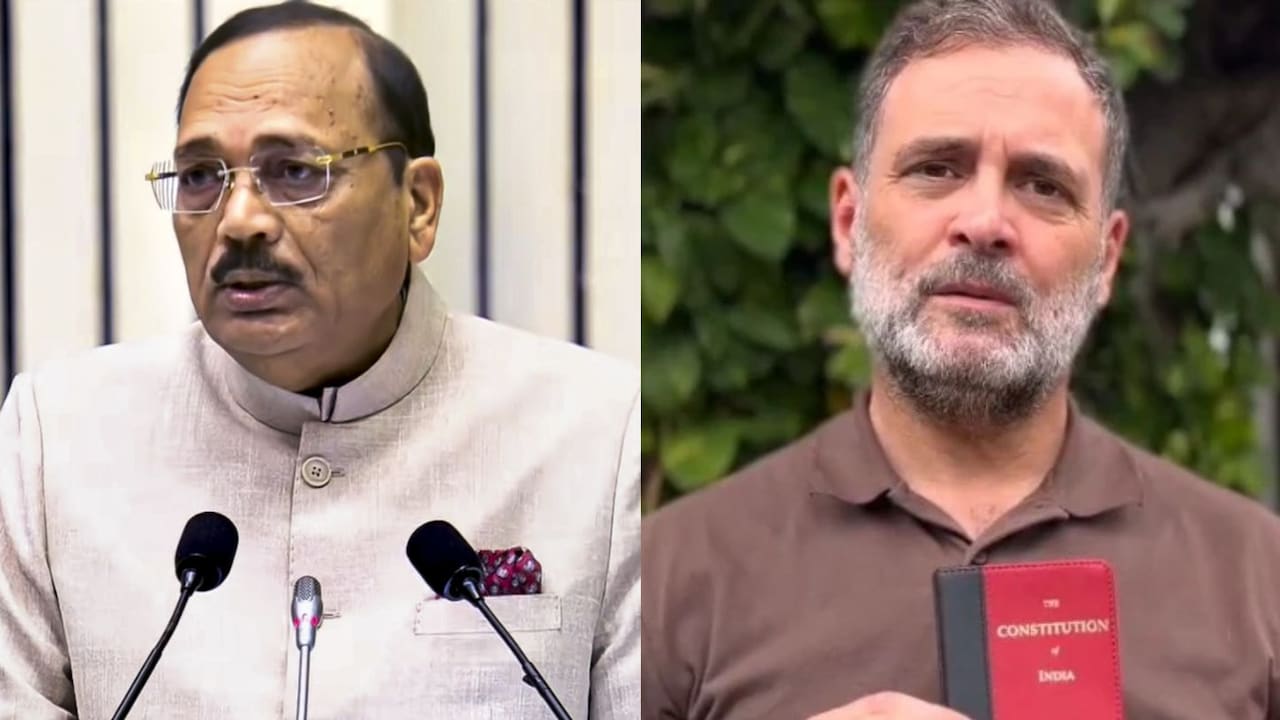
Congress leader Rahul Gandhi, the Leader of Opposition in the Lok Sabha, responded sharply to the development. In a post on X, he alleged that a "compromised" Prime Minister Narendra Modi was forced to "sell India's interest." He said, "There is much more to this than meets the eye," and claimed that India is "paying a huge price" for it. His remarks came after he shared a media report about the court's decision.
The judge's order, issued on August 10, granted the Justice Department's Rule 48(a) motion to dismiss three counts against Gautam Adani, Sagar Adani, and Vneet Jaain, the former CEO of Adani Green Energy. The dismissed counts were securities-fraud conspiracy, wire-fraud conspiracy, and securities fraud. The dismissal was with prejudice, meaning the charges cannot be refiled.
The court, however, reserved judgment on two other counts: one alleging violations of the Foreign Corrupt Practices Act, and another alleging conspiracy to obstruct justice. These counts involve five India-based co-defendants who have not appeared in court: Ranjit Gupta, Cyril Cabanes, Saurabh Agarwal, Deepak Malhotra, and Rupesh Agarwal. The Justice Department has until August 31 to satisfy the court's requirements, and counsel for the non-appearing defendants must confirm their clients' consent by the same date.
Judge Garaufis made clear that the dismissal was an exercise of prosecutorial discretion and not a verdict on the allegations. "No one should mistake" the ruling for the court's agreement with the government's decision or an opinion on the merits, he wrote. He noted that no trial was held, no witnesses were examined, and no evidence was tested in court.
The Justice Department had sought the dismissal in May after an extensive review. Officials cited jurisdictional and evidentiary challenges, the predominantly Indian nature of the alleged conduct, scrutiny of the matter by Indian authorities, the absence of identified investor losses, and a conclusion that pursuing the case no longer aligned with departmental priorities. They also argued that the case, unsealed during the final weeks of the Biden administration, had little realistic prospect of reaching trial and appeared to be a politically motivated "name and shame" exercise.
Gautam Adani welcomed the decision, saying he accepted it with "humility" and "deep respect" for the judicial process. The Adani Group has consistently denied the allegations, maintaining that it acted in accordance with applicable law.
The dismissal removes a significant legal overhang for the Adani Group, which operates across ports, energy, and infrastructure. However, the political implications are likely to persist, with opposition leaders using the case to question the government's relationship with corporate houses. Rahul Gandhi's remarks reflect the ongoing political contest in India, where issues of governance and business dealings frequently intersect.