Sun's Journey Through Dense Cosmic Clouds May Have Driven Ancient Ice Ages, Study Says
A new NASA-funded study suggests that the Sun's path through our galaxy may have played a significant role in shaping Earth's ancient climate. While scientists have long attributed past ice ages to internal factors such as volcanic activity or shifts in greenhouse gas levels, this research points to external forces from deep space as well.
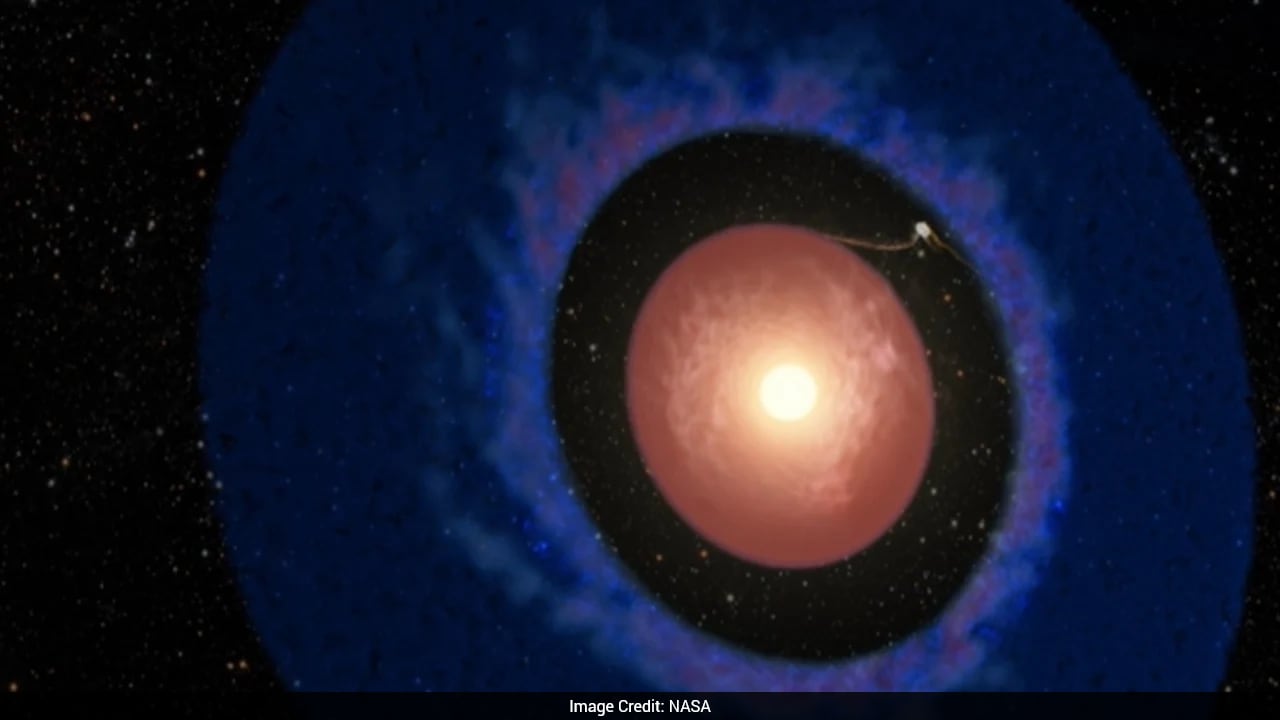
Our solar system is enveloped by a giant protective bubble known as the heliosphere, created by charged particles streaming from the Sun. This bubble shields Earth from much of the harmful galactic radiation that pervades interstellar space. But the heliosphere is not static; it changes shape and size as the Sun moves through different regions of the Milky Way.
Researchers at NASA's SHIELD (Solar Wind with Hydrogen Ion charge Exchange and Large-Scale Dynamics) centre conducted computer simulations to trace the Sun's trajectory over the past 14 million years. Their findings, published by NASA, reveal that the Sun passed through extremely dense, frigid interstellar clouds at least three times during that period.
These clouds, composed of cold gas and dust, exerted intense pressure on the heliosphere, compressing it to a fraction of its normal size. As a result, Earth lost much of its protective shield and was directly exposed to the harsh conditions of interstellar space. The influx of cold galactic hydrogen and cosmic rays increased moisture in Earth's upper atmosphere and altered global weather patterns.
According to NASA's report, these episodes of cosmic exposure may have been a key factor in driving some of Earth's ancient climate changes, including possible ice ages. The report states, "In summary, our heliosphere's trips through colder regions in our galaxy may be a key factor in driving some of Earth's ancient changes in climate, including possible ice ages."
This theory is supported by physical evidence found on Earth. Scientists have detected traces of interstellar dust buried in deep-sea ocean sediments, in lunar core samples, and in ancient Antarctic ice. These deposits are consistent with periods when the heliosphere was compressed, allowing interstellar material to reach the inner solar system.
While the findings do not discount the importance of terrestrial factors in climate change, they broaden our understanding of Earth's climate history. The planet's deep freezes and warming cycles are not solely the result of local geology or atmospheric chemistry. Instead, they are also linked to the Sun's continuous journey through the Milky Way, a reminder that Earth is part of a much larger cosmic system.
The research underscores the interconnectedness of our solar system with the galaxy around it. As the Sun travels along its orbit, it passes through varying environments that can influence conditions on Earth in ways scientists are only beginning to understand. Further studies will be needed to fully map the heliosphere's history and its implications for Earth's past and future climate.