NASA Launches Roman Space Telescope to Study Dark Energy and Exoplanets
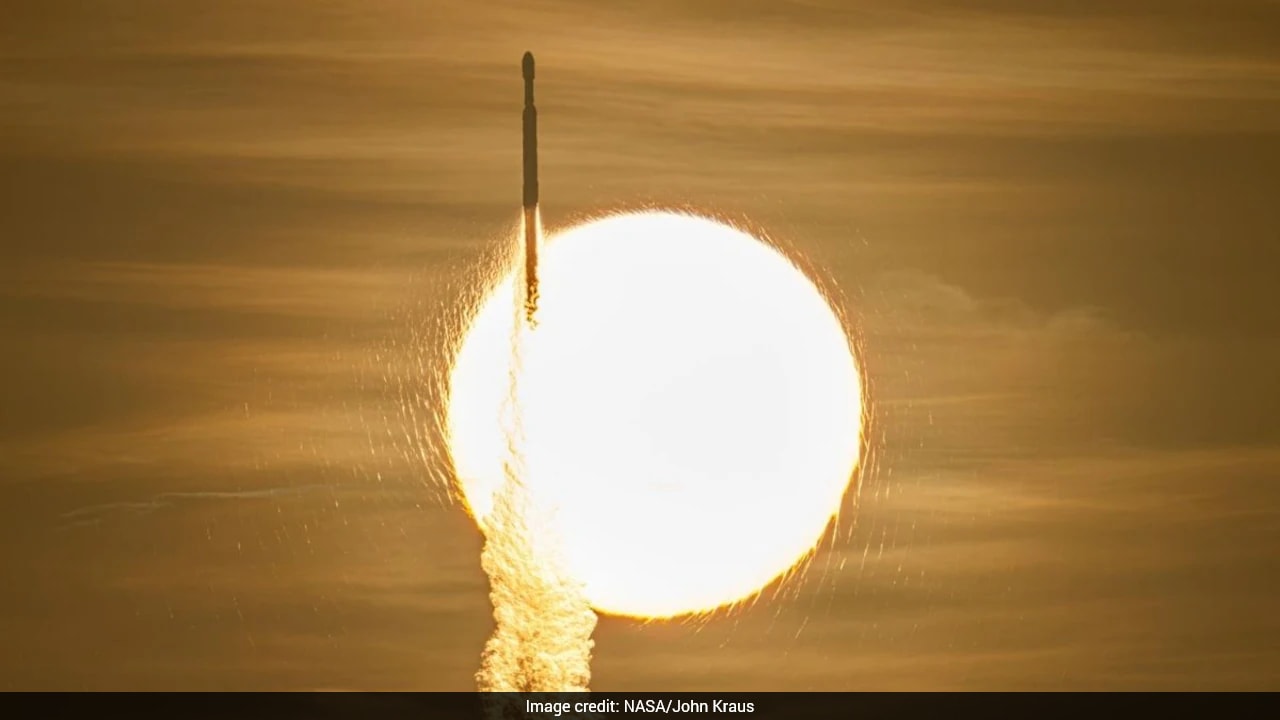
NASA has successfully launched its latest space observatory, the Nancy Grace Roman Space Telescope, aboard a SpaceX Falcon Heavy rocket from the Kennedy Space Center in Florida. The telescope, named in honour of NASA's first chief astronomer, is now on its way to a region about one million miles (1.6 million kilometres) from Earth—the same neighbourhood where the James Webb Space Telescope currently operates.
In a statement, NASA said: "Roman is exactly the kind of success story we want to see across NASA. Delivered ahead of schedule and on budget, this mission reflects more than a decade of dedication from the NASA workforce and our industry partners. Now, Roman will give us a new atlas of the universe, push the boundaries of discovery, and demonstrate what is possible when America's space programme pairs bold ambition with disciplined execution."
The Roman Space Telescope, formerly known as WFIRST (Wide Field Infrared Survey Telescope), has been in development for over a decade. Its wide field of view—about 100 times larger than that of Hubble in the infrared—enables it to capture vast swaths of the sky with exceptional clarity. This capability will allow scientists to study billions of galaxies, map dark matter, and measure the effects of dark energy, the mysterious force accelerating the expansion of the universe.
The observatory relies on two primary instruments for its surveys. The Wide Field Instrument (WFI), its main camera, features a massive 300-megapixel near-infrared focal plane array consisting of 18 individual detectors. These detectors collect photons of light, which will be decoded into crisp cosmic panoramas, according to NASA. The Coronagraph Instrument (CGI) is designed for advanced exoplanet studies, allowing astronomers to directly image faint planets orbiting near bright stars and analyse their atmospheric composition.
"Roman will be a discovery machine that will bring us closer than ever before to answering humanity's most profound questions about our cosmic history," said Nicky Fox, associate administrator for the Science Mission Directorate at NASA Headquarters in Washington. "With its large field of view and fast survey speeds, Roman will usher us into a new era of discovery and make the invisible visible, setting the foundation for humanity's search for life beyond our solar system."
Roman is designed to survey the universe a thousand times faster than the Hubble Space Telescope. With a primary mission lifespan of five years, and a goal to operate for ten, Roman is expected to scan billions of galaxies. Scientists hope to use this vast dataset to understand dark energy and dark matter, find hidden exoplanets, and test whether Albert Einstein's laws of gravity hold on a cosmic scale by observing how massive objects bend light over immense distances. This dataset will be publicly released, providing astronomers worldwide with a rich resource for studying galaxy evolution, dark matter distribution, and the history of cosmic expansion.
Operating from a halo orbit around the Sun-Earth L2 Lagrange point—a gravitationally stable location about 1.5 million kilometres from Earth—Roman will have an unobstructed view of the cosmos, free from the interference of Earth's atmosphere and thermal emissions. This vantage point, shared by the James Webb Space Telescope, is ideal for the deep-space observations the mission aims to conduct.
"We've never been able to view the universe with eyes like Roman's before," said Julie McEnery, Roman's senior project scientist at NASA Goddard. "There's no telling what more we'll know and have seen by this time next year."