Rajasthan HC: Aravalli Hills Near Udaipur on 'Verge of Extinction', Policy Framed by Private Agencies
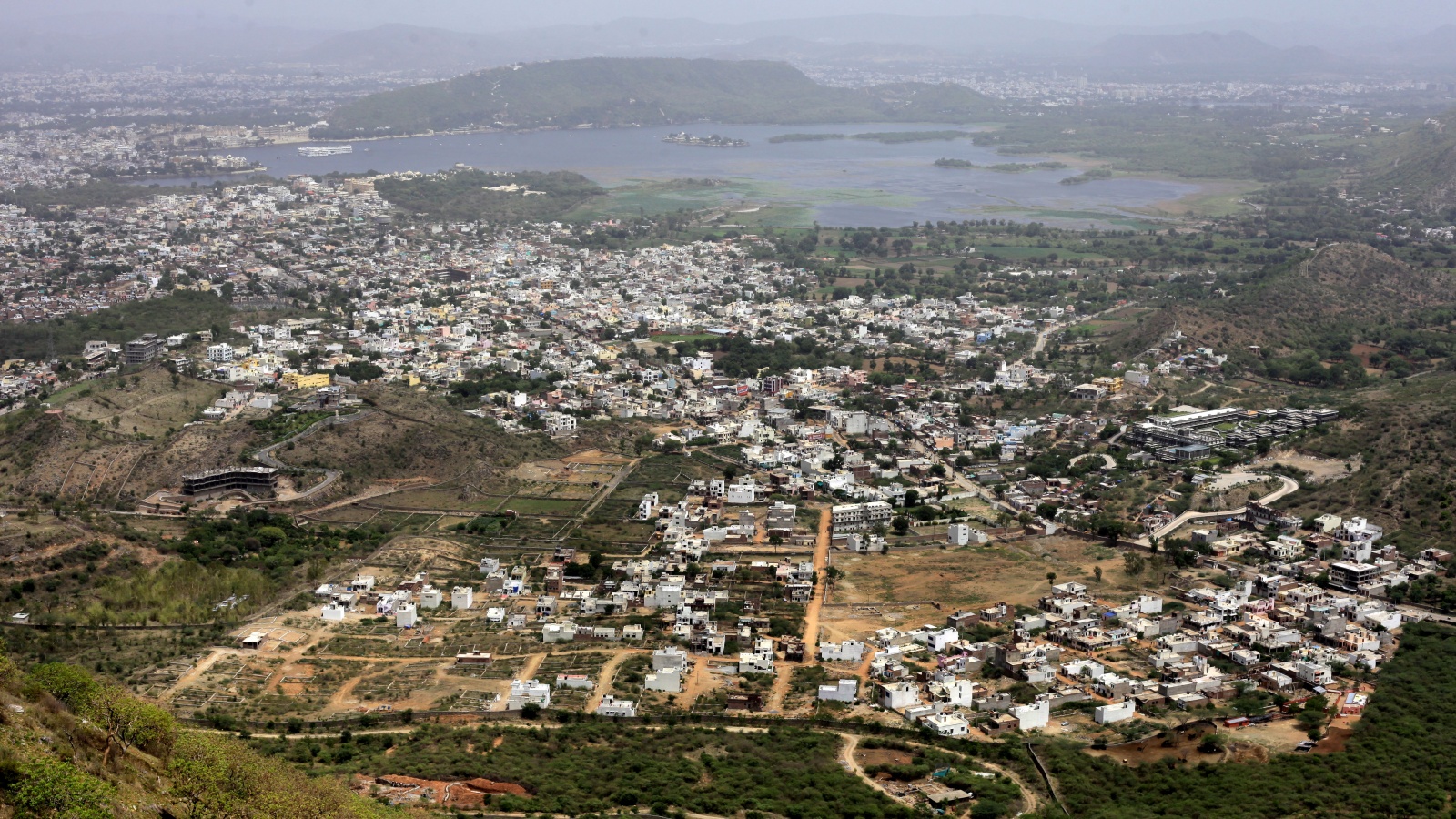
The Rajasthan High Court has expressed serious concern over large-scale construction in the Aravalli hills surrounding Udaipur, observing that the hills are being pushed to “the verge of extinction” and effectively replaced by hotels. The court also questioned the authorship of the state's 2018 Hill Policy, suggesting it was drafted by “certain private external agencies” without consulting statutory authorities.
Justice Sameer Jain made these observations while hearing a petition filed by Basant Hotels Private Ltd, which sought to avoid the provisions of the Hill Policy 2024 on the ground that it had already obtained due permissions under the earlier 2018 policy. The order was uploaded on Monday.
The court noted that it had examined a report prepared by court-appointed commissioners in the case. “It is glaringly evident that the hills and mountains have been brutally cut and constructed upon until they are on the verge of extinction, effectively being replaced by hotels,” the court said.
Expressing shock over the lack of consultation, Justice Jain said: “The author and creator of the bye-laws vis-à-vis the Hill Policy 2018 were certain private external agencies. Shockingly, no advice or consultation was ever sought from the relevant statutory agencies and departments concerning climate, wildlife, pollution, and environment, either through the Union of India or the respective state departments.”
The court also referred to an earlier public interest litigation by the Jheel Sanrakshan Samiti, which was closed based on the state’s undertakings to implement the Public Trust Doctrine. “It is shocking to the conscience of the court that the State has instead authored a policy completely devoid of application of mind, expertise, or research and development, instigated merely by the support services of a private agency, and completely bypassing the Ministry of Environment, Climate, Wildlife, and Pollution Control Boards,” the court observed.
Appearing for the Centre, Additional Solicitor General Bharat Vyas said that the Union Ministry of Environment, Forest and Climate Change and pollution control authorities were never consulted or made stakeholders in the policy.
The High Court sought “complete details of all construction / commercial permissions granted in the nearby vicinity of the petitioner’s property”, along with the names and designations of officers who granted the permissions. It also demanded “the name of the author of the impugned Hill Policy of 2018 and author of the Hill Policy of 2024, along with all related primary documents”.
The court noted that while Articles 14 and 19 of the Constitution guarantee equality and freedom to carry out business and trade, these rights are subject to reasonable restrictions. “Under the guise of the sustainable development theory and arbitrarily crafted policies, hundreds of hotels, resorts, and commercial properties have mushroomed near sanctuaries, sensitive ecosystems, lakes, and upon the hills,” it said.
Lamenting the state of Udaipur, the court said: “The city … renowned for its lakes, mountains/hills (Magris), and wildlife sanctuaries, has been reduced to a pitiable state.”
In its petition, Basant Hotels Pvt Ltd stated that it had been in business since 2007, purchased land for construction in the Udaipur hills, and received permissions for construction, conversion of land, building plan, and an adjoining road. The company said it had taken a loan of Rs 20 crore and invested about Rs 12 crore in the project before the 2018 Hill Policy came into effect.