Delhi's AQI Hits 314: 'Very Poor' Air Returns as Winter Curbs Take Effect
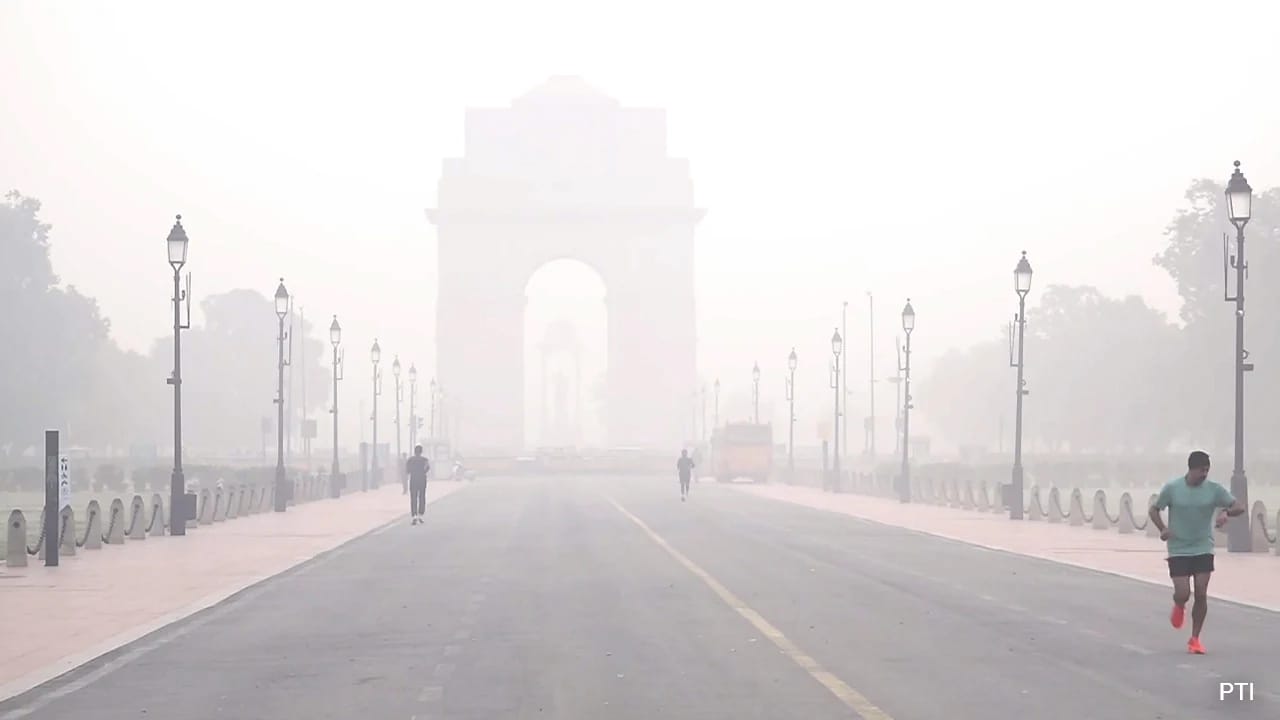
Delhi's air quality slipped into the 'very poor' category for the first time this season on Monday, as the city's winter pollution-control measures came into force from November 1.
The overall Air Quality Index (AQI) stood at 314 at 10 am, according to the Central Pollution Control Board (CPCB). The board clarified that the figure was a morning reading and not the daily average, which is compiled at 4 pm.
Under the national AQI scale, a reading between 0 and 50 is 'good', 51-100 'satisfactory', 101-200 'moderate', 201-300 'poor', 301-400 'very poor' and 401-500 'severe'.
With the index above the 300 mark, Stage 2 of the Graded Response Action Plan (GRAP) applies. This stage covers the 301-400 band and brings in a set of additional measures aimed at curbing pollution.
Readings across monitoring stations
Several monitoring stations in the national capital and its neighbouring areas recorded air quality ranging from 'poor' to 'very poor'.
According to the CPCB, the AQI was 370 in RK Puram, 349 near Akshardham Temple, 335 around India Gate and Janpath, and 349 at ITO — all in the 'very poor' category.
Other readings included 313 in Burari, 258 in Badarpur, 213 in Chhawla, 237 in Jharoda Kalan, 273 in Vasundhara Enclave, 256 in Karala and 310 in Uttam Nagar.
Elevated levels were also recorded in Ghoga at 274, Nangloi at 319, NIH Narela at 353, Mandir Marg at 340, Aya Nagar at 288, CRRI Mathura Road at 334 and Pusa at 340. Sirifort recorded 354, while Chandni Chowk and Burari Crossing stood at 361 and 354 respectively.
The AQI was 319 at JNU, 382 in Alipur, 359 at Delhi University's North Campus, 322 at Talkatora Garden and 357 at Dwarka Sector-8.
Winter Action Plan in force
The dip in air quality coincided with the start of the Delhi government's Winter Action Plan, whose restrictions will remain in force for varying periods until February 28.
To check rising pollution during the winter months, authorities have prohibited all dust-generating demolition and outdoor civil construction work from November 1 to January 31, except for specified essential public infrastructure projects that meet prescribed conditions. A complete ban on construction and demolition activity, barring specified exemptions, will be enforced from December 10 to January 20.
The measures are intended to reduce vehicular emissions, control dust and ease traffic congestion during winter. Under the plan, Delhi government offices will function from 10 am to 6:30 pm, while Municipal Corporation of Delhi offices will operate from 8:30 am to 5 pm until February 28.
Parking charges at authorised lots across the city have been doubled from November 1 to February 28 to discourage private vehicle use. Government and private offices have also been asked to limit physical attendance to 50%, with the remaining staff working from home. Essential and emergency services are exempt from the restrictions.
Penalties on first day of enforcement
On the first day of the plan, authorities imposed penalties and environmental compensation amounting to Rs 68.4 lakh. Enforcement teams checked nearly 15,000 vehicles, turned back 1,539 at border points and issued 566 challans for violations of Pollution Under Control Certificate (PUCC) norms.
Official data available till 5 pm on Sunday showed that the penalties included Rs 56.6 lakh for PUCC violations, Rs 2 lakh for breaches of vehicle entry restrictions and Rs 9.8 lakh as environmental compensation for violations of dust-control norms at construction and demolition sites.
Air quality in the capital typically worsens in the post-monsoon and winter months, when a combination of factors — including falling temperatures, stagnant winds, crop-residue burning in neighbouring states, vehicular emissions and dust — traps pollutants close to the ground. The CPCB's 4 pm daily average reading will offer a fuller picture of the day's air quality.