July rains near normal, but monsoon's uneven spread raises climate concerns
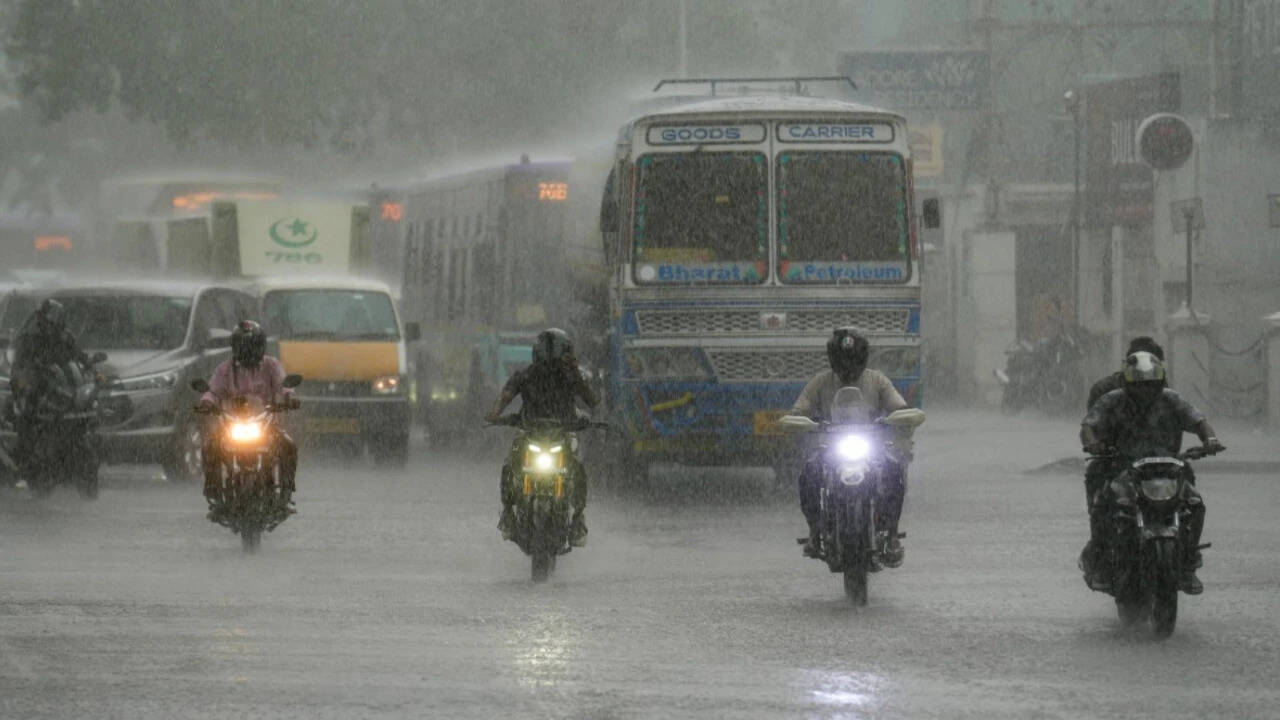
India's monsoon delivered a surprise in July, with rainfall close to normal despite forecasts of a below-normal month due to a strengthening El Niño. According to the India Meteorological Department (IMD), the country received 270.1 mm of rain against a long-period average of 271.9 mm as of July 30. The IMD had earlier projected July rainfall to be less than 94% of the long-period average.
However, the overall figure masks significant regional variations. Central India recorded 29% excess rainfall in July, while east and northeast India saw a 30% deficit, and south India was 28% below normal. This uneven distribution has become a recurring theme, with long dry spells interspersed with short bursts of extremely heavy rain that can trigger floods and landslides.
The monsoon deficit since June 1 stood at 14% as of the end of July, a sharp improvement from the 40% deficit recorded at the end of June. According to a briefing by Climate Trends, successive weather systems helped cut the national shortfall considerably.
Scientists and weather experts say the most significant lesson from this monsoon is that El Niño alone can no longer explain India's rainfall behaviour. Global warming, warming oceans, and changing atmospheric circulation are increasingly interacting with traditional climate drivers, making forecasts more complex and uncertain.
"The challenge is no longer predicting how much rain India will receive, but forecasting where, when and how intensely it will fall in a warming climate," experts noted. The need for more precise and localised forecasts has become urgent as the monsoon exhibits greater variability.
Seasonal data up to July 30 shows that among 36 meteorological subdivisions, 16 recorded normal rainfall, three saw excess or large-excess rainfall, and 17 remained deficient. Central India was almost normal with a 1% surplus, northwest India had an 11% shortfall, east and northeast India were 30% below normal, and south India was 25% deficient.
These findings are particularly striking because the US National Oceanic and Atmospheric Administration (NOAA) has projected an 81% probability of a very strong El Niño developing between October and December — a pattern typically associated with weaker Indian monsoons. Yet July's rainfall suggests other factors are at play.
Former IMD director general K J Ramesh attributed July's recovery to abnormal warming over the western Pacific, which spawned successive monsoon systems over the Bay of Bengal, and the increasing influence of Western Disturbances that enhanced rainfall over Maharashtra and Gujarat. "Climate change is reshaping the characteristics of the monsoon, which existing models are failing to take into account," Ramesh said.
Akshay Deoras of the University of Reading noted that the monsoon rebounded rapidly after an early July lull. He cited Umbergaon in Gujarat receiving 1,064 mm of rain in 24 hours — among the highest daily totals recorded since 1901 — as evidence of intensifying rainfall extremes. Climate change appears to be amplifying the monsoon's internal weather systems, he added.
The July outcome has eased fears of a major monsoon shortfall this year, but it underscores a new reality: traditional forecasting methods may no longer suffice. As climate change alters the monsoon's behaviour, policymakers and farmers will need more resilient strategies to cope with unpredictable rainfall patterns.