Elephant Feeds on Plastic Waste in Karnataka’s Male Mahadeshwara Hills, Renews Waste Management Concerns
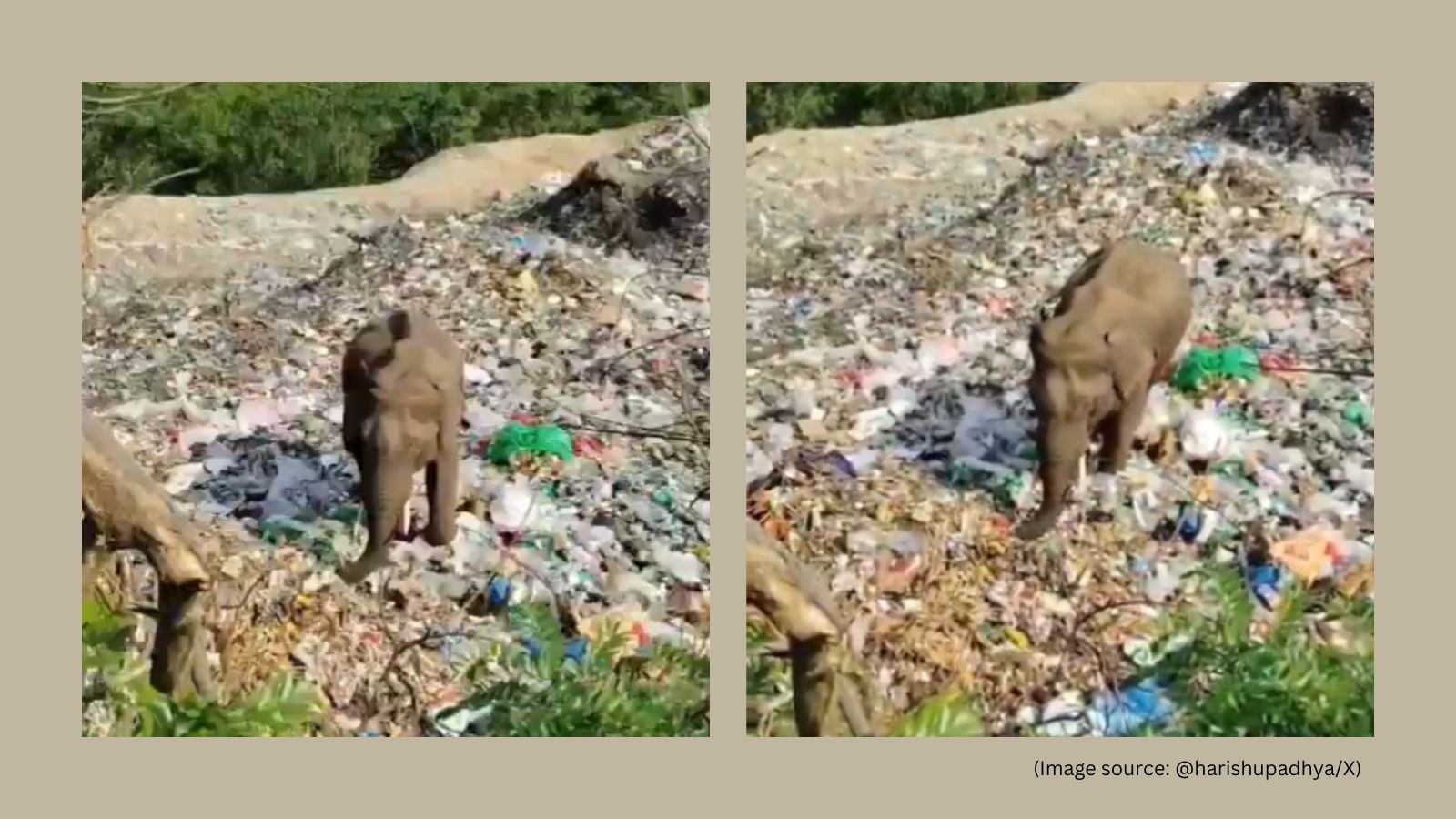
A recent incident in Karnataka’s Male Mahadeshwara Hills (MM Hills) has drawn attention to the persistent problem of waste management in forested areas, after a video showed a wild elephant sifting through and consuming plastic refuse. The footage, shared widely on social media, has reignited discussions on the impact of religious tourism on wildlife and the need for stringent waste disposal measures in ecologically sensitive zones.
The episode took place following a major pilgrimage to the Male Mahadeshwara Temple during an auspicious Amavasya weekend. According to a report by the Times of India, lakhs of devotees visited the shrine, leaving behind vast amounts of garbage. Plastic bags, disposable plates and cups, food wrappers, bottles, and other non-biodegradable materials were strewn along roads, drains, and the fringes of the surrounding forests, despite prohibitions on littering in the area.
Wildlife experts and conservationists have long cautioned against the dangers that plastic pollution poses to forest-dwelling animals. Elephants, in particular, are highly susceptible because they use their trunks to explore and often ingest litter while foraging. Plastic consumption can lead to severe digestive blockages, malnutrition, tissue damage, and even death. The image of a wild elephant—an emblem of the region’s natural heritage—feeding from a heap of human-generated trash serves as a stark illustration of how human activities encroach on wildlife habitats.
Male Mahadeshwara Hills is part of the Cauvery Wildlife Sanctuary, a protected area that hosts a rich array of biodiversity, including elephants, leopards, sloth bears, and numerous bird species. The temple situated within the sanctuary draws devotees year-round, but festivals and special occasions see an overwhelming surge in visitors. The local infrastructure, including waste collection and disposal systems, is often unable to cope with the sudden spike in garbage. While sanctuary and temple authorities have installed signboards and occasionally enforce fines, the scale of the problem continues to outpace mitigation efforts.
This latest incident has prompted an outcry among citizens and environmental groups, many of whom have called for immediate action. In response, local forest officials have reportedly launched a cleanliness drive in the affected zones and are reviewing waste management protocols for future events. Authorities may consider deploying additional staff during peak seasons to monitor littering and prevent wildlife from accessing dumpsites. However, some activists argue that piecemeal measures are insufficient and that a comprehensive policy is needed to regulate religious tourism in protected areas, balancing cultural practices with ecological preservation.
The issue of plastic waste in India’s forests is not new. Incidents of animals ingesting plastic or getting entangled in waste have been reported in various sanctuaries and national parks. Studies indicate that a significant percentage of elephant deaths in certain regions are linked to gastrointestinal complications arising from plastic ingestion. The persistence of non-biodegradable litter in forest environments can pollute water sources and degrade habitats over decades, posing a long-term threat to vulnerable species.
The incident at MM Hills underscores the immediate need for a multi-stakeholder approach. Temple trusts, forest departments, municipal bodies, and devotees must collaborate to implement robust waste segregation at source, provision of adequate bins, regular clean-up operations, and educational outreach. Banning single-use plastics within sanctuary limits and promoting biodegradable alternatives could significantly reduce the risk to wildlife.
As India continues to grapple with mounting plastic pollution, protecting its iconic wildlife from such preventable threats demands urgent and collective action. The spectacle of an elephant feeding on plastic is a poignant reminder that the health of our ecosystems is inextricably linked to human behaviour.