Astronomers identify possible new class of 'black hole star' in early universe
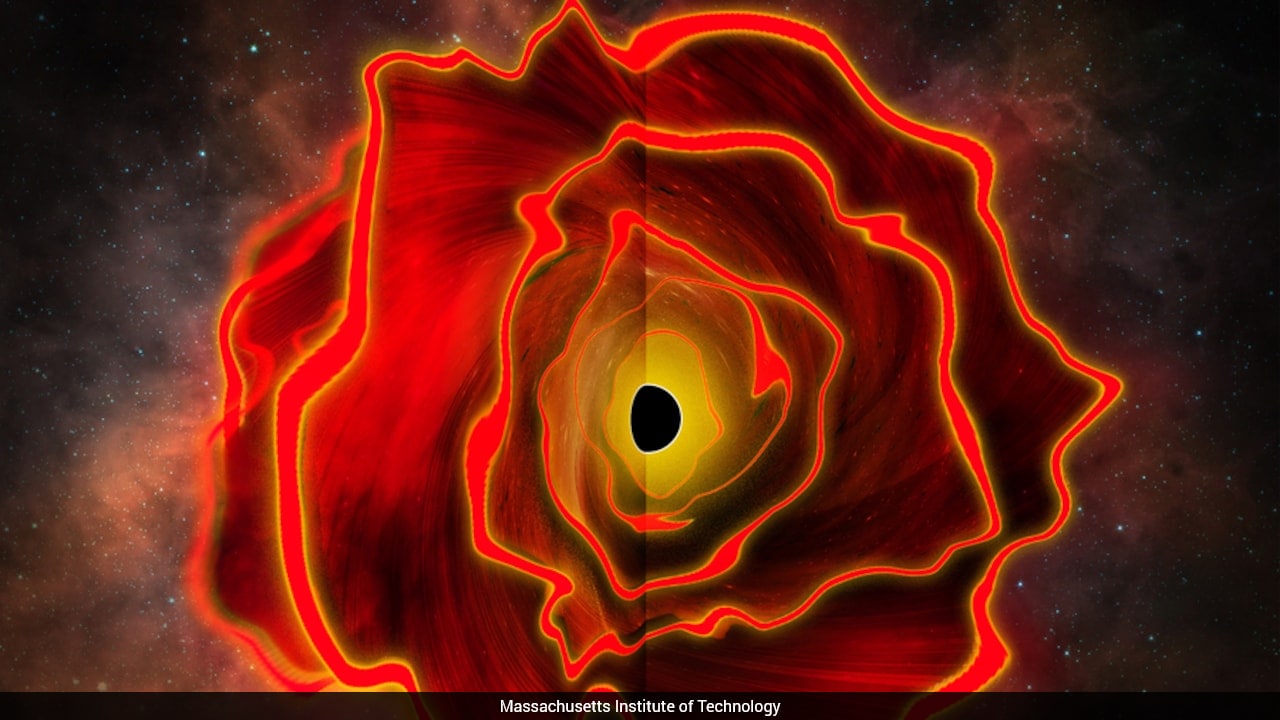
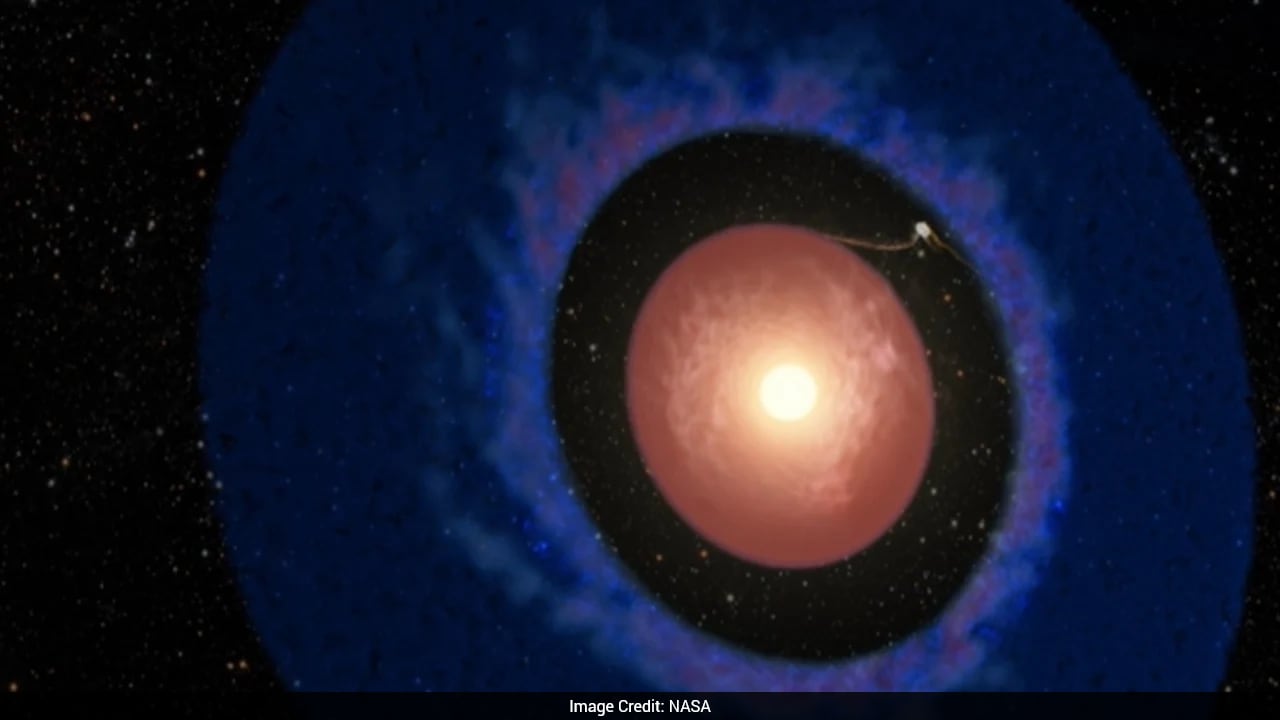
Astronomers from the Massachusetts Institute of Technology (MIT) have identified a cosmic object that may represent a completely new class of celestial bodies. The team has named this object a “black hole star” due to its unusual properties. The discovery could help explain a class of mysterious bright red objects frequently observed in deep-space images taken by the James Webb Space Telescope (JWST).
The object, designated MoM-BH*-1, was found in the early universe, a few hundred million years after the Big Bang. Researchers say it is likely as large as the Solar System and emits far more energy than any known star. According to their analysis, the object produces roughly 100 billion times more energy than a typical star can generate, based on current models.
The research team suggests that the object is a dense cloud of hydrogen gas surrounding a black hole with a mass about 100,000 times that of the Sun. Unlike ordinary stars, which are powered by nuclear fusion, this object appears to be fuelled by gas falling into the central black hole. This process, known as accretion, can release enormous amounts of energy.
The discovery was made during the Mirage survey, which was designed to search for some of the earliest galaxies in the universe. While examining JWST images, the astronomers noticed an unusually bright and red object that did not match any known category of star or galaxy. Its light spectrum contained almost no elements other than hydrogen and helium, which is unusual for known objects at that distance.
Computer simulations carried out by the team indicate that a dense hydrogen envelope surrounding an active black hole could reproduce both the object’s unusual colour and its extreme brightness. This suggests that similar objects may be common in the early universe.
Lead author Rohan Naidu, a researcher at MIT, said the team’s understanding of the object is still evolving. He noted that current evidence points to a massive black hole hidden inside a star-like cloud of gas. He also suggested that such objects may be responsible for many of the “little red dots” seen in JWST images of the early universe, a phenomenon that has puzzled astronomers.
The findings have been published in the peer-reviewed journal Nature. Scientists believe that further study of these objects could improve our understanding of how the first massive black holes formed and evolved shortly after the birth of the universe.
While the discovery is promising, the authors caution that more observations are needed to confirm the true nature of MoM-BH*-1. Future studies, including spectroscopic analysis, could help verify whether it is indeed a new type of cosmic object.