150 Years of IACS: The Institute That Shaped Indian Science
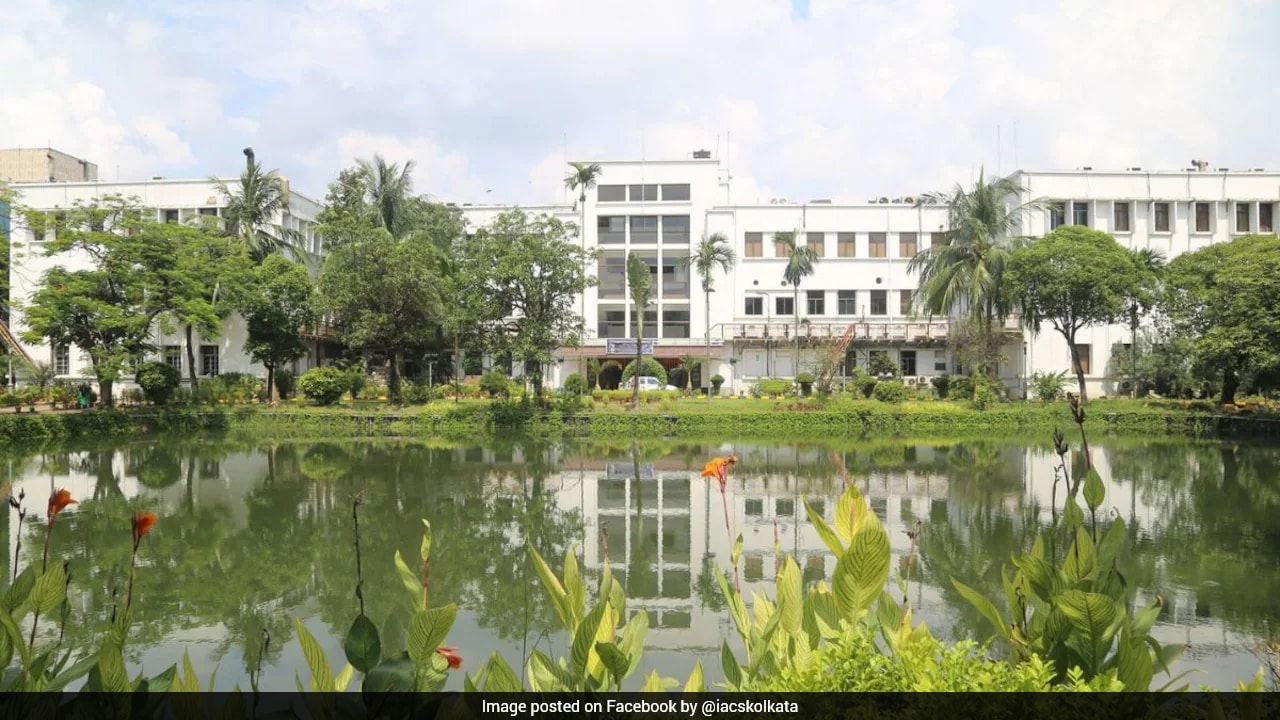
On July 29, 1876, the Indian Association for the Cultivation of Science (IACS) was founded in Kolkata by Dr Mahendra Lal Sircar, a visionary physician. As it marks its 150th anniversary, IACS remains India's oldest scientific research institution, having nurtured some of the country's most renowned scientists.
The list of scientific legends associated with IACS includes Nobel laureate C.V. Raman, discoverer of the Raman Effect; Jagadish Chandra Bose, pioneer in radio and plant sciences; Meghnad Saha, known for the Saha ionisation equation; and Satyendra Nath Bose, whose collaboration with Albert Einstein led to Bose-Einstein statistics. These individuals helped establish India's presence in global science.
Dr Mahendra Lal Sircar founded IACS with earnings from his medical practice, driven by the belief that scientific research was essential for national progress. He also supported education for women at a time when such ideas were uncommon. IACS Director Prof Kalobaran Maiti described the institution as promoting fundamental research beyond traditional boundaries.
The story of C.V. Raman's association with IACS is notable. After joining the Accountant General's Office in Calcutta in 1907, Raman noticed the IACS board and began spending early mornings and evenings at its laboratory while working as a government officer during the day. This routine continued until 1917, when he became a professor at the University of Calcutta.
At IACS, Raman investigated the scattering of light and the colour of the sea, leading to the discovery of the Raman Effect in 1928. This showed that light interacting with matter can emerge with altered wavelengths, providing information about the substance. The discovery earned him the Nobel Prize in Physics in 1930, making him the first Indian to win a Nobel for work conducted entirely in India.
However, the story also reflects a broader challenge: while the Raman Effect was discovered in India, its most transformative applications were developed elsewhere. This highlights the need for stronger links between fundamental research and practical innovation in India.