US-Iran Talks Stalled Again: Strait of Hormuz Remains Flashpoint
Qatari mediators met the Iranian negotiating team in Doha on Wednesday, a day after meeting American negotiators Steve Witkoff and Jared Kushner. The discussions focused on operationalising specific clauses of the June 18 Memorandum of Understanding (MoU), particularly the unfreezing of Iranian funds, of which Doha is reportedly working to release $6 billion.
These indirect talks were the first since the June 19 Switzerland meeting between American and Iranian teams was cancelled over Israel’s renewed offensive in Lebanon. Since then, a fresh US-Israel-Lebanon Trilateral Framework Agreement on June 26 created some space for the continuation of “technical talks” between the US and Iran to implement the MoU. However, these talks were also cancelled owing to fresh tensions across June 26 and June 27.
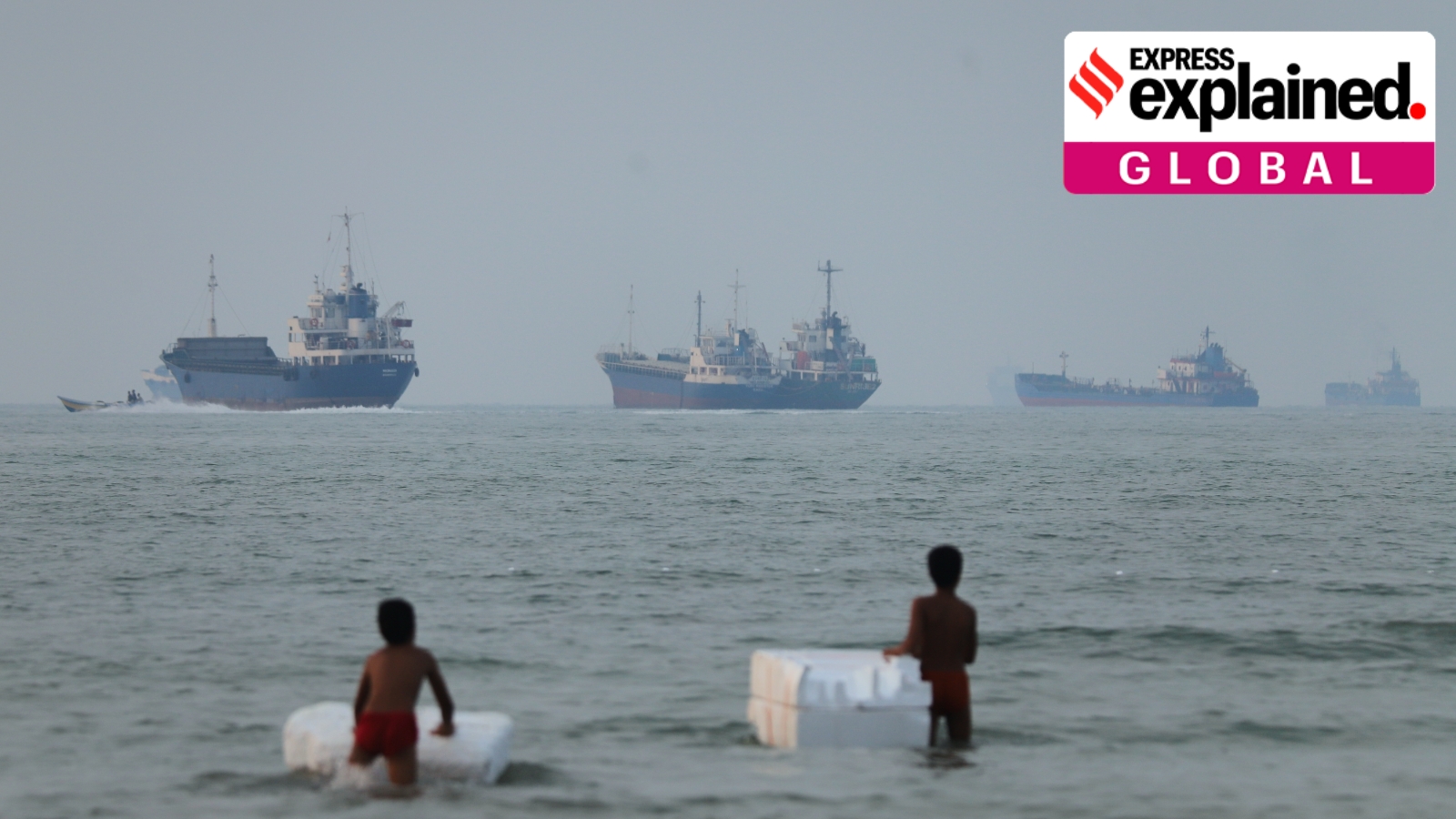
Both dates featured the same pattern of escalation — Iran preventing transit through the Strait of Hormuz for commercial ships that did not coordinate with it, the US Central Command bombing Iranian targets (including Qeshm Island), and Iran retaliating at US bases in Bahrain and Kuwait. These exchanges are not necessarily a resumption of the March war, but rather an effect of the differences between Tehran and Washington over Article 5 of the MoU, which covers the Strait of Hormuz’s future administration.
Under Article 5 of the MoU, the long-term administration of the Strait of Hormuz is to be determined jointly by Oman and Iran, “in line with applicable international law and the sovereign rights of coastal states of the Strait”. By June 23, Iran and Oman jointly declared the creation of a working group “to reach agreement on the future administration of navigation in the Strait”. While this meets Iran’s objective to prevent the strait’s return to its pre-war status, Oman’s cooperation remains crucial for Tehran.
So far, Muscat’s rejection of flat tolls in the strait (prohibited by Article 26 of the UN Convention on the Law of the Sea) has resulted in an arrangement where ships pay coastal states for potential services rendered — which a liberal interpretation of UNCLOS Article 43 allows. While both states differ over whether such payments are to be voluntary or mandatory, it is evident that the structures for the strait’s long-term administration are already being built.
It is the short-term administration of the strait which is a recurring conflict trigger. Under the MoU, Iran is to allow unconditional passage to all commercial ships for 60 days. For Washington, this means a preclusion of any coordination with Iranian authorities. This interpretation was furthered through an International Maritime Organisation-led (and US and Oman-backed) plan that sought to create a temporary southern route through Omani waters and another northern route close to Iran’s Larak island in the strait for commercial passage and rescue of stranded vessels.
The main traffic separation scheme in the central channel remains shut, pending mine clearance. But Iran’s June 25 strikes on vessels transiting through the southern route (and hence not coordinating with Iran) and subsequent exchanges with the US proved what Iranian Foreign Minister Abbas Araghchi ultimately asserted on June 28 — that Tehran would not accept any “new or separate arrangements from those currently being pursued” for the Strait of Hormuz.
So, even as the long-term future of the strait is clear, the short-term is not. Iran’s sensitivities over any attempted new route (however temporary) draw from the Strait of Hormuz’s new value as its main instrument of leverage. This will have to be reconciled with Washington’s preference for unhindered passage during the 60-day negotiation period, while continuing to adversely affect the frequency and efficiency of technical negotiations.