US-Iran Conflict Escalates: Jordan Becomes New Front in Regional War

The ongoing conflict between the United States and Iran has expanded significantly, with Jordan emerging as a key battleground. The latest round of fighting, which began over the status of the Strait of Hormuz, has now spread across the Middle East, from Oman to Jordan.
US forces have conducted nine consecutive nights of strikes on Iran, primarily targeting military infrastructure in Iran's southern coastal region. In response, Iran has struck US bases and other facilities in Oman, Qatar, Bahrain, Kuwait, the United Arab Emirates, and Iraqi Kurdistan. However, the focus has shifted to Jordan, which hosts several American bases and has become the main target of Iranian retaliation.
Jordan is home to two major US military installations: the Muwaffaq al Salti Air Base (also known as Azraq Air Base), the largest US facility in the country, and Tower 22, a small outpost near Jordan's northeastern border with Syria and Iraq. Under the 2021 US-Jordan Defence Cooperation Agreement, US forces also have access to several Jordanian military installations.
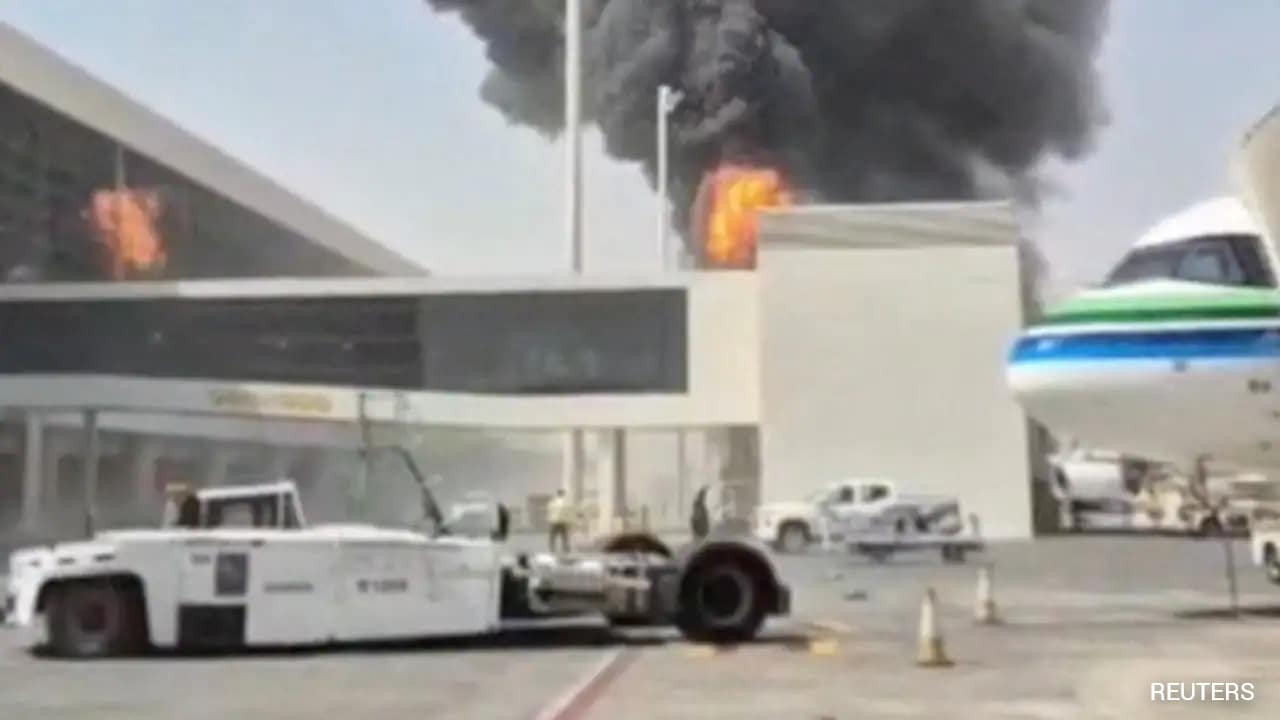
Last week, the US military reported that two service members were killed and several others injured in an Iranian missile strike at the Salti Air Base. A third American soldier was killed in Iraq. On Friday, Iran's military central headquarters claimed responsibility for a drone attack on fuel tanks at the Jordanian base, stating that several American helicopters were also hit.
As many US bases in the Persian Gulf have been damaged by Iranian missile attacks, Jordan has become a crucial location for stationing US troops and weapons. Iran is expanding the scope of the conflict by repeatedly targeting Jordan, which shares borders with Israel, Saudi Arabia, Iraq, and the occupied West Bank. The US aims to degrade Iran's military capability and its ability to disrupt traffic through the Strait of Hormuz, while Tehran seeks to reduce the US military presence in its neighbourhood through these attacks.
Despite the ongoing hostilities, both sides have indicated openness to diplomacy. Regional Gulf countries have proposed a 10-day ceasefire, with the UAE and Qatar calling for de-escalation. US Secretary of State Marco Rubio stated on Sunday that 'if that door opens, we'll be happy to see it open,' but added that Iran's 'behaviour has to change in order for ours to change.' Iran's Foreign Minister Abbas Araghchi said the country had 'emerged as a significant interactional actor' from the war, and that 'the right time to negotiate is exactly when you have achieved reliable battlefield and strategic gains.' However, Iran's leadership has made clear that it will not compromise on control over the Strait of Hormuz.
The US military has repeatedly claimed the strait remains open, but tankers using the US-cleared route along the Oman coast have come under fire. Only four commercial vessels passed through the strait on July 19, down from around 130 before the conflict began, highlighting the severe impact on global shipping.
The Islamic Revolutionary Guard Corps (IRGC) is driving Iran's war effort, led by General Ahmad Vahidi, a commander known for asymmetric warfare tactics. The conflict continues to evolve, with both military and diplomatic avenues being pursued simultaneously.