Missile Strike on Riyadh Airport Kills 12, Injures Over 300; Saudi Coalition Blames Houthis
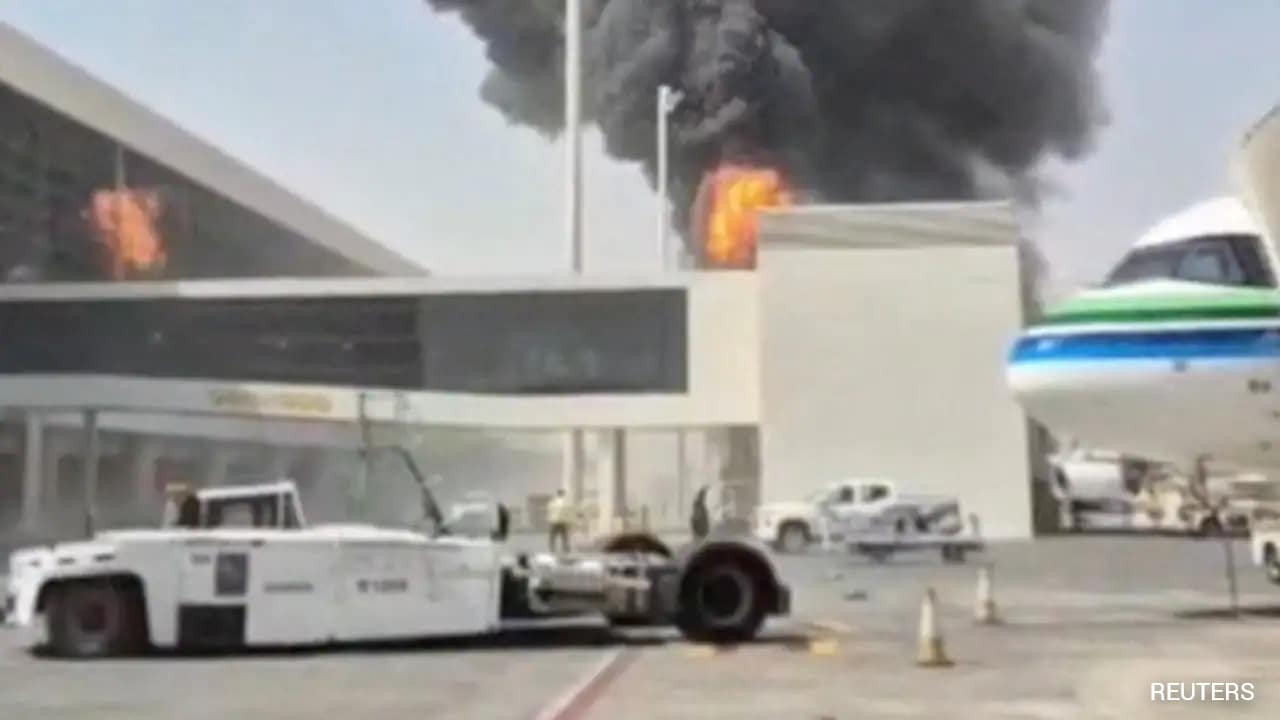
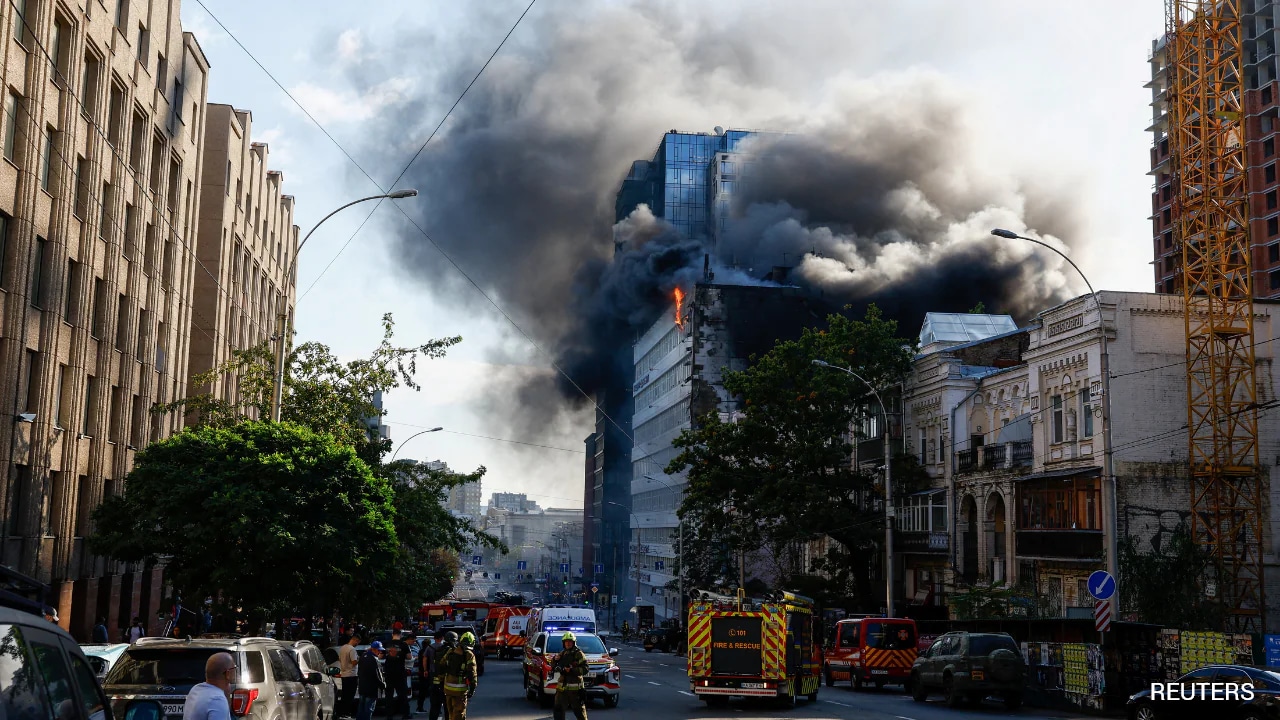
Riyadh: Twelve people were killed and more than 300 injured, some critically, when a missile struck King Khalid International Airport in the Saudi capital, the kingdom's civil aviation authorities said. Officials described it as the deadliest attack in any Gulf Arab country since the Iran war began.
The Saudi statement said those killed included four Saudi citizens, two Bangladeshi nationals, a Palestinian, a United States citizen, an Egyptian, a Jordanian, a Syrian and a Sudanese national. The injured were being treated at several hospitals. A regional official, speaking on condition of anonymity because they were not authorised to speak to the media, said the missile hit a complex housing Terminals 3 and 4, which handle domestic flights. The Saudi-led coalition said the airport has no military facilities.
Footage posted on social media after the attack and analysed by The Associated Press showed at least one ambulance and another vehicle outside the airport. There was no immediate claim of responsibility for the strike, and no immediate statement from the Houthi rebels in neighbouring Yemen.
The Saudi-led coalition fighting the Houthis blamed the group, calling the strike a "fully-fledged war crime" and promising a firm response. Earlier on Saturday, the rebels accused Saudi Arabia of striking Sanaa International Airport in the Houthi-held Yemeni capital. The coalition says the Houthis are backed by Iran.
United States President Donald Trump said shortly after the strike that he was evaluating whether Washington should join Saudi strikes against the rebels. "We may. We're going to look at it," he said. He later said he planned to speak to Crown Prince Mohammed bin Salman, adding that "what happened in Saudi Arabia is not acceptable". Secretary of State Marco Rubio confirmed that an American citizen was among the dead and condemned the attack, saying such strikes showed "a blatant disregard for innocent civilian life" and "must stop now".
Airport operations were suspended, entrances blocked and lights around the complex dimmed, with a heavy police presence at the site. Flights were diverted elsewhere, according to the tracking service Flightradar24. The United States, Britain, Germany, Australia and Canada were among the countries that warned their citizens to avoid the airport.
The strike is the latest in a week of attacks on the airport. The Houthis claimed earlier strikes this week that killed three Saudis, including a pilot. The escalation follows a major military offensive against the Houthis launched by the Saudi-led coalition a week ago, and has also targeted other Saudi airports, military facilities and oil infrastructure. Until recently, the Houthis had remained largely on the sidelines of the Iran war; they are now widely seen as a means for Tehran to pressure a key US ally.
Separately, US Central Command said a fighter jet struck and disabled a commercial cargo vessel, the Panama-flagged M/V Ocean Molica, with a precision munition in the Gulf of Oman. The ship had left an Iranian port and did not respond to repeated warnings, CENTCOM said, adding that the crew was unharmed. It described the action as part of US efforts to maintain a naval blockade of Iranian ports.
The attacks have unsettled markets and the wider region. Saudi Arabia is the world's largest oil exporter, yet its energy ministry was still promoting a major international energy conference due to begin in Riyadh on Sunday.