Houthis Claim Missile Attack on Riyadh Airport; Saudi Coalition Reports Interceptions
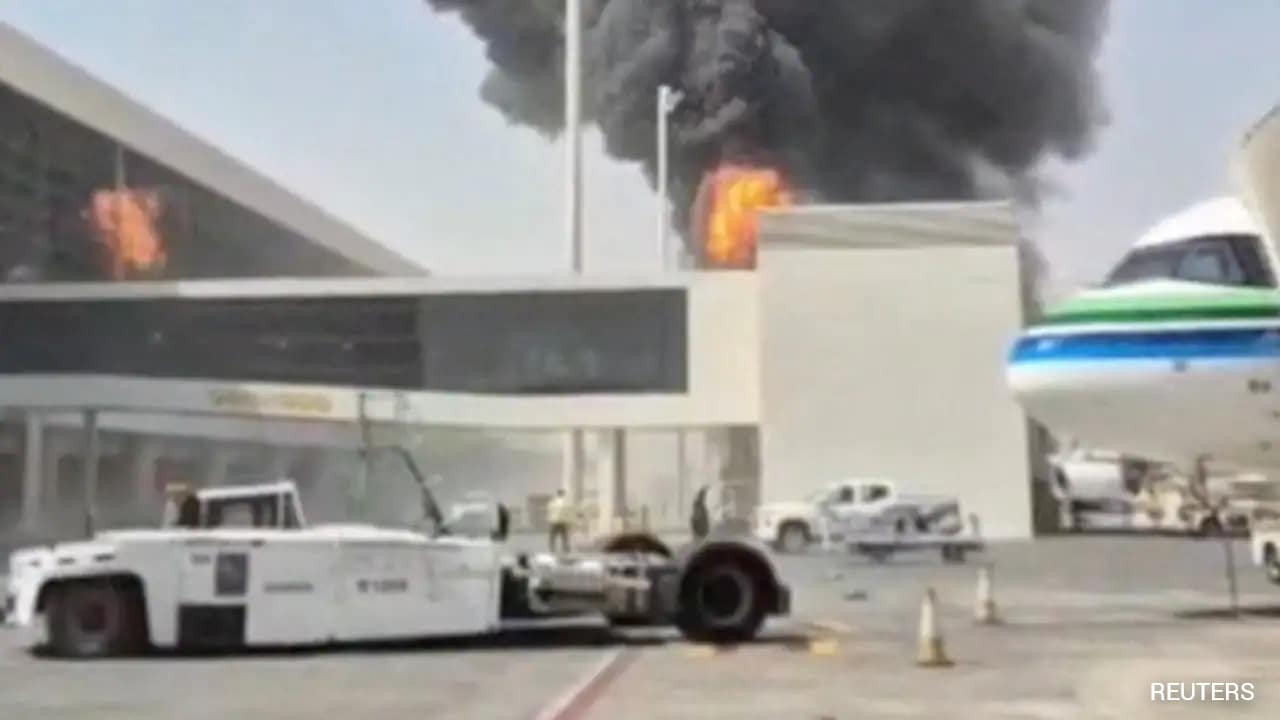
Several explosions were heard in Saudi Arabia's capital, Riyadh, on Thursday, including a large blast at the city's international airport, according to a witness who spoke to The Associated Press. The reports came a day after the kingdom said an attack on the airport killed one person and wounded others.
Iran-backed Houthi rebels in neighbouring Yemen claimed responsibility for the new attack on King Khalid International Airport in Riyadh. The group said a ballistic missile caused damage but provided no evidence. There was no immediate comment from Saudi authorities on the claim.
The spokesperson for the Saudi-led coalition fighting the Houthis, Maj. Gen. Turki al-Malki, said the coalition intercepted and destroyed two ballistic missiles launched by the Houthis toward Riyadh, as well as a ballistic missile fired toward Khamis Mushait, in the southwest near the Yemen border.
The Houthis have repeatedly claimed attacks against Saudi airports, military and oil facilities in recent days. Early on Thursday, the rebels warned global airlines "for the last time" about the potential consequences of operating in Saudi airspace, which they called a theatre for their military operations.
This recent escalation is part of the ongoing conflict in Yemen, where the Houthi movement has been fighting a Saudi-led coalition since 2015. The coalition intervened in Yemen to restore the internationally recognised government after the Houthis seized the capital, Sanaa. The war has caused a severe humanitarian crisis, with thousands of civilians killed and millions displaced.
The Houthis have frequently launched missile and drone attacks into Saudi territory, targeting airports, oil facilities, and military sites. Saudi Arabia has intercepted many of these attacks, but some have caused casualties and damage. The attacks have raised concerns about regional stability and the safety of civilian aviation.
International airlines have previously suspended flights to Saudi Arabia due to security concerns. The Houthi warning to airlines could further disrupt air travel in the region. The Saudi-led coalition has accused Iran of supplying the Houthis with advanced weaponry, a charge Iran denies.
The United Nations has repeatedly called for a ceasefire and a political solution to the Yemen conflict. Efforts to broker peace have so far been unsuccessful. The recent attacks underscore the fragility of the situation and the potential for further escalation.
The attack on Wednesday, which the Houthis also claimed, killed one person and wounded others at King Khalid International Airport, according to Saudi authorities. The coalition said it intercepted a missile, but debris fell on the airport, causing the casualties. The Houthis said they targeted the airport with a cruise missile.
King Khalid International Airport is a major aviation hub in the Middle East, serving millions of passengers annually. Any disruption there could have significant economic and logistical repercussions. The airport has been targeted before, but this week's attacks mark a notable escalation.
The Houthi warning to global airlines on Thursday said that Saudi airspace is a "theatre for military operations" and that airlines should avoid it. The warning did not specify what actions the Houthis might take against airlines, but it raised concerns among carriers. Several airlines have already rerouted flights to avoid Yemeni airspace, and some have suspended flights to Saudi Arabia.
The Saudi-led coalition has been fighting the Houthis since 2015. The conflict has killed tens of thousands of people, mostly civilians, and pushed Yemen to the brink of famine. The United Nations describes it as the world's worst humanitarian crisis. Peace talks have stalled, and the Houthis have continued to launch attacks on Saudi territory.
Iran has been accused by Saudi Arabia and its allies of providing ballistic missiles and drones to the Houthis. Iran denies these allegations, saying it supports the Houthis politically but not militarily. The United States and other Western countries have also condemned the Houthi attacks and called for an end to the violence.
On Thursday, the Saudi coalition said it intercepted two missiles over Riyadh and one over Khamis Mushait. The coalition often reports intercepting Houthi missiles, but some have slipped through, causing casualties and damage. The Houthis have claimed responsibility for many of these attacks, though they rarely provide evidence.
The international community has urged restraint. The UN special envoy for Yemen has been trying to revive peace negotiations. However, the recent escalation could complicate these efforts. The Houthis have demanded an end to the Saudi-led blockade of Yemen and a halt to coalition airstrikes.
As the situation develops, the safety of civilians and the potential for a wider conflict remain key concerns. The Saudi government has not yet commented on the Houthi claim of Thursday's attack.