US missions in 12 West Asian countries issue security alert as Houthi strikes on Saudi Arabia escalate

United States diplomatic missions in 12 countries across West Asia issued a joint security alert on Sunday, advising American citizens in the region to “exercise heightened vigilance” amid concerns that attacks by Yemen’s Houthi movement on Saudi Arabia could widen into a broader confrontation.
The advisory covers missions in Saudi Arabia, the United Arab Emirates, Kuwait, Jordan, Bahrain, Oman, Iran, Qatar, Iraq, Lebanon, Yemen and Israel. It warned of “potential flight cancellations, airspace closures, and travel disruptions” and said the hostilities “have the potential to escalate rapidly beyond that immediate area.”
The alert also cautioned that “Iran and groups supportive of Iran may target other U.S. interests overseas or at locations associated with the United States and Americans throughout the world, including U.S. businesses and other institutions.”
Citizens travelling to or from the region were asked to monitor information on airport and airline operations and to prepare contingency plans in advance. The U.S. embassy in Jerusalem separately published a list of “actions to be taken” and details of emergency assistance available.
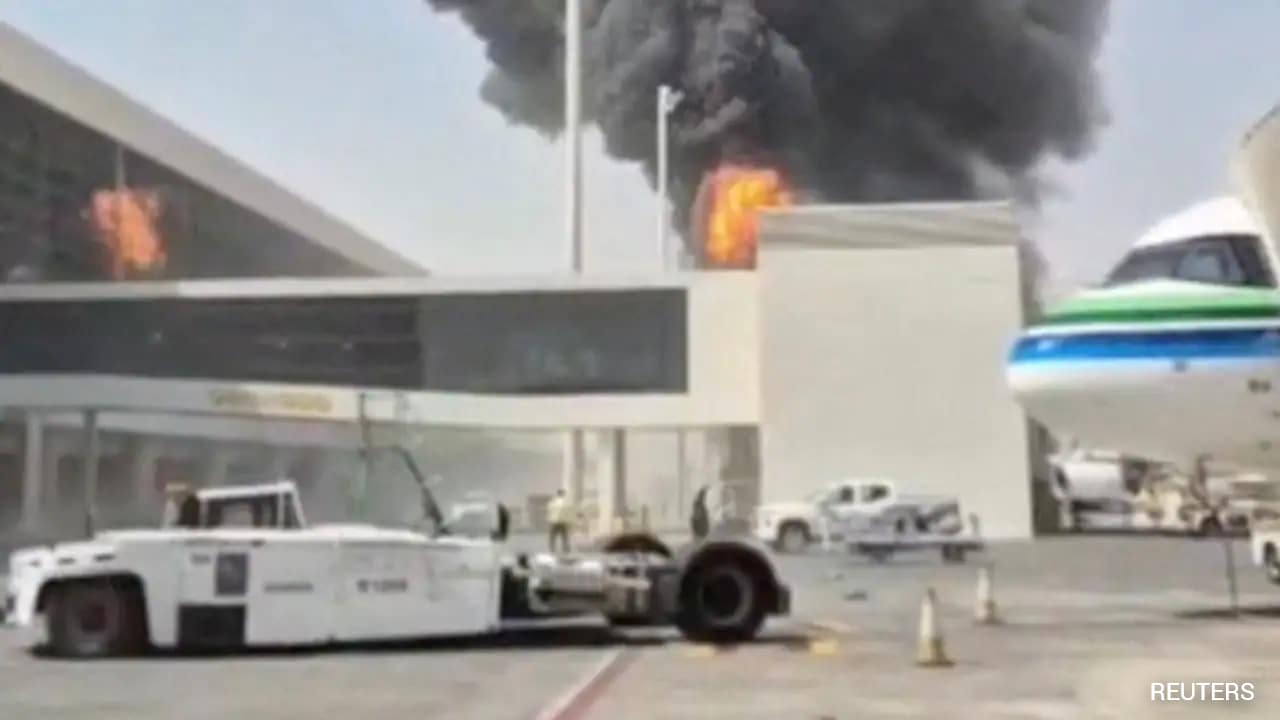
The advisory follows a sharp escalation in fighting in Yemen this month after the collapse of a multi-year informal ceasefire. The Houthis have carried out drone and missile strikes deep inside Saudi Arabia, including an attack on Riyadh’s King Khalid International Airport on October 10 that killed 13 people, among them an Indian national.
Washington regards the Houthis as a key Iranian-aligned armed group within Tehran’s regional network, citing Iranian weapons, funding and training, while noting that the movement retains considerable operational autonomy.
The civil war in Yemen began in 2014, when the Houthis seized the capital, Sanaa, and forced the internationally recognised government to relocate to Aden. In March 2015, a Saudi-led military coalition intervened to support the government, opening years of fighting and airstrikes. A United Nations-brokered truce in 2022 brought a period of relative calm and was followed by Saudi-Houthi talks aimed at a lasting settlement, but the ceasefire was never formalised into a comprehensive peace agreement.
The renewed Houthi campaign against Saudi Arabia adds a regional dimension to the continuing confrontation between the United States and Iran, which began in February and remains locked in a military and diplomatic stalemate after the collapse of a June agreement. Iran continues to restrict shipping through the Strait of Hormuz, a vital waterway for global oil trade, while the United States maintains a naval blockade of Iranian ports.
Iran’s Defence Minister has warned of “enormous damage” if the United States attacks, remarks that have added to regional tensions. Officials have not publicly detailed the intelligence behind the latest advisory, and claims made by the parties to the various conflicts have been difficult to verify independently.
For travellers and residents, the practical effect is uncertainty. Several airlines have adjusted schedules in recent weeks, and governments have urged citizens to keep travel documents in order and to remain in contact with their embassies. Advisories of this kind are ordinarily precautionary and do not by themselves indicate that an attack is imminent.
India has a large diaspora across the Gulf, and New Delhi has in the past issued its own advisories during regional flare-ups. Indian nationals in the region are advised to follow guidance issued by local authorities and their missions.