Explosions Heard in Kyiv as Russia Steps Up Winter Strikes on Energy Grid
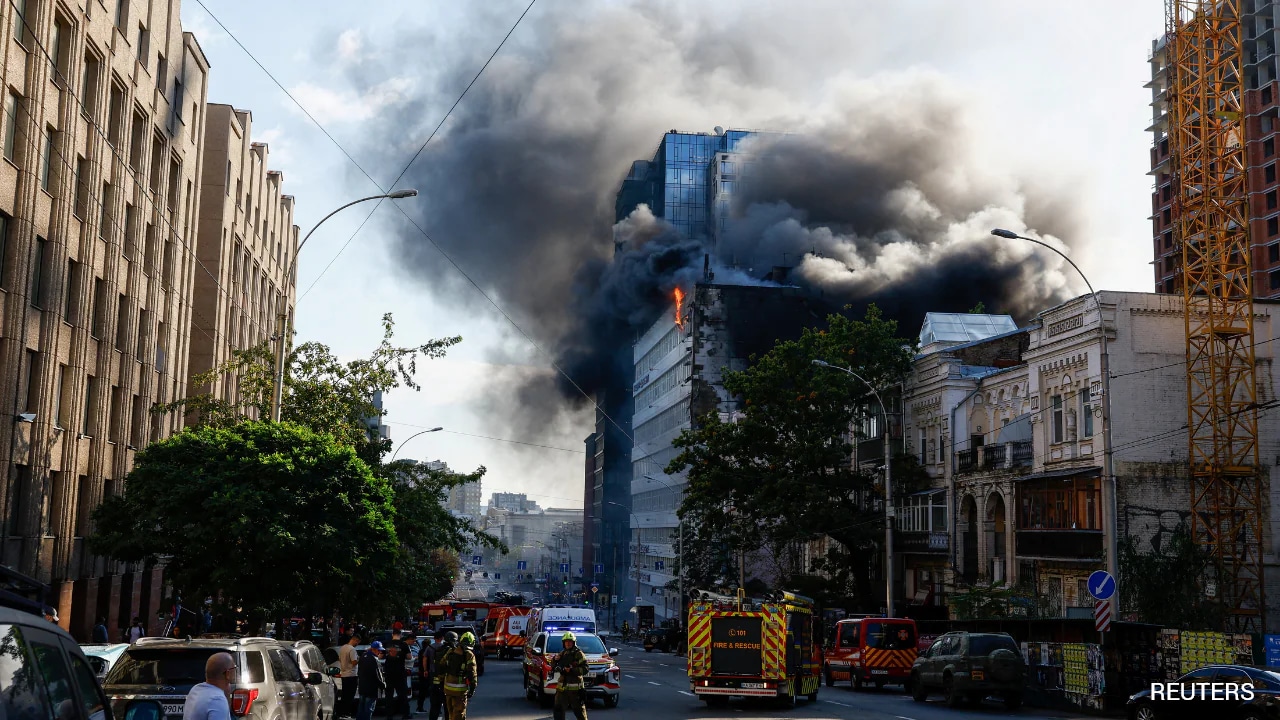
Multiple explosions were heard in Kyiv on Wednesday, an AFP journalist reported from the Ukrainian capital, shortly after the country's air force warned that a ballistic missile was heading towards the city.
The warning came a day after President Volodymyr Zelensky said in his nightly address on Tuesday that a "massive strike" was expected. Soon afterwards, scheduled power cuts plunged parts of Kyiv into darkness as operators moved to ease pressure on the country's damaged electricity grid.
Ukraine's air force said on Telegram: "Ballistic missile heading towards Kyiv." It also warned that a ballistic missile was headed towards Zaporizhzhia in the south-east. Military monitoring channels that track air activity over Ukraine said they expected a large-scale attack combining cruise and ballistic missiles with fast-moving jet-powered drones. Such accounts could not be independently verified.
Details of casualties or damage were not immediately available.
Kyiv has come under intensified attack in recent weeks as winter approaches. Russian strikes have hit energy infrastructure as well as rail and road transport, including bridges across the Dnipro river that link the two halves of the capital. Damage to power stations and substations has forced rolling blackouts across the country.
Air raid sirens have sounded almost continuously, day and night, with residents urged to take cover in basements, underground shelters and metro stations.
Since Russia's full-scale invasion in February 2022, its forces have repeatedly struck Ukraine's power generation and transmission network, with the heaviest waves of attacks falling in autumn and winter. Kyiv says these strikes are deliberately aimed at civilian infrastructure. Moscow has said it targets facilities linked to Ukraine's military capacity.
Under international humanitarian law, parties to a conflict must distinguish between military objectives and civilian objects. Deliberate attacks on objects indispensable to the survival of the civilian population can amount to violations of the laws of armed conflict.
Ukraine's air defences, bolstered by Western-supplied systems, have intercepted many missiles and drones in previous waves of attacks. Officials in Kyiv have continued to press allies for additional air defence equipment and ammunition, warning that shortages leave cities exposed.
Zaporizhzhia, also on the Dnipro river, lies close to the front line in the south-east and near Europe's largest nuclear power station, which has been a focus of international concern over safety since the war began.
There was no immediate comment from Russia's defence ministry on Wednesday's reported strikes. Accounts of attacks and battlefield developments from both sides are difficult to verify independently in wartime.
The renewed targeting of the energy system raises particular concerns for civilians as temperatures fall. Power cuts affect heating, water supply, hospitals and communications, and officials have urged residents to stock up on essentials and charge devices whenever electricity is available.
Humanitarian agencies have repeatedly warned that damage to energy infrastructure can leave millions without reliable access to heat and clean water during winter, with the elderly, children and people with disabilities facing the greatest risk.
Ukrainian officials have not yet given details of the scale of Wednesday's attack. Monitoring groups were still assessing how many of the reported missiles and drones had reached their targets or been intercepted.