Trump Says Iran Seeks Agreement but Not Ready for 'Right Deal'
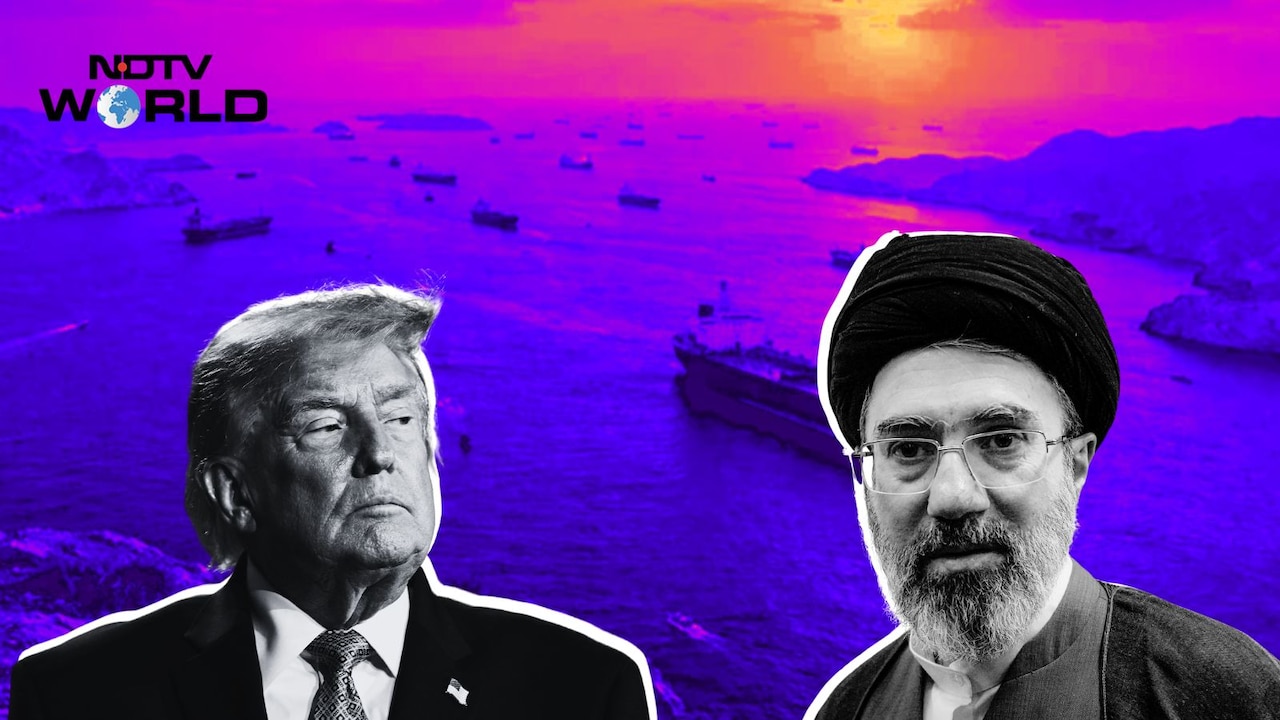
US President Donald Trump has said that Iran wants to reach an agreement but is not ready to accept the terms that Washington considers acceptable. Speaking to reporters at Joint Base Andrews before heading to Myrtle Beach, South Carolina, Trump said Tehran would "love to make a deal" but was unprepared for what he called "the right deal."
"So they would love to make a deal, but they're not ready to make the right deal in my opinion," he said.
Trump's remarks come amid escalating tensions between the two countries. The US President recently announced what he described as the "most crushing economic operation ever taken" against Iran. The measures, outlined in a Truth Social post, target oil smuggling networks, financial transfers, exchange houses, ship registries and front companies. Trump called the campaign an "Economic D-Day" and appealed to American allies to join in isolating Iran.
Trump also asserted that the United States has "total control" over the entire region surrounding the Strait of Hormuz. He argued that the pressure campaign does not imply limited military options. "No, not at all. It just means that we're seeing what happens. They have no money, they have no navy, they have no air force, they are not paying their soldiers, they're not paying their police, they have 350% inflation," he said.
In an interview with 77 WABC, excerpts of which were shared on X, Trump repeated his claims about Iran's weakened military. "The Navy's gone, the Air Force's gone, the leadership's gone," he said. He also said that talks with Iran had become difficult following the deaths of key Iranian leaders. On the nuclear issue, he said, "They cannot have a nuclear weapon, and they won't be having a nuclear weapon." These statements have not been independently verified.
Iranian Foreign Minister Seyed Abbas Araghchi dismissed the latest US pressure campaign as a failed approach. In a post on X, he referenced previous American policies, including the "most crippling sanctions" and "maximum pressure," and said they had failed. He predicted that the "most crushing economic operation ever" would also fail, accusing Washington of using the announcement to divert attention from its own economic challenges.
Iranian Parliament Speaker Mohammad Bagher Ghalibaf said Tehran would not reopen the Strait of Hormuz until the United States fulfills commitments under a 14-point Memorandum of Understanding. These commitments, according to Ghalibaf, include lifting the blockade, releasing frozen Iranian assets, and easing oil sanctions. The United States has not publicly confirmed the existence of such a memorandum.
The Strait of Hormuz is a strategically vital waterway through which a significant share of global oil exports pass. Any disruption there could have major consequences for the world economy. The latest escalation is part of a long history of mistrust between Washington and Tehran, with cycles of sanctions, threats, and occasional diplomatic overtures.
Trump's comments also come as his administration faces domestic economic pressures, and critics have accused him of using foreign policy to divert attention. Iran, meanwhile, continues to grapple with severe economic difficulties, including high inflation and unemployment.
Both sides have expressed openness to dialogue, but significant differences remain. The international community continues to monitor the situation, with many urging restraint and a return to diplomacy.