Kyiv Mayor Says City 'Fighting for Survival' as Russian Strikes Intensify

Kyiv's mayor, Vitali Klitschko, has said the city is facing a fight for survival as Russian strikes intensify, targeting critical infrastructure including a key bridge across the Dnipro River.
Speaking at a defence council meeting on Friday with Kyiv's top military, security, emergencies and police officials, Klitschko said: "We're talking about survival." He added that Russia's aim was to "sow panic" but stressed that the capital would "prevail - but only through the joint efforts of those who love it and care for it."
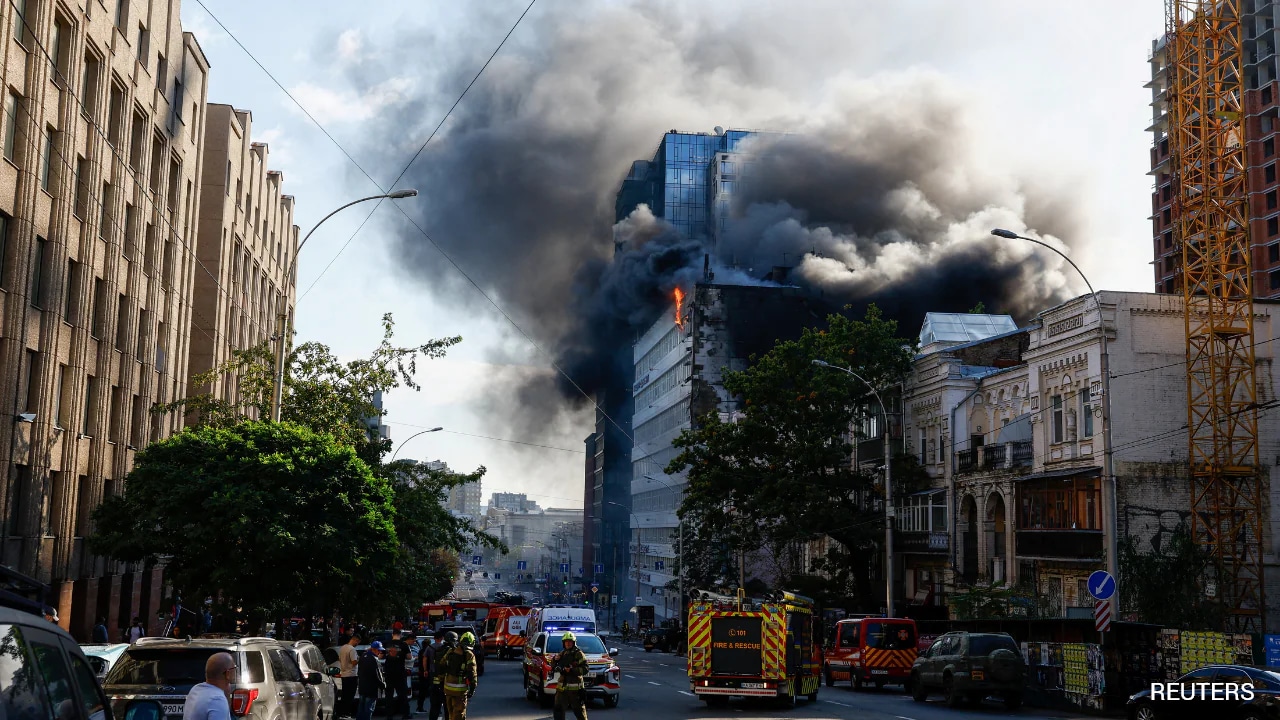
The mayor's remarks came just hours after the Pivdennyi (Southern) bridge was hit in an overnight Russian drone attack. On Friday evening, it was struck again - the fourth time in two days. The bridge is one of the main transport arteries across the Dnipro River, which divides the western and eastern parts of Kyiv. All metro and automobile traffic is now suspended across the bridge, causing major delays across the city. Restrictions are also in place on Kyiv's two other key bridges.
Kyiv's current population is estimated to be about three million, and many residents rely heavily on the city's metro network. One person was killed in the capital when a multi-storey residential building was hit overnight, Ukraine's state emergencies service (DSNS) said.
Ukrainian President Volodymyr Zelensky said that Russian President Vladimir Putin had decided in early September that "there are no rules now" when attacking Ukraine. In an excerpt from an interview with the Financial Times, Zelensky said: "The Russians have failed to occupy us. So now they are carrying out massive attacks and mass killings. They want to destroy our bridges... our data centres, the internet, mobile networks, hospitals, kindergartens, schools, universities - everything. They want people to flee their cities."
Putin, however, said that Russia's attacks on Ukrainian economic targets were a direct response to Ukraine's strikes on Russia's oil refineries and its ships in the Black Sea. "Now from every direction we're receiving calls 'let's stop'. But they started it," Putin said after his Thursday speech at the Valdai foreign policy forum. Putin acknowledged that Kyiv had "got some results" from its refinery attacks and that Russia had lost about 1% of its GDP. Ukraine says it began attacking Russian oil infrastructure because it helps the Kremlin finance the war.
Russia has targeted Ukrainian energy infrastructure, ramping up attacks every winter since Putin launched a full-scale invasion in 2022. The recent strikes on Kyiv's infrastructure are part of this ongoing pattern, with both sides trading blame for the escalation. The impact on civilians continues to grow, as critical services are disrupted and daily life becomes increasingly difficult.
The Southern Bridge is a vital link for commuters and goods, and its closure has left many residents struggling to move across the city. The metro system, which normally carries a large portion of Kyiv's population, is now partially suspended, forcing people to use alternative routes or stay home. Emergency services also face challenges in reaching affected areas due to traffic disruptions.
This is not the first time Kyiv's infrastructure has been targeted. Since the start of the full-scale invasion, Russian forces have repeatedly struck energy facilities, water systems, and transport networks, aiming to cripple the country's ability to function. Ukraine, in turn, has targeted Russian oil refineries and military assets, seeking to undermine Moscow's war effort.