Supreme Court Declares Walking on Footpaths a Fundamental Right; Gurgaon’s Infrastructure Falls Short
The Supreme Court of India has ruled that the right to walk safely on well-demarcated footpaths is a fundamental right, forming part of the right to movement guaranteed under Article 19(1)(d) and the right to life and liberty under Article 21. The court emphasized that pedestrian movement must take precedence over motorised vehicles on designated paths.
This landmark judgment has drawn attention to the state of pedestrian infrastructure in Gurgaon, a city where walking accounts for 33% of all daily intra-city trips, according to the Comprehensive Mobility Management Plan (CMMP) prepared for the Gurugram Metropolitan Development Authority (GMDA) in 2020. Despite this high reliance on walking, the city's average Walkability Index—measuring safety, security, convenience, and policy support—stands at a low 0.68 out of 5.
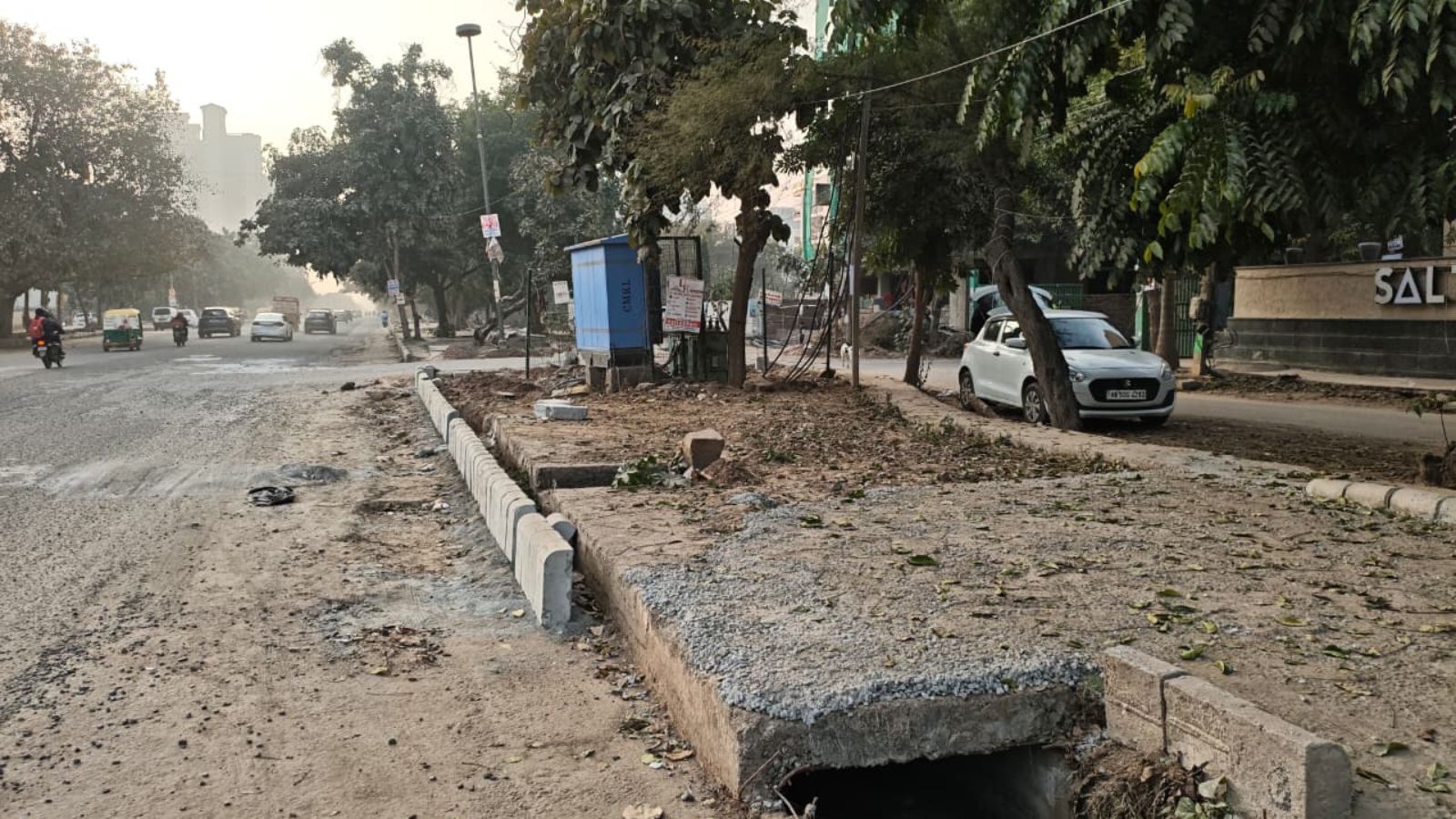
The CMMP report highlighted that pedestrian facilities, including footpaths and safe crossing mechanisms, have been 'grossly inadequate' and 'deficient not only in quantity but also in quality,' making pedestrians highly vulnerable. Before recent interventions, only 28% of the city’s total road network—153.6 km—was covered by footpaths, primarily in the inner core and areas like MG Road and HUDA City Centre. However, these footpaths are often obstructed by parked vehicles or vendors, forcing pedestrians onto roads, which is both unsafe and inconvenient.
Newer developing areas such as Badshahpur and sectors beyond the Dwarka Expressway reportedly lack footpaths entirely. The CMMP analysis identified 800 km of road network without essential pedestrian infrastructure. To address this, authorities have set a target to develop a total footpath network of 1,083 km by 2041, ensuring 100% coverage of primary roads. The plan mandates a minimum clear width of 1.8 meters on each side to accommodate wheelchair users, and at least 2.5 meters in commercial zones.
GMDA Chief Town Planner Sanjeev Maan stated that about 40% of the target has been achieved so far, with regular meetings held to discuss progress. However, Sarika Panda Bhatt, co-founder of the Raahgiri Foundation, an NGO working on sustainable urban mobility, noted that the walkability index has worsened since 2020, with major roads dug up and existing footpaths damaged.
The Supreme Court’s ruling provides a constitutional basis for citizens to demand safe pedestrian infrastructure. While Gurgaon’s authorities have committed to long-term improvements, the gap between policy and on-ground reality remains significant.