Cabinet Approves Rs 23,731 Crore GOBARdhan Scheme to Boost Biogas, Empower Farmers
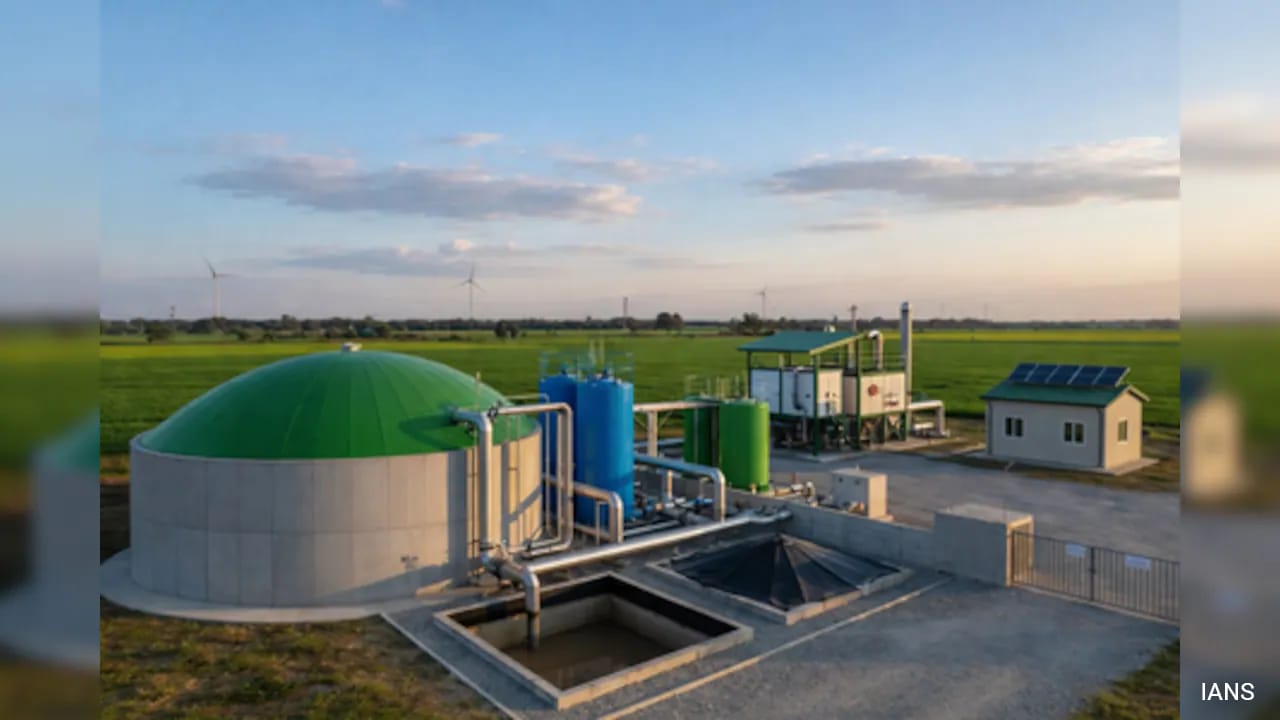
The Union Cabinet, chaired by Prime Minister Narendra Modi, has approved the 'GOBARdhan' National Circular Bioenergy Scheme with a total outlay of Rs 23,731 crore. The scheme, to be implemented from financial year 2026-27 to 2035-36, aims to make compressed biogas (CBG) a major component of India's energy mix.
According to an official statement, the scheme seeks to increase domestic CBG production nearly ten-fold, attract large-scale private investment, and foster a circular bioeconomy. A key feature is the 'CBG Offtake Assurance' framework, designed to provide producers with a reliable and predictable market.
The framework aligns with the government's notified CBG Obligation trajectory, which mandates 3 per cent blending in FY27, 4 per cent in FY28, and 5 per cent from FY29 onwards in the CNG (transport) and PNG (domestic) segments. This is expected to give clear long-term demand signals to the industry, improving project viability and encouraging sustained investment.
To ensure revenue certainty, the scheme introduces an administered CBG price of Rs 2,110 per Metric Million British Thermal Unit (MMBTU), backed by a government-supported pricing mechanism. The statement notes that a minimum ten-year horizon will give producers durable revenue visibility, commercially attractive returns, and a stronger case for investment and capacity expansion.
Eligible greenfield CBG projects will receive capital assistance of up to Rs 2 crore per tonne per day (TPD) of installed capacity. This support covers not only core plant machinery but also critical value-chain assets for feedstock aggregation, organic manure processing, and value addition. Brownfield projects that expand capacity are also eligible.
The scheme also provides support for both cluster-based and standalone pipeline infrastructure connecting CBG plants to trunk pipelines and city gas distribution networks. Improved connectivity is expected to reduce evacuation costs, enhance reliability, and expand market reach for domestically produced CBG.
A dedicated Credit Guarantee mechanism is part of the scheme to boost lender confidence and increase institutional credit flow to eligible MSME-based CBG projects. By absorbing a share of lending risk, it aims to make finance more accessible, lower collateral requirements, and accelerate project development.
Additionally, a CBG Ecosystem Challenge Fund will be established to fast-track district-level implementation and strengthen local value chains. The scheme will be administered by the Ministry of Petroleum and Natural Gas, providing a single integrated platform across the CBG value chain.
The GOBARdhan scheme builds on India's existing efforts to convert organic waste into energy and biofertilisers, offering farmers a new source of income through waste supply and manure use. The initiative is part of the government's broader push towards clean energy and sustainable agriculture.