Russia's overnight strikes kill 10 in Ukraine; Kyiv alleges North Korean missiles used

Russian attacks across Ukraine killed at least 10 people overnight and wounded dozens, Ukrainian authorities said on Tuesday, accusing Moscow of using North Korean missiles in the assault.
The southeastern city of Zaporizhzhia was the worst hit, with seven people killed and 24 wounded, local officials reported. All seven deceased were employees of the Zaporizhstal steel plant. The plant said the ballistic strike caught workers on their way to shelter after the air alert was announced.
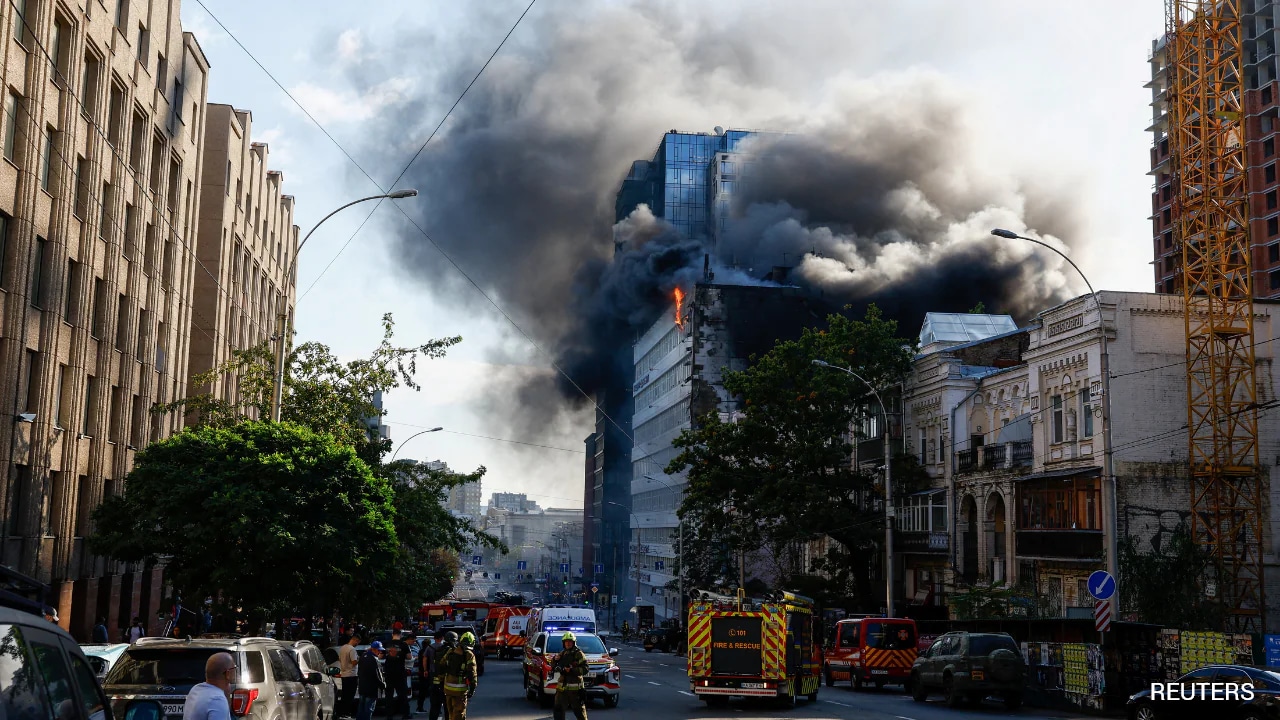
Three more people were killed in the neighbouring Dnipropetrovsk region, according to the local military administration. In the capital Kyiv, President Volodymyr Zelensky said an infectious diseases hospital was struck, while attacks on the frontline cities of Kharkiv and Kherson caused power outages. A children's hospital in Kyiv was also hit, but the Health Ministry said no children or staff were harmed as they were in a shelter at the time.
Russia's Defence Ministry said its forces carried out a group strike with high-precision ground-based weapons, hitting military-industrial enterprises and transport-logistics centres in Kyiv and Zaporizhzhia.
Later on Tuesday, Russia attacked the northeastern Sumy region with four guided aerial bombs, killing a man driving past a targeted area, according to regional governor Oleg Grygorov. Two more people were killed in a daytime strike in the southern port region of Odesa, local authorities said.
Russia also reported a civilian killed in a drone strike in its Belgorod region, which borders Ukraine.
Zelensky has renewed warnings about deepening military ties between Moscow and Pyongyang, claiming Russia had received additional ballistic missiles from North Korea and that a decision had been made to deploy 30,000 to 50,000 North Korean troops on Russian territory. Kyiv has not provided evidence or a timeframe for these claims, but Zelensky is urging allies in the Asia-Pacific to supply more air defence systems to counter what he describes as Pyongyang's involvement.
South Korea's foreign ministry said it was watching the situation closely, calling military cooperation between North Korea and Russia a direct security concern and a violation of UN Security Council resolutions. Hong Min, a senior researcher at the Korea Institute for National Unification, said further North Korean deployments were highly plausible given Russia's growing demand for manpower as the war drags on.
The conflict, now in its fifth year, has seen Russia increasingly rely on North Korea for support. Pyongyang previously sent thousands of troops to help repel a Ukrainian counterattack in Russia's Kursk region. The two countries signed a mutual defence pact in 2024, and Western, Ukrainian and South Korean intelligence have long accused North Korea of supplying weapons to Russia.