Punjab MLAs Admit Passing Anti-Sacrilege Bill Without Reading, Experts Flag 'Criminal' Dereliction
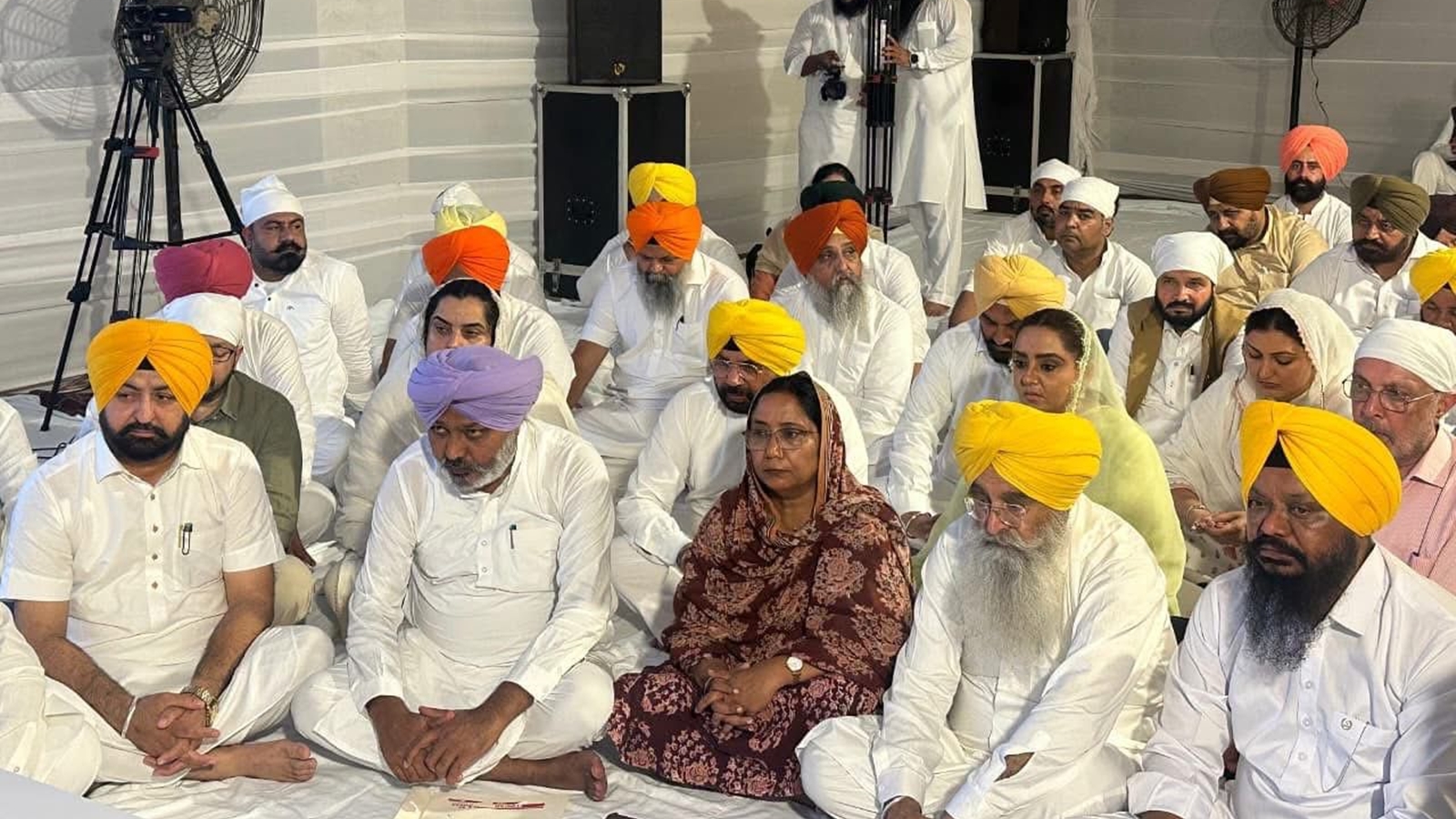
Several Punjab MLAs from different parties acknowledged before the Akal Takht on Monday that they had passed the anti-sacrilege legislation without reading its contents, claiming that copies of the Bill were circulated only at the last minute.
The Akal Takht, the highest temporal seat of Sikhism, had summoned Sikh MLAs and ministers over objections to provisions of the recently enacted Jaagat Jot Sri Guru Granth Sahib Satkar (Amendment) Act, 2026. The Takht has maintained that the legislation was passed by the ruling Aam Aadmi Party (AAP) government without consulting it, the Shiromani Gurdwara Parbandhak Committee (SGPC) or other Sikh stakeholders.
Experts termed the admission 'criminal and irresponsible', saying that legislators passing laws without reading them undermines democracy. They also flagged concerns over sensitive Bills being passed 'within minutes and often without meaningful debate'.
'Every Bill has to undergo three readings — introduction, detailed discussion and scrutiny – and finally voting. Broadly, the procedure is the same in Parliament and Assemblies. But these constitutional safeguards are hardly being followed,' said Ashutosh Kumar, professor of political science at Panjab University, Chandigarh.
Kumar explained that the second reading, which involves detailed debate and clause-by-clause scrutiny, is the heart of the legislative process. 'Today, the second reading is no longer being taken seriously. Bills are being passed within minutes, without discussion, including in Punjab. Many lawmakers now see constituency work as their primary responsibility, not lawmaking. At the state level, it has become an even bigger circus, with multiple Bills being passed in quick succession without MLAs reading a word.'
He criticised the practice of passing legislation in the absence of the Opposition, calling it 'criminal and irresponsible'. Regarding the anti-sacrilege law, he said not consulting the Akal Takht was a 'grave mistake'.
Paramvir Singh, professor at Punjabi University and member of an SGPC committee constituted to advise the government on a separate all-faith anti-sacrilege Bill, said the government never responded to their queries or shared details despite repeated reminders. He noted that the committee was not consulted on the 2026 Amendment Act.
The earlier all-faith Bill, 'The Punjab Prevention of Offences Against Holy Scriptures Bill, 2025', remains pending before a Select Committee. Critics argue that the government bypassed proper procedure by introducing the 2026 Amendment without wider consultation.