No sanction, no case: Supreme Court quashes defamation proceedings against Rahul Gandhi

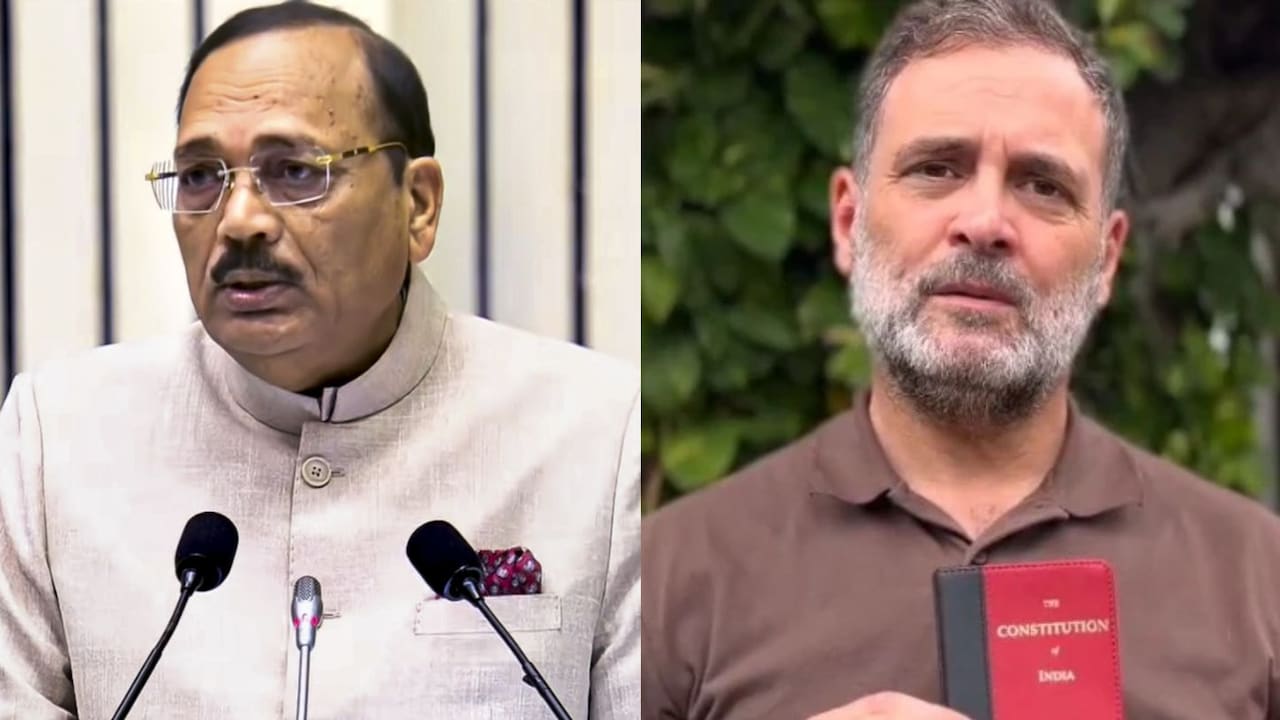
The Supreme Court on Friday (August 14, 2026) quashed the criminal defamation complaint and the summons issued against Rahul Gandhi, the Leader of Opposition in the Lok Sabha, for his remarks about Vinayak Damodar Savarkar. A Bench headed by Justice Dipankar Datta passed the order, noting that an affidavit filed by the Uttar Pradesh government revealed that no sanction had been granted for the prosecution.
Under the Code of Criminal Procedure, a court cannot take cognizance of a defamation complaint against a public servant for acts done in the discharge of official duties without prior sanction from the appropriate government. The Supreme Court observed that the absence of sanction made the proceedings legally unsustainable.
“Sanction is required. But there is no sanction. If there is no sanction, there is no case. You have to follow the law,” Justice Datta told the state government and the complainant.
The Bench quashed both the complaint filed by Nripendra Pandey, a Lucknow resident, and the summons issued by a Lucknow Magistrate. Mr. Pandey had accused Mr. Gandhi of deliberately insulting Savarkar during a rally in Maharashtra’s Akola district on November 17, 2022, as part of the Congress leader’s Bharat Jodo Yatra. The complainant alleged that the remarks were part of a “well-planned conspiracy” to defame the Hindutva ideologue.
Mr. Gandhi had moved the Supreme Court after the Allahabad High Court’s Lucknow Bench, on April 4, 2025, declined to intervene at that stage, saying he could file a revision petition before the sessions court. The Congress leader had challenged the trial court’s decision to summon him in the case.
Criminal defamation is defined under Section 499 of the Indian Penal Code, and the procedure for prosecution is governed by Section 199 of the Code of Criminal Procedure. The provision mandates that when a public servant is accused of defamation in respect of acts done in the discharge of official duties, the court cannot take cognizance without the government’s sanction. In this case, the UP government’s affidavit confirmed that no such sanction had been given, a fact that proved decisive.
The Supreme Court’s ruling does not address the merits of Mr. Gandhi’s remarks. It is limited to the procedural defect in the initiation of the prosecution. The order reaffirms the legal safeguard that protects public servants from frivolous defamation cases while allowing legitimate grievances to be pursued through proper channels.
Following the quashing of the complaint and summons, the complainant retains the option to approach the appropriate forum if he can satisfy the legal requirements, including obtaining the necessary sanction. The state government also retains the power to grant sanction in the future, which would allow the complaint to be revived. For now, the case stands closed on the ground of non-compliance with the law.