Supreme Court Quashes Case Against Rahul Gandhi Over Savarkar Remarks Citing Lack of Sanction

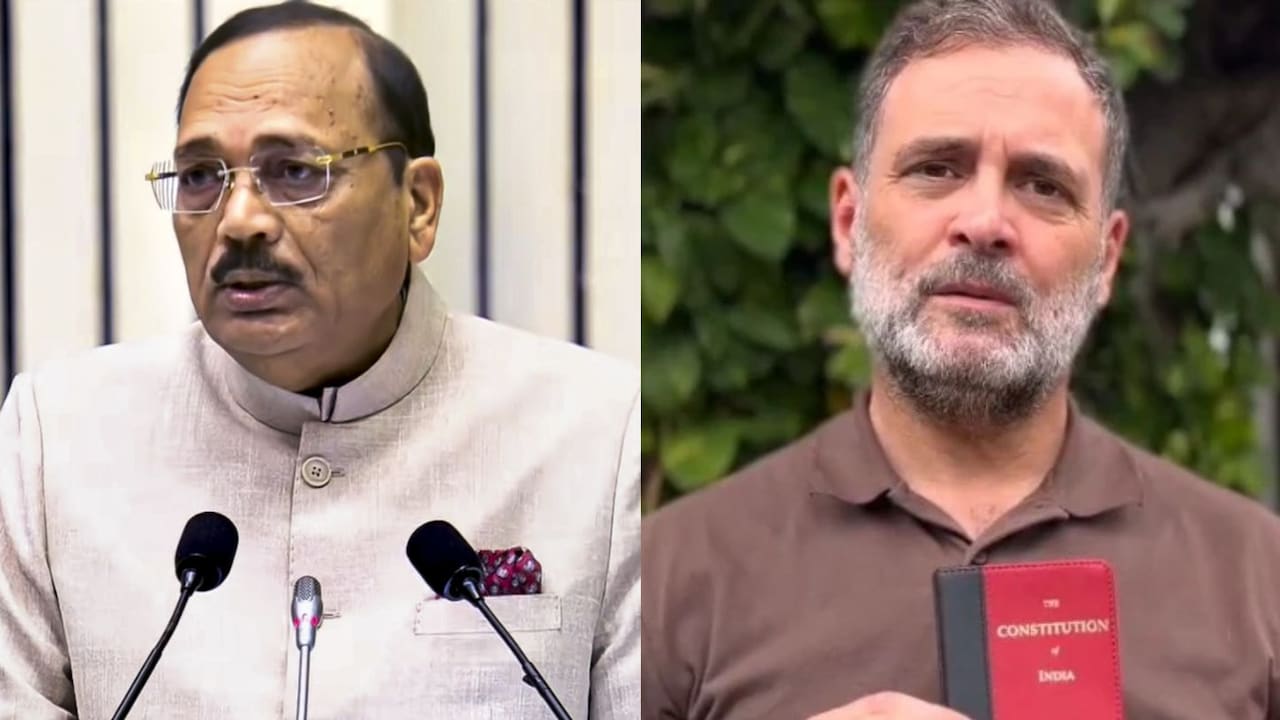
The Supreme Court on Friday quashed a private criminal complaint against Rahul Gandhi, Leader of the Opposition in the Lok Sabha, over his remarks on Vinayak Damodar Savarkar. The ruling came on the grounds that the mandatory sanction required for such a prosecution had not been obtained.
A bench of Justices Dipankar Datta and Sheel Nagu set aside the complaint and the orders passed by a magistrate in Uttar Pradesh, which had earlier issued a summons to Gandhi. The bench noted that the affidavit filed by the state government disclosed no sanction, making the complaint invalid. “In such view of the matter, the complaint and orders passed by magistrate stands quashed,” the court said.
The case originated from a complaint filed by advocate Nripendra Pandey, who accused Gandhi of promoting communal disharmony during the Bharat Jodo Yatra. On November 17, 2022, Gandhi had described Savarkar as a collaborator with the British and stated that he received a pension from colonial rulers. The complainant argued that these remarks were aimed at fostering enmity between communities and amounted to a public mischief.
Gandhi, who is also a Congress MP, faced charges under Sections 153A (promoting enmity between different groups) and 505 (public mischief) of the Indian Penal Code. The magistrate in Uttar Pradesh had taken cognizance of the complaint and summoned him as an accused. Challenging this, Gandhi moved the Supreme Court seeking quashing of the summons.
During the hearing, the Additional Solicitor General, appearing for the state, submitted that the affidavit filed by the Uttar Pradesh government did not disclose any sanction. The Supreme Court, therefore, concluded that the complaint was not maintainable. The court did not examine the truth or falsity of Gandhi’s statements about Savarkar, nor did it rule on whether they were defamatory or inflammatory. The decision is purely procedural, underscoring that legal requirements must be met before a prosecution can proceed.
The case is one of several legal challenges faced by Gandhi. This ruling is a relief for him, but it does not settle the broader political and historical debate surrounding Savarkar’s legacy. Savarkar, a freedom fighter and ideologue of Hindutva, remains a polarising figure. He was a leader of the Hindu Mahasabha and is credited with shaping Hindutva ideology. He was imprisoned by the British for his activities but later faced accusations of involvement in the conspiracy to assassinate Mahatma Gandhi, for which he was acquitted. His supporters view him as a nationalist hero, while critics point to his petitions for clemency to the British as evidence of collaboration.
The Supreme Court’s decision highlights the importance of procedural safeguards in the criminal justice system. Sanction is a legal prerequisite in certain cases, often intended to protect public servants and individuals from frivolous or malicious complaints. The lack of such sanction renders the proceedings invalid, regardless of the merits of the allegations.
Political reactions to the ruling are likely to be divided. Congress leaders may welcome the decision as a validation of Gandhi’s stance, while opponents might criticise the court’s procedural approach. However, the legal position is clear: the complaint failed to comply with a necessary formality, and thus it was quashed.
The court did not impose costs on the complainant, and the order opens no further action on this particular complaint. Whether the complainant will pursue a fresh complaint with the required sanction remains uncertain. For now, the legal chapter is closed, though the political discourse around Savarkar and Gandhi’s remarks is likely to continue.