Pune teen Arnav Paparkar becomes first Indian in 36 years to reach Wimbledon boys' singles quarterfinals
On July 8, 14-year-old Arnav Paparkar called his mother, Dr Vijaya Paparkar, from Wimbledon with the news: 'Match ho gaya hai, Mummy. Main jeet gaya hoon.' (The match is over, Mummy. I have won.)
What Arnav did not know as he walked off the court after defeating Japan's Ryo Tabata 6-2, 6-1 in 52 minutes in the boys' singles Round of 16 was that he had just made history. He became the first Indian in 36 years to reach the Wimbledon boys' singles quarter-finals. Leander Paes was the last Indian to achieve this in 1990.
'I had to stretch. I had to eat. So, I avoided checking WhatsApp or Instagram. It was two hours later that I saw a post announcing that I was the first Indian to reach the boys' singles quarter-finals at Wimbledon in more than three decades. It was a very different feeling. I was shocked and honoured,' said Paparkar.
In the quarter-final, after Jordan Lee of the United States defeated him on Thursday, Arnav called his mother again. 'Mummy, match ho gaya. Main haar gaya.' (Mummy, the match is over. I have lost.)
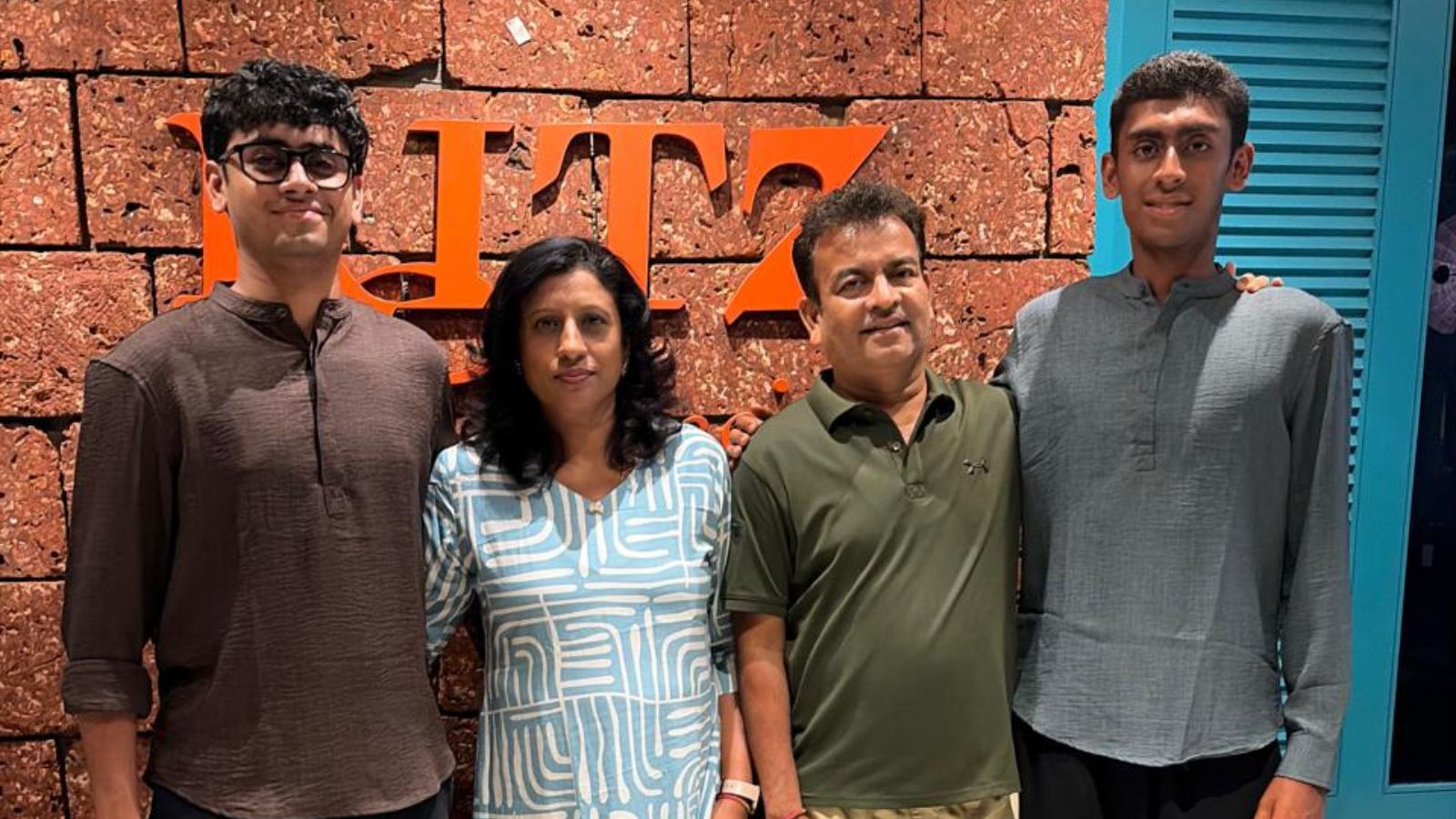
On Saturday morning, Arnav was back home in Bavdhan, Pune, where he lives with his parents and his older brother, Aryan Paparkar, a mechanical engineer. The family places a strong emphasis on hard work, respect and education.
'We have a system where you can play as much as you want but, for one hour every day, you have to sit with a book,' said Vijaya.
Arnav's room is adorned with posters of his football heroes, especially Cristiano Ronaldo, and memorabilia collected from Grand Slam tournaments worldwide. His first home-cooked meal after two months—during which he played the French Open and Wimbledon—was idli-sambar for breakfast. There was chicken for dinner.
'It is a normal day for us. Reaching the quarter-finals of the Wimbledon boys' singles was an important milestone, but it is another step in our long journey. Goal bahut aage hai. (The goal is still far ahead.) We will celebrate a little today and keep walking forward,' said Vijay Paparkar, Arnav's father, an engineer.
Coach Hemant Bendre recalled his emotions when Arnav lost. 'I am feeling bad. I always thought that he could make it to the finals. He was 15 when he came to us for coaching. He was doing well at the national level but I thought he could play internationally well. Reaching the quarter-finals is one of those milestones that we need in between to motivate us,' said Bendre.
Arnav found his footing early in the fitness-conscious atmosphere of Pune. A calm child, he was naturally drawn to sports. He joined a football academy, played cricket for a while and even took up skating. At six, he became a member of a club, now known as Metro City Sports Club in Rambaug Colony, Kothrud, where he swam in the pool.
'There was a tennis court right beside it and I used to watch the players. When the coach there asked me to join, I was happy to start playing tennis,' he said.
His parents, though not sportspersons themselves, wanted their sons to be active—just as a hobby and not as the main focus. But from the beginning, Arnav struck the tennis ball well. Coaches pointed out that he had an excellent, almost intuitive, sense of ball speed and timing. A year later, he was playing tournaments in Pune. Soon, he began progressing rapidly.
'From time to time, we upgraded his academy. The New India School, where he studied, supported him by accommodating his absences and relaxing his examination schedule,' said Vijay.
By the time he reached Class VIII, Arnav had to spend more time on tennis than on studies. 'We had to make a decision about his future. Kya karna hai? School pe shift hona hai ya tennis pe? (Should we shift our focus on school or tennis?)' he added. The decision was to pursue tennis seriously, a path that led him to Wimbledon history.