Phoenix's Heat Survival Blueprint: How a Desert City Slashed Deaths Amid Rising Temperatures
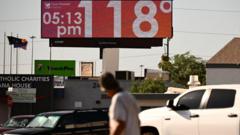
As record-breaking heatwaves sweep across the United States and Europe, claiming hundreds of lives, one city in the American Southwest offers a proven model for reducing heat-related deaths. Phoenix, Arizona, located in Maricopa County—one of the hottest regions in the US—has implemented a series of measures over the past decade that have significantly lowered mortality rates during extreme heat events.
According to data from the Maricopa County Department of Public Health, the county recorded 130 heat-associated deaths in 2020, a number that has declined in subsequent years despite increasingly severe heatwaves. The county's approach includes the expansion of cooling centres, distribution of free air conditioning units, and a robust public awareness campaign.
“We recognised that heat is a silent killer that disproportionately affects vulnerable populations—the elderly, the homeless, and those without access to air conditioning,” said Dr. Rebecca Sunenshine, medical director for Maricopa County. “Our strategy focuses on early intervention, community partnerships, and ensuring that no one is left without options during extreme heat alerts.”
The effectiveness of Phoenix’s measures is particularly relevant this summer, as Europe and North America grapple with heatwaves that scientists attribute to climate change. In late June, France reported an excess of 2,000 deaths during a heatwave that shattered records. In England and Wales, an estimated 2,700 heat-related deaths occurred between May and August, according to the UK Health Security Agency. The US saw at least 44 heat-related fatalities over the Fourth of July weekend alone.
“People don't realise this is not the same heat that we were experiencing 10 years ago,” said Jennifer Marlon, a researcher at Yale University who studies extreme heat impacts. “It is actually worse, because in many cases nighttime temperatures are not cooling off.” The human body relies on cooler nights to recover from daytime heat stress; when overnight temperatures remain high, the risk of heatstroke and cardiovascular failure rises sharply.
Phoenix’s programme involves a multi-pronged approach. The city operates over 70 cooling centres during peak heat months, including libraries, community centres, and designated “hydration stations” where residents can fill water bottles. The county also runs a “Heat Relief Network” that distributes portable air conditioning units and fans to low-income households and individuals experiencing homelessness. Outreach teams patrol streets to check on vulnerable individuals and transport them to shelters.
Critically, local authorities have streamlined the process for declaring a heat emergency. When the National Weather Service issues an excessive heat warning, the county activates a coordinated response involving public health, emergency management, and non-profit organisations. “We don’t wait for people to come to us; we go to them,” said Tom O'Hara, a spokesperson for Phoenix’s Office of Heat Response and Mitigation.
The results are evident. While heat deaths remain a concern, the rate per 100,000 residents has declined from 10.8 in 2017 to 7.2 in 2021. “Phoenix has shown that with sufficient investment and political will, heat deaths are preventable,” said Marlon. “Other cities can adapt these strategies to their local context, especially as global temperatures continue to rise.”
However, experts caution that Phoenix’s success relies on sustained funding and community engagement. As heatwaves become more frequent and intense, scaling up these efforts will be crucial. “The blueprint is there, but it requires long-term commitment,” said Dr. Sunenshine. “This is not a one-time fix—it’s a fundamental shift in how we treat extreme heat as a public health emergency.”
For cities in the US, Europe, and Asia now facing unprecedented heat, Phoenix offers a pragmatic example: systemic planning, targeted assistance, and a proactive culture can save lives, even as the mercury rises.