Partial burning of crop residue remains key hurdle in tackling pollution: Study
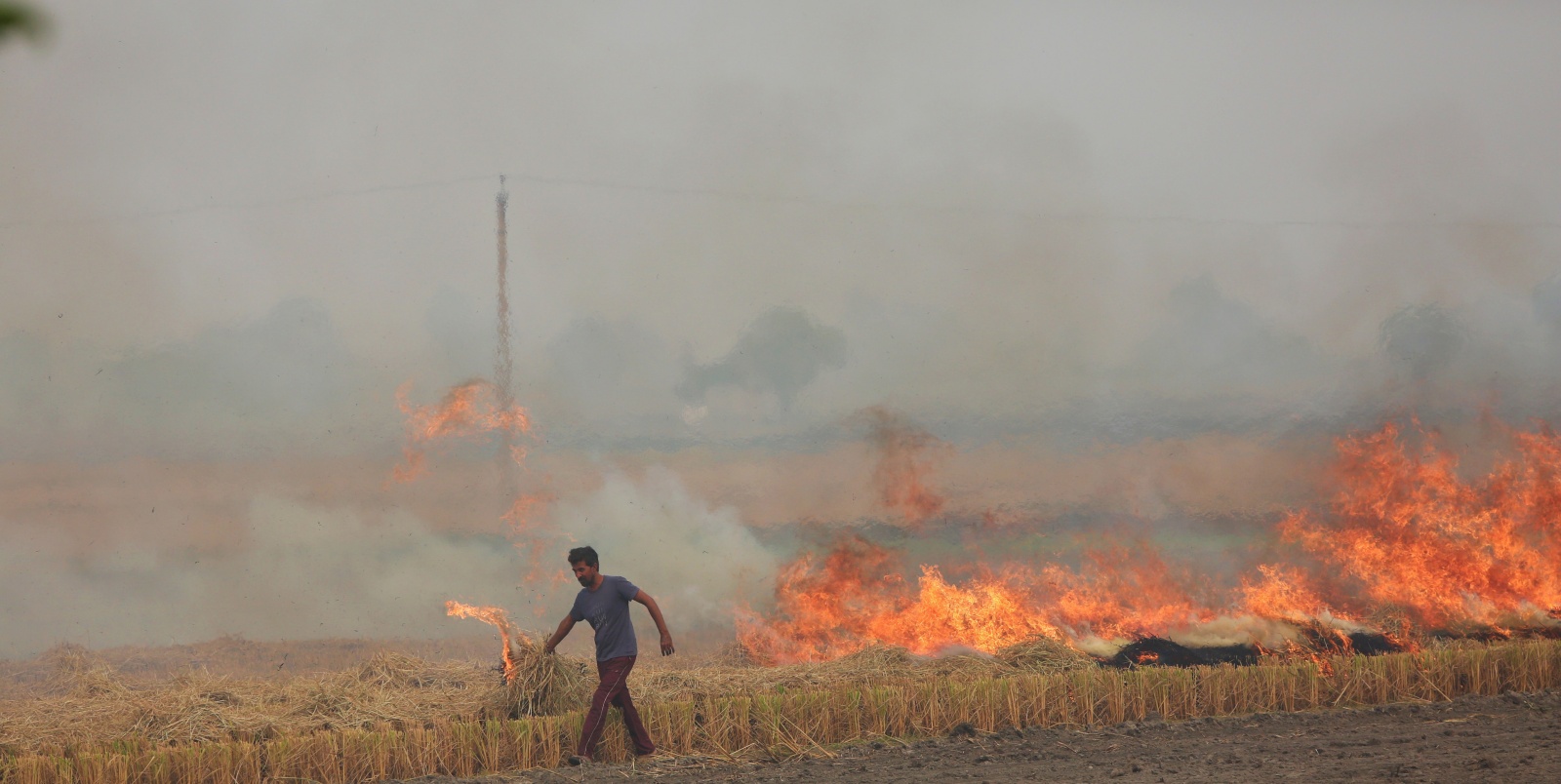
A recent study by the Council on Energy, Environment and Water (CEEW) has identified “partial burning” of crop residue as a significant hurdle in efforts to reduce air pollution from farm fires in Northwest India. Despite increased adoption of crop residue management (CRM) machines, many farmers continue to set fire to residual stubble, citing concerns over pest attacks, costs, and lack of confidence in alternative methods.
The study, titled “Behaviour Change Approaches to Tackle Stubble Burning at Scale: Reimagining Crop Residue Management,” is based on a survey of 102 farmers in Punjab’s Sangrur, Ludhiana, and Amritsar districts, focus group discussions with 36 farmers in Amritsar and Kapurthala, and consultations with 15 agriculture officials. CEEW, a non-profit research organisation, released the findings on Tuesday.
Crop residue burning in Punjab and Haryana during October and November contributes severely to air pollution, accounting for up to 30–35% of the PM2.5 levels in Delhi during peak season. The study found that 63% of surveyed farmers had moved away from complete burning. However, 31% continued to partially burn their fields, while 6% still practised complete burning. This indicates uneven progress in the adoption of no-burn practices.
Among farmers who continued burning residue either partially or completely, 67% cited prevention of pest attacks as the main reason. Notably, 57% of them admitted they had never personally witnessed increased pest attacks, suggesting that hearsay and peer narratives significantly influence their decisions. The study notes that while reported farm-fire incidents have declined since 2022, fire counts alone may not fully reflect on-the-ground changes due to shifts in burning behaviour, timing of fires, and limitations of satellite detection. A 2025 ISRO study highlighted that stubble burning now occurs at different times of the day, which can affect satellite monitoring.
The CEEW report also uncovered low awareness of government initiatives. Only 14% of surveyed farmers had heard of the Punjab government’s Unnat Kisan app, meant to facilitate CRM machinery rentals. Furthermore, 78% of farmers were unaware of CRM training schedules. Among those who had received training, 73% said it was largely lecture-based with limited practical demonstrations. This lack of practical guidance may undermine the effective use of CRM machinery, which is critical to avoiding partial burning.
To address these challenges, the study recommends moving beyond generic information campaigns towards a dedicated “Behaviour Change Communication” strategy under the CRM scheme. This would involve segmenting farmers into distinct categories—those who have never used CRM machinery, those who have just started, regular users, those who stopped after negative experiences, and partial burners who are close to full adoption. For partial burners, targeted technical reassurance, field demonstrations, and peer testimonials are suggested to tackle fears about pests, machine reliability, and maintenance costs.
The report also calls for district-specific communication. In villages with low burning incidents, the focus should be on completing the shift to no-burn practices. In medium-burn villages, efforts should target farmers who have adopted machinery but continue partial burning. In high-burn districts, messaging should directly address local fears such as pest attacks and machine reliability. Such a nuanced approach, the study argues, could help bridge the gap between technology access and sustained behaviour change.
The issue of stubble burning has been a persistent environmental and health challenge, with courts and regulatory bodies often directing states to ensure strict enforcement. However, the CEEW study suggests that a more holistic approach combining enforcement with behaviour change communication is needed to achieve lasting results.