New AI system aims to sharpen Delhi's winter air quality forecasts, experts cautious
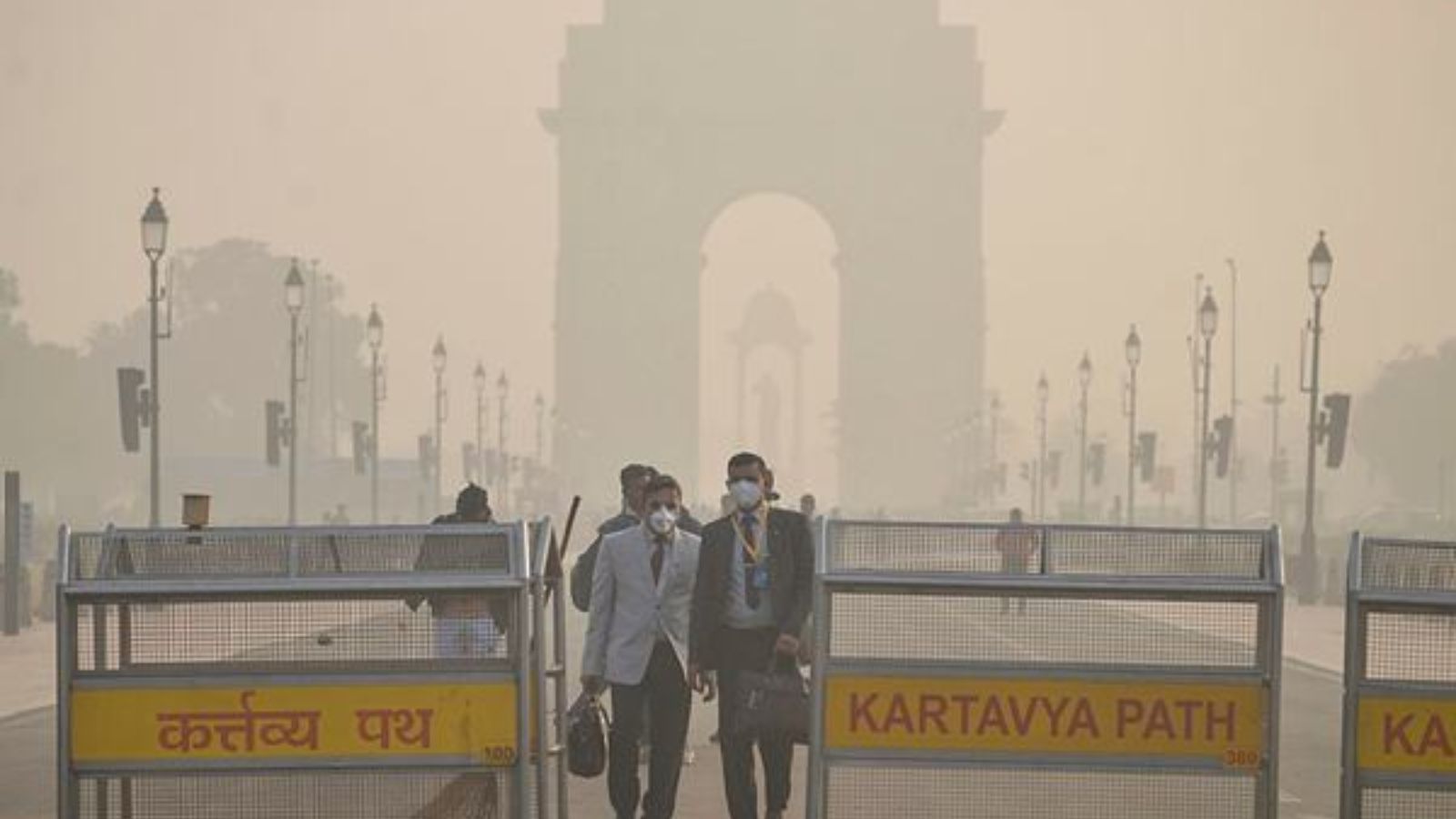
Every winter, as Delhi battles severe air pollution, emergency measures are introduced based on forecasts of how bad the air is likely to become. To improve these forecasts, the Indian Institute of Technology Kanpur's Airawat Research Foundation (ARF) has been developing an artificial intelligence-based system under a pilot initiative, sources said.
The current model, known as the Decision Support System (DSS), used for identifying pollution sources and air quality forecasts, suffers from several issues, including an ageing emissions database and reduced accuracy outside peak winter months, as reported by The Indian Express in November 2024. To address these problems, IIT Kanpur signed a memorandum of understanding with the Delhi Environment department in February 2025.
The new AI-based DSS will use machine learning to continuously analyse live pollution data and identify early signs of worsening air quality, allowing authorities to take action before conditions deteriorate, according to sources. This marks a shift from the current system, which produces a single daily forecast based on a fixed scientific model. The new system will learn from historical AQI patterns and improve its predictions over time.
A report by the Council on Energy, Environment and Water (CEEW) released in October 2024 noted that while Delhi's existing forecasting and decision-support setup meets most requirements of an ideal system, its accuracy is uneven. The forecasts are strongest at predicting 'very poor and above' (AQI > 300) pollution episodes more than 80% of the time during recent winters, but the system has only been formally evaluated for the post-monsoon and winter months, leaving the rest of the year less rigorously tested. Historically, the DSS has been run mainly during winter rather than throughout the year.
A key weakness identified by the CEEW report is the data underpinning the model. The report recommends that the emission inventory—the database of which sources emit how much—be updated every two to three years, emphasizing that the immediate focus should be on upgrading the inventory for the Delhi-NCR region to improve forecasts. Even with better data, the report cautions that model output may still have errors, and specifically urges the use of machine learning to correct forecast errors.
The AI-driven approach being piloted by IIT Kanpur's Airawat Research Foundation aligns with these recommendations: modernizing the underlying data, adding machine-learning-based corrections, and moving towards a year-round, more granular system. The platform includes predictive analytics dashboards, hotspot detection systems, hyperlocal source apportionment, and forecasting models designed to provide a detailed picture of the city's air quality.
According to the agreement, the system is being built to generate pollution forecasts and advisories 48 to 72 hours in advance, giving authorities time to act before an episode peaks. Rather than a single city-wide snapshot, the tools aim to pinpoint where pollution is building up, identify the airsheds and regional movement feeding it, and trace contributions from individual sources.
The Airawat Research Foundation is a non-profit set up under Section 8 at IIT Kanpur. The pilot project's outcomes will be evaluated before any potential full-scale implementation.