Modi Honours Mookerjee, Credits Him for Keeping Bengal With India
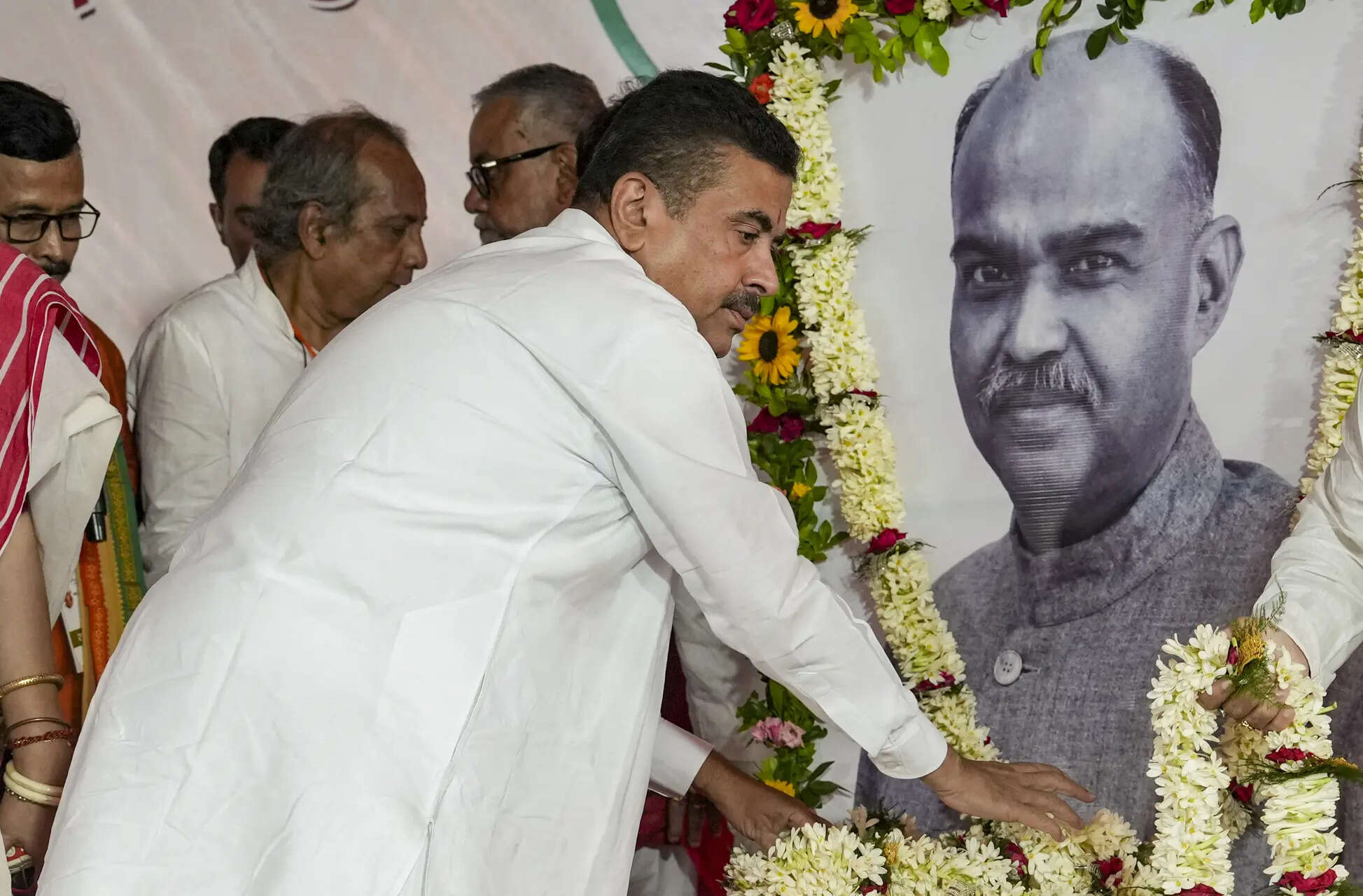
Prime Minister Narendra Modi on Tuesday paid tribute to Syama Prasad Mookerjee in Kolkata, highlighting the leader's role in ensuring that Bengal remained an integral part of India during the partition of the country in 1947. Speaking at an event, Modi said Mookerjee's efforts were crucial in preventing the division of Bengal along communal lines.
Syama Prasad Mookerjee, a prominent politician and founder of the Bharatiya Jana Sangh, had opposed the partition of Bengal and advocated for a unified India. He also stood against the proposal for a separate constitution and flag for the state, arguing that such moves would weaken national unity. Modi noted that Mookerjee's vision for a strong, industrialised India led to the establishment of key national institutions that contributed to the country's economic strength.
The Prime Minister also drew a direct link between Mookerjee's legacy and the revocation of Article 370 in 2019, which granted special status to Jammu and Kashmir. Mookerjee had opposed the separate constitution for Jammu and Kashmir, considering it a threat to the integrity of the nation. Modi stated that his government's decision to abrogate Article 370 fulfilled Mookerjee's long-standing demand.
Modi's speech comes at a time when the political landscape in West Bengal remains polarised. The state, led by Chief Minister Mamata Banerjee, has often been at loggerheads with the central government over issues of federalism and cultural identity. By invoking Mookerjee, a Bengali leader with a pan-Indian vision, Modi appeared to reach out to the people of Bengal, emphasising shared nationalistic ideals.
During the event, the Prime Minister also laid a wreath at the statue of Syama Prasad Mookerjee and participated in a programme organised by the Bharatiya Jana Sangh's successor, the Bharatiya Janata Party. The occasion marked the birth anniversary of Mookerjee, who was born on July 6, 1901, in Kolkata.
Mookerjee's contributions to India's industrialisation were also highlighted by Modi. He was instrumental in the establishment of institutions like the Damodar Valley Corporation and the Indian Institute of Technology Kharagpur. His vision for economic self-reliance and strong public sector enterprises shaped early post-independence policy.
Critics, however, argue that Mookerjee's legacy is complex, as he was also associated with Hindu nationalist politics that some see as divisive. Nonetheless, the Prime Minister's tribute sought to underscore a narrative of unity and national integrity, drawing on Mookerjee's stance against separate statehood movements.
The event in Kolkata was attended by several dignitaries, including West Bengal Governor C.V. Ananda Bose and senior BJP leaders. Modi's address was widely covered by local media, reflecting the continuing relevance of Mookerjee in contemporary political discourse.
By honouring Syama Prasad Mookerjee, the Prime Minister reiterated his government's commitment to the ideals of national unity and integration, while also reaching out to voters in a state that has traditionally resisted BJP's influence. The speech is likely to be seen as an attempt to broaden the party's appeal in West Bengal ahead of upcoming elections.







