Jailed former Pakistan PM Imran Khan hospitalised after Supreme Court order
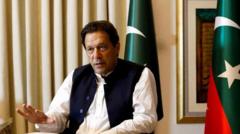
Former Pakistani Prime Minister Imran Khan has been admitted to a hospital in Islamabad following a Supreme Court directive, after his lawyers raised concerns about his deteriorating health. The 73-year-old politician was moved from Adiala Jail to Shifa International Hospital under tight security, in compliance with a ruling issued by a three-judge panel of the court.
The Supreme Court had ordered that Khan be examined by physicians within 48 hours, acknowledging the constitutional and legal obligation to protect the life, health, dignity, and security of the prisoner. The order specifically noted that an eye specialist would be part of the medical team attending to him.
Khan, who served as Pakistan's prime minister from 2018 to 2022, has been incarcerated since August 2023 on corruption charges. He has consistently maintained that the cases against him are politically motivated. His legal team has stated that he suffers from multiple health conditions, including severe vision impairment, and has been denied adequate specialist care while in custody.
In February, his lawyer claimed that Khan had lost 85% of vision in his right eye because prison authorities failed to provide timely treatment — an allegation that the government has disputed. The latest court order did not comment on the merits of that claim but stressed the need for proper medical attention.
Following the court ruling, both the judiciary and members of Khan's political party, Pakistan Tehreek-e-Insaf (PTI), urged his supporters not to gather outside the hospital, warning that any such assembly would violate the court's terms. The appeal was aimed at preventing potential clashes and ensuring the medical process proceeded without disruption.
Khan, a former cricketer who captained Pakistan's national team, has faced over 100 legal cases since his removal from office, ranging from allegations of leaking state secrets to unlawfully selling state gifts. In late 2024, he and his wife, Bushra Bibi, were sentenced to 17 years in prison in one of these cases. Khan has denounced all charges as baseless and driven by political vendetta.
His imprisonment has sparked widespread protests across Pakistan, with demonstrators demanding his release. Authorities have responded with crackdowns, leading to arrests and clashes. Despite being behind bars, Khan remains a formidable figure in the country's political landscape, retaining significant influence among a large section of the electorate.
The hospitalisation marks a notable development in the ongoing legal and political saga. While it does not alter his detention status, it highlights the contentious intersection of judicial oversight, prisoner welfare, and political tensions in Pakistan. The Supreme Court's intervention underscores the judiciary's role in ensuring that detention conditions meet basic human rights standards.
As Khan receives medical care, the focus now shifts to his health outcomes and the broader implications for his legal battles. Analysts note that the episode could influence public perception and political dynamics, though any such effects remain speculative at this stage.







