Liberia to host 1,200 US deportees as 'guests' in migration deal
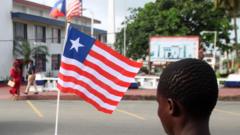
Liberia has agreed to accept up to 1,200 foreign nationals deported from the United States over the coming year, in one of the largest arrangements of its kind as Washington intensifies its crackdown on irregular migration. The West African nation is the latest to agree to take in people whom the US cannot legally send back to their countries of origin.
Announcing the deal on Wednesday, Liberia's Information Minister Jerolinmek Piah described the deportees as "guests" and stressed that the arrangement is purely humanitarian. An initial group of 20 is due to arrive on Thursday. They will be free to leave whenever they wish, or may apply for asylum in Liberia, he said.
Piah said none of the deportees are criminals or face prosecution in either the US or Liberia. He did not specify the nationalities of those being sent, nor whether any have legal protection orders that would normally prevent their return to their home countries.
"The government wants to emphasise that those being brought to Liberia are being received as guests," Piah said. He added that the move is in keeping with Liberia's long-standing tradition of sheltering those fleeing persecution, wars, and other conflicts.
The deal is part of a broader US policy under President Donald Trump, who returned to office in January 2025, of deporting individuals to "third countries" when they cannot be legally returned to their home nations. Several African countries, including Ghana, Equatorial Guinea, Eswatini, the Democratic Republic of Congo, and Sierra Leone, have already entered into similar agreements.
The Trump administration has defended these third-country arrangements as lawful. However, human rights groups have criticised them for being opaque and for potentially exposing deportees to further harm. In some cases, deportees have ended up being repatriated to the very countries they fled.
Ghana, for instance, has faced legal challenges over allegations that it forced US deportees back to countries where they face danger. In Eswatini, the government confirmed this week that two people deported from the US had voluntarily returned to their home countries, Mauritania and DR Congo. Eswatini had earlier received $5.1 million from Washington, drawing sharp criticism from rights activists.
Piah said Liberia has "not demanded or received any compensation or promise of rewards" for its participation. He maintained that the agreement is "entirely humanitarian," but acknowledged that the US would provide support to help Liberia manage the programme and strengthen its migration system.
The US State Department has not commented on the Liberia arrangement.
Liberia holds a unique historical connection to the United States. Founded in the early 19th century as a settlement for freed slaves and free-born Black people from America and the Caribbean, the country has long seen itself as a haven for those unable to return home.
"We have always welcomed people who cannot return to their home of origin," Piah said. "To reject these third-country nationals would be acting against our best interest."
The first flight of 20 deportees is expected to land in the coming days, marking the beginning of a year-long programme that will see more than a thousand individuals resettled, at least temporarily, on Liberian soil.