Kashmir 'integral and inalienable part of India', Delhi tells Pakistan at UN
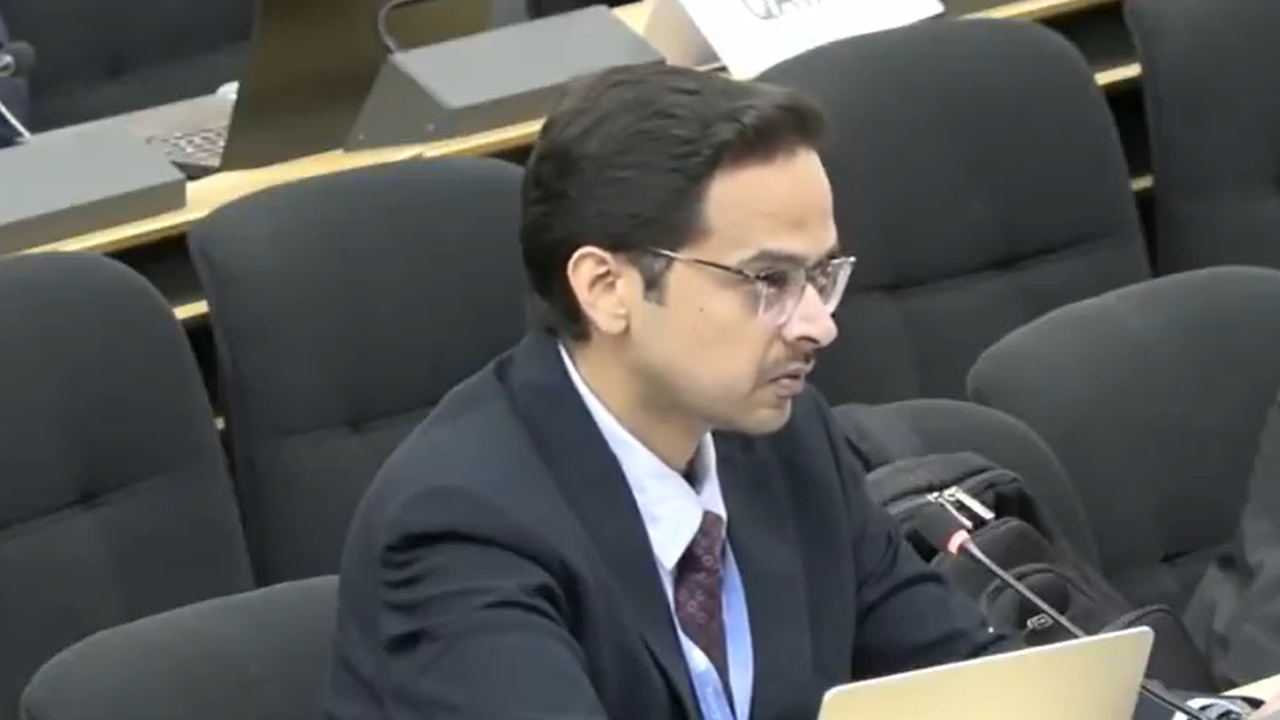
New Delhi: India on Thursday used its right of reply at the United Nations Human Rights Council to reject Pakistan's remarks on Jammu and Kashmir and on the treatment of minorities in India, in the latest exchange between the two neighbours at a multilateral forum.
Indian diplomat Kshitij Tyagi told the Council in Geneva that Jammu and Kashmir "was, is and will always remain an integral and inalienable part of India". The only part of the region under foreign occupation, he said, is the portion held by Pakistan, which India again called upon to vacate. This is a position New Delhi has stated repeatedly at the United Nations and in bilateral statements.
Mr Tyagi advised Islamabad to direct its energies towards its debt-ridden economy, which he described as surviving on bailouts, rather than pursuing territorial ambitions or, in his words, sponsoring cross-border terrorism. These were India's characterisations of Pakistan's priorities and record.
Turning to minority rights, Mr Tyagi said India is home to one of the largest Muslim populations in the world and that minorities in the country vote, legislate, sit on its highest court and lead its institutions. He contrasted this with Pakistan, where he said Hindu, Sikh and Christian communities have shrunk drastically since independence, and where, he alleged, daughters are abducted, forcibly converted and married off, while blasphemy laws hang over every minority household. He also said Pakistan's own Muslim minorities — Shias, Ahmadiyyas, Ismailis and Hazaras — face systemic persecution and that their places of worship are attacked and desecrated.
Responding to Pakistan's references to Kashmir, Mr Tyagi said the Council did not need Islamabad to explain what happened in 1990 to the Kashmiri Pandits, whom he described as having been driven from their homes by terrorists that Pakistan armed, trained and sent across the border. He added that those same terrorists have since killed Kashmiris of every faith, many of them Muslim.
Large numbers of Kashmiri Pandits left the Kashmir Valley in 1989-90 amid violence and threats directed at the community. Estimates of those who fled vary, and the displacement remains one of the most widely documented episodes of the conflict. Pakistan has consistently rejected allegations that it sponsors militancy in Jammu and Kashmir. Both countries have long contested each other's accounts of that period, and each rejects the other's characterisation of its record on minorities.
Separately, Ministry of External Affairs spokesperson Randhir Jaiswal rejected a letter circulated by Pakistan to the UN Security Council concerning a Court of Arbitration pronouncement on the Indus Waters Treaty. Mr Jaiswal said Pakistan has a habit of misrepresenting facts and propagating falsehoods to serve what he called a malicious propaganda.
"For starters, the so-called ruling is not a ruling by the Permanent Court of Arbitration as sought to be projected by the Pakistan minister. It is a ruling by an illegally-constituted court," he said, adding that India's position on the matter has been reiterated several times.
India and Pakistan have been locked in a long-running dispute over the interpretation of the Indus Waters Treaty, signed in 1960 under World Bank auspices. In 2023, India issued a notice seeking modification of the treaty and has not participated in proceedings before the Court of Arbitration, arguing that the body lacks competence to hear the matters Pakistan has referred to it. A parallel process has been under way through a neutral expert appointed under the treaty. The World Bank has said the two mechanisms should proceed in a coordinated manner while the parties resolve their differences.
Kashmir has been raised repeatedly by Pakistan at UN human rights bodies over the years, with India maintaining that the region's status is a bilateral matter and rejecting international adjudication of the dispute. The exchanges at the Council reflect positions both governments have held for decades; neither has shown signs of shifting.