Israeli strike in southern Lebanon kills seven, including children, PM says
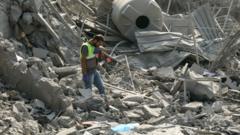
An Israeli air strike killed seven people in southern Lebanon early Saturday, including three children and two women, according to Lebanese Prime Minister Nawaf Salam. The strike hit a house on the outskirts of the village of Ansar in the Nabatieh district at about 04:30 local time (01:30 GMT), where authorities said displaced families were living.
Lebanon's state-run National News Agency reported that the dead included three children and two women. The strike is one of the deadliest since an agreement aimed at reducing hostilities was announced in June, following months of cross-border exchanges.
Israel's military said it struck "Hezbollah terror infrastructure" in response to what it described as an earlier action against its soldiers. The Israeli Defense Forces (IDF) did not provide further details about the specific incident that prompted the strike.
In a separate development, another round of Israeli strikes hit the town of Deir al Zahrani later Saturday morning, killing two people and injuring nine others, according to Lebanon's Ministry of Health. Social media footage showed large plumes of grey smoke rising from the village as sirens blared in the background.
Prime Minister Salam condemned the attacks, saying those killed were civilians and not "military infrastructure." He said in a statement: "Israel must halt this escalation. For the security of our people and their right to life on their land are not subject to negotiation or bargaining."
The IDF said the incident that prompted the strike on Ansar took place in the Ali al-Taher Ridge, a strategic high ground overlooking much of south-eastern Lebanon and one of the most fiercely contested positions in the conflict. Lebanon's National News Agency also reported a series of strikes around the ridge.
Near the border, Israeli forces reportedly destroyed several homes in Bint Jbeil and opened heavy machine gun fire toward houses, according to NNA. The reports could not be independently verified, and the Israeli military did not comment on these specific incidents.
The violence underscores the fragility of the June agreement, which was intended to reduce hostilities between Israel and Hezbollah, the Iran-backed armed group. Lebanon was drawn into the broader regional conflict on 2 March, when Hezbollah launched rockets into Israel in retaliation for a strike that killed Iran's supreme leader. Israel responded by launching a bombing campaign across Lebanon and invading a significant part of the country's south. Israeli forces continue to occupy roughly 5% of Lebanese territory.
International calls for restraint have grown as civilian casualties mount. The United Nations has repeatedly urged both sides to uphold the ceasefire and protect civilians, but no formal mechanism for enforcement has yet been put in place.
As the situation on the ground remains tense, residents of southern Lebanon face the constant threat of further strikes. The loss of life in Ansar and Deir al Zahrani has deepened fears that the agreement may collapse entirely, plunging the region back into open warfare.