India's First Hydrogen Train Begins Operations: How It Works
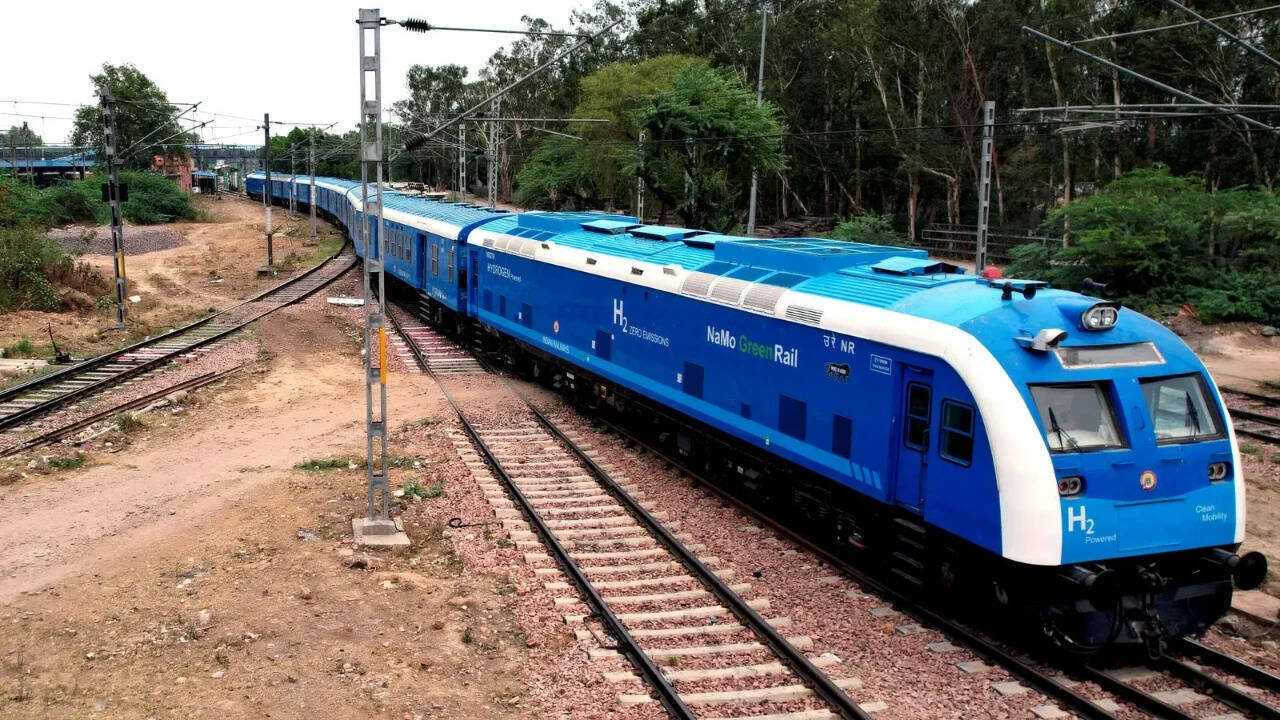
India has taken a significant step towards green mobility with the launch of its first hydrogen-powered passenger train, operating on the Jind-Sonipat route. Unlike conventional trains that burn diesel or use overhead electric wires, this train generates its own electricity onboard using hydrogen fuel cells, emitting only water vapour as a byproduct.
Hydrogen trains are part of a global push to decarbonise rail transport. Several countries, including Germany and the United Kingdom, have already deployed hydrogen trains on regional routes. India's entry into this technology marks a milestone in its commitment to reduce carbon emissions from the railway sector.
How does the hydrogen train produce power?
The train uses a hydrogen fuel cell system. Hydrogen gas is stored in pressurised tanks atop the train. This hydrogen is then fed into fuel cells, where it reacts with oxygen from the air to produce electricity. The only emission from this chemical reaction is water vapour, making the train truly zero-emission at the point of use. The electricity generated powers electric traction motors that drive the wheels.
Where does the hydrogen come from?
Hydrogen can be produced through various methods. For this train, the hydrogen likely comes from industrial sources, but the ultimate goal is to use 'green hydrogen' produced by electrolysis using renewable energy. Green hydrogen has zero carbon footprint from production to use, making it the cleanest option.
Why use hydrogen instead of batteries or overhead wires?
Hydrogen offers advantages over battery-electric trains for routes that lack overhead electrification. Batteries are heavy and have limited range, while hydrogen tanks can provide longer range and quicker refuelling. Hydrogen fuel cells also have a higher energy density than batteries, making them suitable for longer distances and heavy loads. Overhead electrification is expensive to install, especially in rural areas. Hydrogen trains provide a clean alternative without needing new infrastructure.
How does the Indian train use energy?
The Indian hydrogen train is a multiple-unit train, meaning each carriage has its own motors. It uses a hybrid system: the fuel cells charge lithium-ion batteries, which then supply power to the motors. This setup allows for efficient energy management, capturing regenerative braking energy and smoothing power demands. The train can reportedly run up to 1,000 kilometres on a single hydrogen refill, though official specifications may vary.
Why is hydrogen storage difficult?
Hydrogen is the lightest element and must be stored under high pressure (350-700 bar) or in liquid form at extremely low temperatures (-253°C). This requires specialised, heavy tanks and careful safety protocols. Onboard storage is a key engineering challenge, as the tanks take up space and add weight. India's train uses pressurised gas storage, balancing capacity with weight constraints.
The science extends beyond the train
Hydrogen fuel cells are not limited to trains. They are used in cars, buses, ships, and even stationary power generators. The technology is part of a broader hydrogen economy, where hydrogen serves as a clean energy carrier for sectors that are hard to electrify directly. India's National Hydrogen Mission aims to scale up green hydrogen production and its applications.
India's hydrogen train demonstrates that the country is moving towards cleaner transport solutions. While challenges remain in hydrogen production, storage, and infrastructure, this launch provides valuable practical experience. The train is currently running on a trial basis, and if successful, could pave the way for more hydrogen trains across India's vast rail network.